









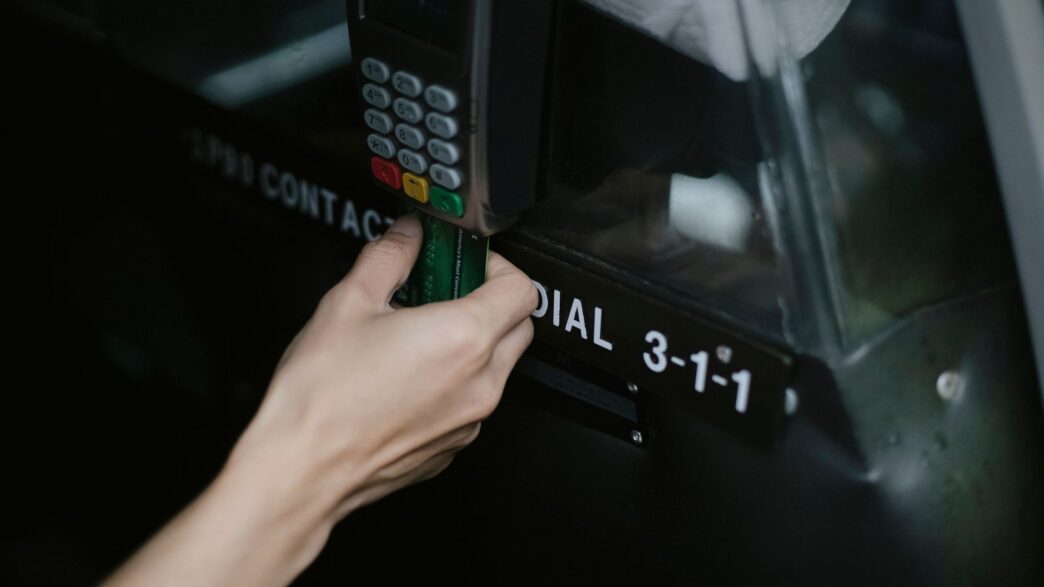
You’re at a card reader in Rome, tired, holding a €1,850 hotel bill, and the screen asks a friendly-sounding question: pay in euros, or pay in dollars? Tap dollars and you’ve just triggered dynamic currency conversion, the most expensive button on the machine. It feels like a courtesy. It’s a markup, and this summer it’s going to catch a record number of Americans off guard.
More than one in five U.S. travelers say they’re heading abroad this year, a 10-point jump from 2025, according to the U.S. Travel Association’s 2026 forecast. Every one of those trips runs through card readers and cash machines primed to ask that same question at exactly the moment you’re distracted. Beating it costs nothing but two seconds of attention, and knowing which two seconds is the whole game.
The fee you’re watching isn’t the one taking your money
Most people pack for a trip worried about the foreign transaction fee. It’s the one that gets all the press. And it’s real: foreign transaction fees average about 1.58%, according to WalletHub’s Credit Card Landscape Report, and top out around 3% at the higher-fee cards. On a $2,000 week of spending, a 3% fee is $60. Worth avoiding with the right card, but hardly a catastrophe.
Dynamic currency conversion is a different animal. When researchers looked at what these point-of-sale conversions actually charge, they found markups averaging 7.6% over the wholesale Visa rate, and as high as 12.4%, in a 2023 study published in the Journal of the Association for Consumer Research. That’s not a rounding error. That’s four to five times the fee you were so careful to dodge, hiding behind a button that looks like it’s doing you a favor.
Dynamic currency conversion is a markup dressed up as a convenience
Here’s the mechanism. Using your debit card abroad, or a credit card, the terminal sees that your card is American and offers to bill you in dollars instead of the local currency. The pitch is that you’ll “know exactly what you’re paying.” What actually happens is that the merchant’s payment processor does the conversion, at a rate the processor sets, and pads that rate with a margin it keeps. Your own bank never gets the chance to convert at the near-wholesale rate it would normally use.
Regulators noticed. The European Union decided this was slippery enough to legislate, and Regulation (EU) 2021/1230 now requires anyone offering dynamic currency conversion to display their markup as a percentage over the European Central Bank’s reference rate before you agree to it. The rule exists precisely because the markup used to be invisible. When you decline and pay in local currency instead, the conversion falls to Visa or Mastercard, whose exchange rates run far closer to the real market rate.
Saying yes to dollars can cost you twice
Now the part that most travel guides get wrong. There’s a widespread belief that accepting the dollar option lets you sidestep your card’s foreign transaction fee. It usually doesn’t. Many issuers trigger that fee based on the merchant being foreign, not on which currency shows up on the screen. Accept the conversion and you can end up paying the padded DCC rate and your bank’s fee, stacked on top of each other.
Run the numbers on that Rome hotel. Say the €1,850 bill works out to about $2,000 at the network rate. Accept dynamic currency conversion at the study’s average 7.6% markup and you pay roughly $152 extra, pushing the bill to about $2,152. If your card also carries a 3% foreign transaction fee that still applies, that’s another $60 or so. You’re now more than $200 over the honest price for one checkout, and you volunteered for it by tapping the wrong button. Pay in euros with a card that charges no foreign transaction fee and the same night costs you the plain $2,000. Do that across a two-week trip with meals, tours, and a rental car, and the difference easily clears the cost of a nice dinner out.
The ATMs built to trip you up
Cash machines are where this gets predatory. If you’ve traveled in Europe, you’ve seen the blue-and-white independent ATMs clustered near train stations and tourist plazas, many of them run by Euronet. They are engineered to profit from confusion. The screen pushes dynamic currency conversion hard, defaulting to “with conversion” and burying the decline option, and it layers on its own withdrawal charge on top. Stack that operator fee, your bank’s out-of-network foreign ATM fees, and a fat DCC markup, and a simple €200 withdrawal can quietly cost you $30 in pure overhead.
The fix is boring and effective. Pull cash from a bank-branded ATM rather than a standalone kiosk when you can, decline the conversion every time, and take out larger amounts less often so you’re paying any fixed withdrawal fee once instead of five times.
The two-second habit that keeps the markup out of your pocket
The whole defense against dynamic currency conversion comes down to one reflex: always choose to pay in local currency. Euros in Italy, yen in Japan, pounds in London. If a waiter or clerk has already rung the charge up in dollars, hand the card back and ask them to void it and re-run it in the local currency. They can, even if they act like they can’t. Carry a card with no foreign transaction fee for the actual spending, and treat “would you like to pay in USD?” as the trick question it is. The honest answer is always no.
Record travel means record opportunity for these markups to do their quiet work. But you don’t need a special card trick or an app to beat them, just the discipline to read one screen and tap the less convenient-looking option. It’s the cheapest travel upgrade you’ll ever get: pay attention for two seconds, keep 7.6% in your pocket, and let the conversion racket lose money on you for once.
If you’re mapping out the trip budget, it pairs well with our guides on dodging foreign transaction fees the smart way and saving for a summer vacation without going into debt.