







Here’s a habit that quietly costs millions of people hundreds of dollars a year, and almost nobody notices it happening. You open a checking account at a bank, the teller asks if you’d like a savings account to go with it, you say sure, and from that day forward your entire financial life lives under one roof. It feels tidy. It feels responsible. And it’s probably leaving real money on the table every single month.
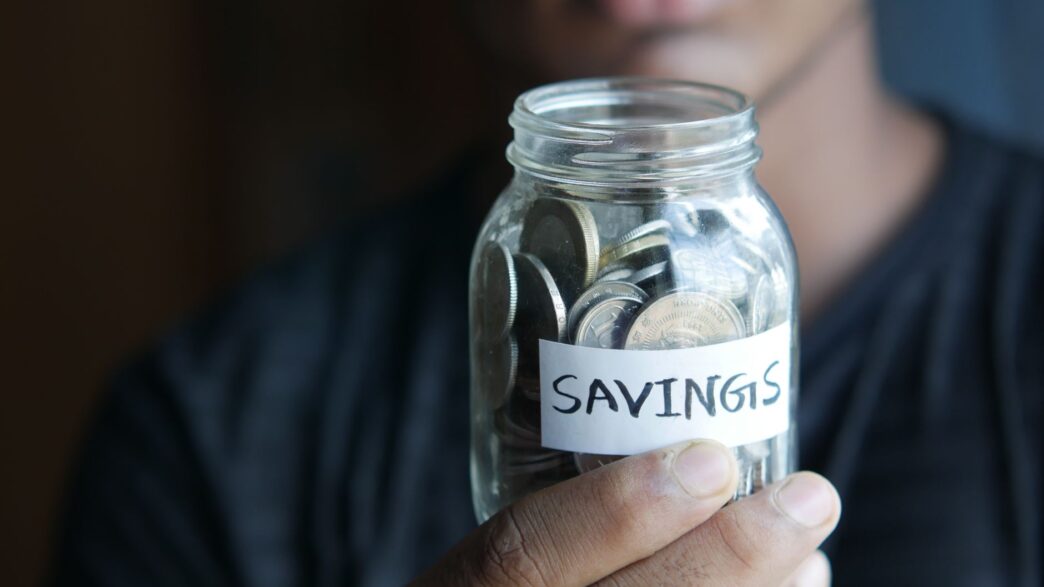
I want to make the case for something that sounds almost too simple to matter: keeping your savings at a completely different bank than the one where your paycheck lands and your bills get paid. It’s one of the easiest money moves you can make, it takes about twenty minutes to set up, and it works on two fronts at once. It earns you more interest, and it makes you spend less. Let’s walk through why.
The interest gap is bigger than you think
Start with the numbers, because they’re genuinely startling. As of late July 2026, the national average savings account pays just 0.61% APY, according to Bankrate’s weekly survey. Big traditional banks — the ones with a branch on every corner — often pay even less than that, hovering closer to a rounding error. The FDIC pegged the average savings rate at around 0.39% earlier in the year, and the average checking account at a laughable 0.07%.
Now compare that to what the best online banks are paying right now: roughly 4% to 4.2% APY, with several competitive high-yield savings accounts sitting right at the top of that range. That’s not a small difference. That’s your money working roughly seven times harder for you, with zero added risk, because these accounts carry the same FDIC insurance as the giant bank down the street.
What does the gap actually look like in dollars? If you’re holding $20,000 in an emergency fund earning the national average instead of a competitive high-yield rate, you’re giving up somewhere around $800 a year in interest you could have collected for doing nothing. On a $25,000 balance, that gap climbs past $1,000 annually. That’s a car repair, a chunk of a vacation, or a couple of months of groceries — evaporating simply because your savings are parked at the wrong address.
And most people are parked at the wrong address. Surveys have found that 57% of consumers are earning less than 3% on their savings, and roughly a quarter are earning under 1%. Only about one in five Americans has moved their money into a high-yield account at all. The reason isn’t access — anyone with a smartphone can open one of these accounts. The reason is inertia. We keep our money wherever we first put it, and that default is expensive.
The psychological firewall matters just as much
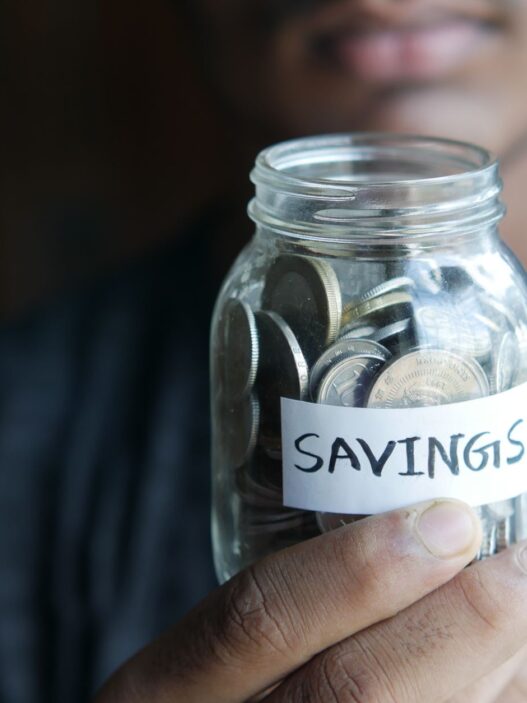
The interest boost alone is enough reason to make the switch, but honestly, the second benefit might save you even more. When your savings sit in the same app as your checking, they’re not really savings. They’re just a bigger number you can see and tap into the second you want something.
You know how this goes. You’re eyeing a $300 purchase, you glance at your account, and there’s your $5,000 “emergency fund” sitting right there in the same dashboard, one transfer away. The mental line between “money I can spend” and “money I’m protecting” gets blurry, and blurry money gets spent. Behavioral economists have a name for this — mental accounting — and the practical takeaway is that friction is your friend. The harder it is to reach your savings, the more likely it survives.
Moving your savings to a separate online bank builds that friction in automatically. When those funds live somewhere else, pulling from them isn’t instant. A transfer between two different banks usually takes one to three business days to clear. That delay is a feature, not a bug. It’s just enough of a speed bump to let the impulse pass, to let you sleep on it, to ask yourself whether you actually need the thing or just wanted it for a minute. Out of sight really does become out of mind, and a savings balance you don’t stare at every day is a balance that grows.
You also protect yourself from overdrafts and fraud
There’s a defensive angle here too. Keeping a firewall between your spending account and your savings means that if something goes wrong on the checking side, your cushion stays safe. If a debit card number gets skimmed, if a subscription you forgot about triggers an overdraft, if a merchant double-charges you, the damage is contained to the account you use for daily transactions. Your emergency fund, sitting quietly at another institution, never gets touched.
This separation also makes overdrafts far less likely in the first place. When your savings aren’t visible inside your checking app, you’re forced to actually look at what you have available to spend, rather than mentally counting your savings as spendable cushion. The Consumer Financial Protection Bureau has long pointed out that overdraft fees hit hardest when people lose track of their true available balance — and a clean line between spending money and saved money is one of the simplest ways to keep that number honest.
How to actually set this up
The mechanics are refreshingly boring, which is exactly what you want. Pick a reputable online bank or a credit union with a strong high-yield savings rate — NerdWallet and Bankrate both keep updated lists of who’s paying the most, and rates shift, so it’s worth a quick check before you commit. Confirm the account is FDIC insured (or NCUA insured if it’s a credit union), which nearly all of them are. Opening the account online usually takes ten to fifteen minutes and requires nothing more than your Social Security number, an ID, and your existing checking account details to link for transfers.
Once it’s open, link it to your checking account and set up an automatic transfer for the day after payday. Even $50 or $100 a paycheck adds up faster than you’d expect, and because the money moves before you have a chance to spend it, you barely notice it’s gone. This is the old “pay yourself first” idea, except now the money you’re paying yourself is landing somewhere that both earns real interest and stays out of temptation’s way.
If you want to get slightly fancier, you can open more than one savings account at that online bank and nickname them for specific goals — one for emergencies, one for a vacation, one for holiday shopping. Seeing “$1,200 / Emergency Fund” is a lot more motivating than seeing an anonymous lump sum, and it makes you think twice before raiding a labeled pot for something unrelated.
The bottom line
Your checking account is for spending. Your savings account should be for saving. When those two jobs share the same roof, both suffer — your money earns pennies and your willpower takes a beating every time you open the app. Splitting them apart costs you nothing, takes an afternoon at most, and quietly pays you back twice: once in interest you’re currently leaving behind, and once in the purchases you don’t make because the money simply wasn’t sitting there tempting you. In a year when the best accounts are paying 4% and change while most people limp along under 1%, that’s about as close to free money as personal finance ever gets.