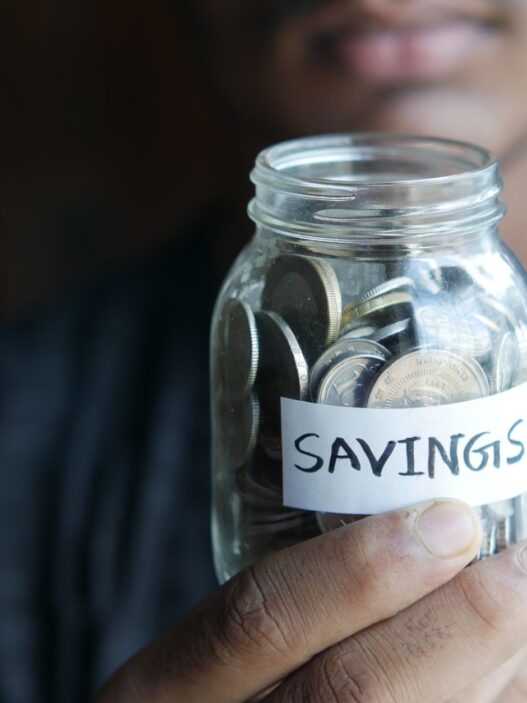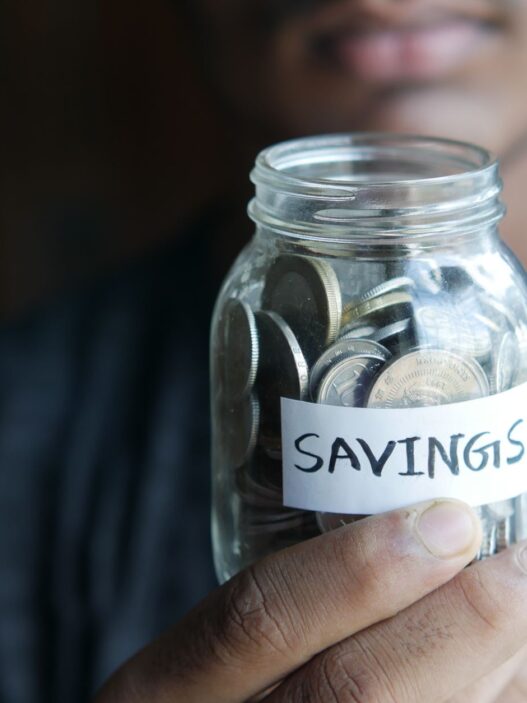








If you’ve ever told yourself you’d start saving “as soon as things settle down,” you already know how that story ends. Life never fully settles down, and the money you meant to set aside quietly disappears into groceries, gas, and the occasional impulse buy. That’s exactly the problem round-up savings programs are built to solve. Instead of asking you to find spare money you don’t feel like you have, they skim tiny amounts off purchases you’re already making and tuck them away before you notice they’re gone.
It’s one of the few money moves that works precisely because it’s so small you don’t feel it. And in 2026, with more banks and apps offering these features than ever, it’s worth understanding how they work, how much they can realistically do, and how to squeeze more out of them.
How round-up savings actually works
The idea is almost embarrassingly simple. Every time you swipe your debit card, the bank rounds the purchase up to the next whole dollar and moves the difference into your savings. Buy a coffee for $4.35, and $0.65 quietly slides over to savings. Grab lunch for $11.20, and $0.80 makes the trip. On their own, these amounts are meaningless. Added up across dozens of purchases a month, they start to look like real money you never had to think about.
Bank of America more or less pioneered this approach back in 2005 with its Keep the Change program, which rounds up debit card purchases to the nearest dollar and sweeps the total into your savings account once a day. You need both a Bank of America checking and savings account to use it, and the roundups happen automatically once you’re enrolled. Worth knowing: the bank used to match a portion of your roundups, but that perk is gone, so what you save is now simply what you round up.
Plenty of others have followed. Chime’s Round Ups feature does the same thing for its debit card users, automatically rounding purchases to the nearest dollar and moving the change into savings. Ally takes a slightly different angle with its automated “surprise savings” tool, which analyzes your checking account, finds small amounts you won’t miss, and quietly transfers them for you. Apps like Acorns and Qapital layer round-ups on top of investing or goal-based accounts. The mechanics vary, but the philosophy is identical: make saving the default, not a decision you have to make over and over.
The honest math: what round-ups can and can’t do
Here’s where a good friend levels with you instead of overselling. Round-ups are wonderful, but they are not going to fund your retirement or build a full emergency cushion by themselves.
Do the arithmetic. If you make around 30 debit card purchases a month and each one rounds up by roughly $0.50, you’re saving about $15 a month, or somewhere near $180 a year. Some people who swipe more often land closer to $30 to $50 a month, which works out to $360 to $600 a year. That’s genuinely useful money, especially if you’re starting from zero, but it’s a trickle, not a flood.
The real value is psychological. For a lot of people, the hardest part of saving isn’t the amount, it’s the habit. Round-ups get the habit started painlessly and prove to you that saving something is possible. Once that account starts growing on its own, it’s a lot easier to talk yourself into adding more on top.
Where you park the money matters more than the roundups
This is the part most people miss, and it’s the difference between a program that impresses you and one that just checks a box. The spare change is only half the equation. The account it lands in is the other half.
A lot of round-up programs deposit into a plain savings account tied to your checking, and those accounts often pay next to nothing. According to Bankrate, the national average savings account yield was just 0.61% as of late July 2026. Meanwhile, the best high-yield savings accounts were paying in the neighborhood of 4%. That gap is enormous. On a growing balance, a competitive rate can nearly match the amount you’re rounding up in the first place, essentially doubling the work your spare change does.
So before you get excited about pennies rounding into savings, check what that savings account actually pays. If your round-ups are flowing into an account earning 0.05%, you’re doing the right thing in the wrong place. Many online banks and credit unions offer both automatic round-up tools and strong interest rates, so you don’t have to choose between convenience and yield. If your current bank makes you pick, it might be time to open a high-yield savings account somewhere that gives you both.
Simple ways to boost what you save
If the standard round-up feels too gentle, most programs let you turn up the dial. Some banks and apps offer a multiplier, doubling or tripling every roundup, so a $0.65 skim becomes $1.30 or $1.95. That small change can push your annual savings from a couple hundred dollars into the four figures without ever feeling like a real sacrifice.
You can also stack round-ups with a second automatic transfer. Set a modest recurring deposit each payday, say $20 or $40, and let the round-ups run alongside it. The scheduled transfer does the heavy lifting while the round-ups quietly top it off. And because it all happens automatically, you never have to summon the willpower to move money by hand, which is usually where good intentions go to die.
One more trick: point your round-ups toward a specific, named goal. “Emergency fund” or “car repair cushion” motivates far better than a vague savings balance. Watching a goal fill up, even slowly, keeps you from raiding it for something you don’t actually need.
A couple of things to watch out for
Round-up programs are low-risk, but they aren’t zero-risk. The main thing to keep an eye on is your checking balance. If you’re living close to the edge, those automatic transfers can occasionally nudge you toward an overdraft, and an overdraft fee will vaporize months of carefully rounded pennies in a single afternoon. Set a low-balance alert on your checking account so you always have a buffer.
It’s also worth reading the fine print on any app-based program. A few charge monthly membership fees that can quietly eat into modest savings, and if a service is investing your round-ups rather than saving them, understand that the balance can go down as well as up. For a true emergency fund, you generally want the safety and easy access of an insured savings account, not the ups and downs of the market.
Finally, don’t let round-ups lull you into thinking the job is done. They’re a fantastic on-ramp, but they work best as the first layer of a bigger plan, not the whole thing. If you want a deeper look at automating your finances, NerdWallet keeps an updated rundown of accounts that pair automatic savings tools with the kind of rates that actually move the needle.
The bottom line
Round-up savings won’t make you rich, but they’ll do something arguably more valuable: they’ll turn saving from a chore you keep putting off into a habit that runs on its own. Enroll, point the money at a high-yield savings account, maybe flip on a multiplier, and then more or less forget about it. A year from now, you’ll have a small pile of money you never missed and a savings habit that’s a lot easier to build on. In a world where nearly half of Americans would struggle to cover a surprise expense, quietly stashing your spare change is a very smart place to start.