







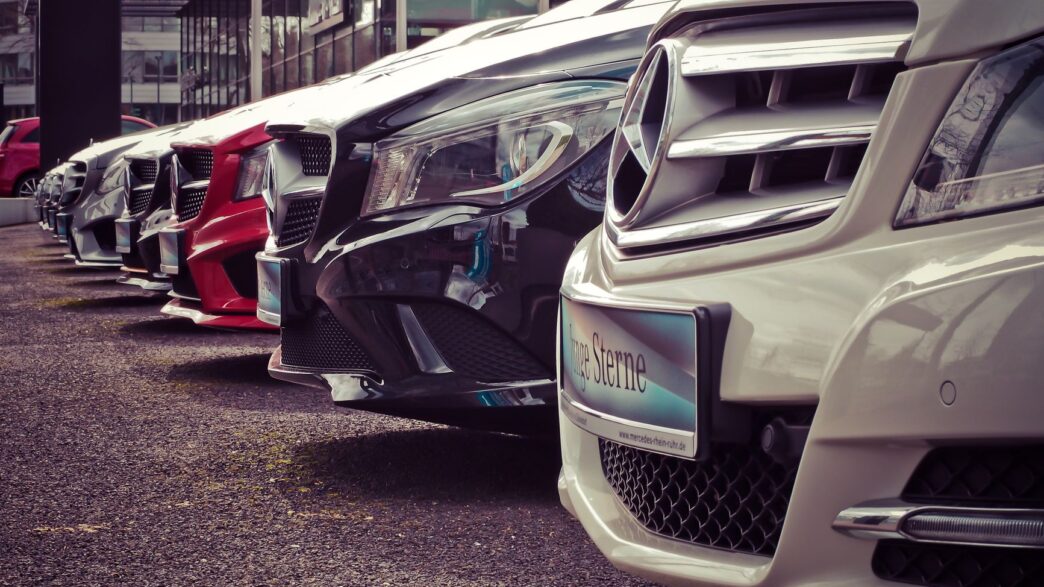
The average new car sold for $51,109 in October, a record, according to Kelley Blue Book’s latest transaction price report. If you’ve been waiting for the best time to buy a car, December is the month everyone points to, and they’re not wrong. Dealers chase year-end targets and automakers stack rebates. But the December discount is a few hundred dollars bigger than what you can get right now. The interest rate the finance office writes on your contract can swing your cost by more than $2,000. So my advice is to fix the loan in the first week of December and do the haggling in the last.
The best time to buy a car is December, but the discount is smaller than you think
In October 2026, incentives averaged $3,490 per vehicle, or 6.8% of the average transaction price, per Kelley Blue Book. That’s up from 6.5% a year earlier, but the report says spending “remains below long-term averages,” meaning automakers aren’t desperate to clear lots.
December does push harder. In December 2024, incentives hit 8% of the transaction price, about $4,000 a car, according to Cox Automotive analyst Chris Hardesty. If December 2026 matches that 8% on October’s $51,109 average, you’re looking at roughly $4,089 in incentives. That’s about $600 more than October.
Six hundred dollars is worth having. It’s also not life-changing on a $51,000 purchase, and Hardesty himself put it plainly in a column for the Atlanta Journal-Constitution: December deals “tend to be good, just not uniquely good.” December accounts for about 9% of annual sales, versus 8.3% if sales were spread evenly across the year. Dealers get busier. The deals don’t get magical.
The finance office is where the real money moves
This is the part most “best time to buy” articles skip. When you finance at the dealership, the dealer usually isn’t the lender. It sends your application to banks and finance companies, one of them approves you at a rate, and the dealer is allowed to write your contract at a higher rate and keep part of the difference. The Consumer Financial Protection Bureau described this in its 2013 auto finance bulletin: the lender “shares part of the revenue from that increased interest rate with the dealer.”
That’s not a fringe practice. According to a March 2026 Congressional Research Service report, about 83% of auto loans are arranged indirectly through dealers, and dealers are typically paid “through a discretionary markup.” The same report notes that Congress rescinded the CFPB’s guidance on indirect auto lending in 2018, and that CFPB oversight “does not extend to auto dealers’ activities.” Nobody is going to police that markup for you.
The math: $600 in December versus $2,346 at the desk
Run it on a typical buyer. Edmunds reported that in the third quarter of 2026, new-car buyers financed an average of $44,664 at an average APR of 7.0%, with an average payment of $787, all records except the rate.
Take that $44,664 over 72 months. At 7.0%, your payment is $761.48 a month and you pay $10,162 in total interest. Now say the lender actually approved you at 7.0% but the contract comes back at 8.5%. That 1.5-point gap is my example, not a published average, but it’s the kind of spread markup creates. At 8.5%, the payment is $794.05 and total interest is $12,508.
Subtract: $12,508 minus $10,162 is $2,346. That’s nearly four times the extra December incentive you’d fight for on the sales floor. And it arrives as $32.57 a month, which is exactly why it gets past people. Nobody walks out of a dealership over 33 bucks.
A preapproval turns the rate into a number you can check
The fix takes about an hour and you can do it this week. Apply for a car loan with your bank or a credit union before you shop. You’ll get a written preapproval with a rate and a maximum amount. Ask how long it’s good for, and time the application so it covers the last week of December. Keep all your rate quotes within a couple of weeks of each other, since FICO scoring counts a cluster of auto loan inquiries as one.
Then you walk in with a number. You don’t have to use the preapproval. Plenty of times the dealer’s lender, especially an automaker’s captive finance arm running a year-end promo rate, will beat it. That’s fine. Take the dealer’s financing if it’s lower. The point is that you’ll know when it isn’t. If the finance manager quotes 8.5% and you’re holding a 7.0% letter, the conversation changes fast.
One more thing to watch in that office: a lower monthly payment built on a longer term. Edmunds found that 25.5% of new-car loans in the third quarter ran 84 months or longer, a record. Stretching the term is the easiest way to make a marked-up rate look affordable. Compare total interest, not the monthly figure.
Negotiate the price and the loan as two separate deals
The order matters. In early December, get your preapproval and pick two or three specific trims you’d be happy with. Check each automaker’s website for its current incentives. Then email several dealers for an out-the-door price (vehicle, fees, taxes, everything) and don’t mention how you’re paying yet.
In the last week or so of the month, when salespeople are closest to their targets, push on the out-the-door number. Only after the price is locked in writing do you talk financing. If you mix the two, the dealer can give you a good price and take it back in the rate, or the other way around. Kept separate, each number has to stand on its own.
A trade-in is a third deal, and it’s where a dealer can quietly hand back the discount it just gave you. Get outside offers before you set foot on the lot. We broke down that math in trade-in versus selling your car yourself.
Already signed at a marked-up rate? You’re not stuck
If you bought recently and your rate looks high next to what your credit union quotes today, refinancing is worth a look. Check your contract for a prepayment penalty first; if there isn’t one, a refinance can claw back much of the markup. We walked through when it pays off in how to refinance a car loan.
So yes, December is the best time to buy a car if you’re buying anyway. Just know where the money is. The year-end incentive bump is worth roughly $600 on an average car. A rate that’s a point and a half too high costs about $2,346 over six years. Spend one evening this week getting a preapproval, and the end-of-month haggling becomes the easy part.