







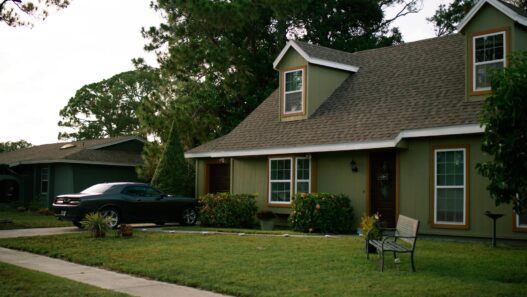
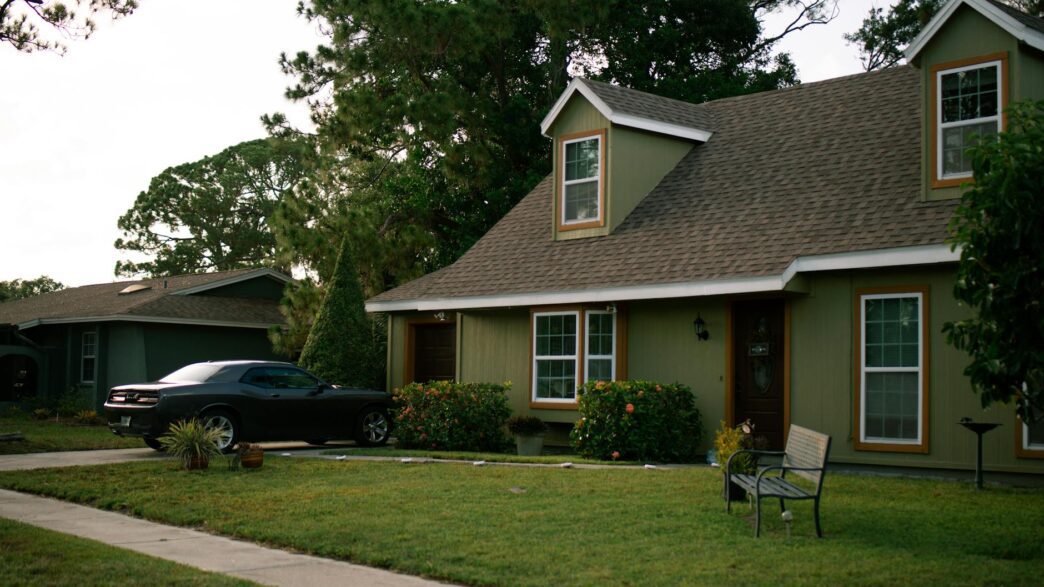
If you opened your homeowners insurance renewal this spring and felt your stomach drop, you are very much not alone. The average U.S. homeowner is now paying around $3,057 a year for coverage in 2026, up another 4% on top of the brutal 12% jump in 2025, according to Insurify’s 2026 Home Insurance Report. Since 2021, premiums have climbed roughly 46% — about three times the rate of overall inflation. In plain English, your house is the same house, but the bill to insure it has gone up about $900 a year.
Hurricane season starts June 1, so insurers in coastal and storm-prone states are about to lock in their underwriting math for the year. That makes the next two weeks the perfect window to push back on your premium before claims volume spikes and adjusters get buried. I called my own agent last spring on a coffee-break whim and walked away with $412 a year in savings. The conversation took 22 minutes. Here are the eight levers that actually move the needle.
Shop Your Policy Like You Shop Your Auto Insurance
The single biggest mistake homeowners make is treating insurance as a set-it-and-forget-it bill. NerdWallet’s 2026 analysis found that the most effective lever for cutting your premium is comparing quotes from at least three carriers every year or two. Rate hikes are not uniform — one insurer’s underwriting model may treat your roof age and zip code very differently than another’s. State Farm, Allstate, Travelers, USAA (if you qualify), Erie, and regional mutuals can come in hundreds of dollars apart on identical coverage. Use a broker if you do not want to fill out six separate forms; an independent agent who writes for multiple carriers can quote you in one sitting.
A note on timing: rates are projected to rise sharply this year in California (up 16%), Nebraska (13%), New Mexico (11%), and Georgia (10%), per Insurance Journal. If you live in one of those states, shopping is not optional. If you live in Hawaii, Massachusetts, Maine, Louisiana, or Rhode Island, you may actually see a small rate decrease of up to 2% by year-end — but only if you push for it.
Raise Your Deductible Strategically
Bumping your deductible from $1,000 to $2,500 saves around 9% on average, according to the Insurance Information Institute. On a $3,000 premium, that is roughly $270 a year in your pocket — every year. The catch is obvious: you need to actually have $2,500 sitting in a savings account that you can access without flinching if a tree comes through your roof.
This is where the math gets interesting. If you have a healthy emergency fund parked in a high-yield savings account earning around 4%, the higher deductible is almost always worth it. You save $270 a year on premium, and the extra $1,500 of “self-insured” cushion in your savings account earns you another $60 in interest. If you do not have an emergency fund yet, leave the deductible at $1,000 and build the savings first. Do not let an insurance agent talk you into a deductible you cannot actually pay.
Bundle Home and Auto Together
Bundling your homeowners and auto policies with the same carrier is one of the most reliably profitable moves in personal finance. Bankrate’s 2026 discount guide puts the typical bundling discount at 10% to 25% on your home premium and 5% to 15% on your auto premium. For most families that totals $400 to $600 a year in combined savings — for the price of two phone calls and a single login.
A few carriers, like Erie and Auto-Owners, will quietly offer even bigger multi-policy discounts if you add an umbrella policy or a boat or RV policy to the stack. Ask. Insurers rarely volunteer their best pricing; you have to fish for it.
Stack the Security and Safety Discounts
Most major insurers offer 5% to 20% off for security and safety upgrades, but they only apply the discount if you tell them you installed something. A monitored alarm system — ADT, Vivint, SimpliSafe Pro, or your alarm company of choice — typically gets you 15% to 20%. A self-monitored system like Ring or Nest usually qualifies for 5% to 10%. Smart smoke and water-leak detectors, deadbolts on every exterior door, and a backup generator can each peel off a few more percentage points.
If you have done any of this in the last two years and have not called your insurer, you are leaving real money on the table. Take photos of your devices, find the receipts, and email them to your agent. The discount usually backdates to the install date if you push for it.
Mind Your Credit-Based Insurance Score
In most states, your homeowners insurance premium is partially priced off a credit-based insurance score that is similar but not identical to your FICO. The Consumer Financial Protection Bureau notes that paying bills on time, keeping revolving balances low, and disputing any errors on your credit report can lower your premium just as surely as installing a deadbolt. If your credit has improved meaningfully since you took out the policy — a paid-off card, a settled collection, a new score tier — call your insurer and ask them to re-run the rating. They will not do it on their own.
Three states ban the practice entirely (California, Maryland, and Massachusetts), and a handful of others restrict it. Everywhere else, your credit is quietly shaping your bill.
Reassess Your Dwelling Coverage and Endorsements
A lot of homeowners are overinsured on the dwelling itself and underinsured on the stuff inside. Your dwelling coverage should reflect the cost to rebuild your house, not its market value. If your home is worth $450,000 on Zillow but would cost $310,000 to rebuild from scratch, you are paying premium on $140,000 of phantom coverage. Ask your agent to walk you through the replacement cost calculation. Construction costs have risen sharply since 2021, but if you have not updated your dwelling figure in a while, it may still be too high — or it may be far too low.
While you are at it, audit the endorsements. Scheduled jewelry, fine art, and electronics riders, water-backup coverage, and equipment breakdown coverage can all be valuable, but you should be paying for the ones you actually need and dropping the ones you do not. The same goes for “extended replacement cost” riders that pay 25% or 50% above the dwelling limit — useful in a wildfire or hurricane zone, often unnecessary elsewhere.
Ask for the Loyalty, Paperless, and Auto-Pay Discounts
These three are pure money for almost no effort. Most carriers offer a 1% to 3% discount for going paperless, another 2% to 5% for setting up automatic payments from a checking account (a little less if you use a credit card), and a small loyalty discount that kicks in after three or five years with the same insurer. Combined, these often add up to 5% to 10% off — call it $150 to $300 on a typical policy. Ask explicitly: “What discounts am I not currently getting?”
Strengthen the Roof Before the Storms Get There
This one is bigger in some states than others, but it can be the most powerful single discount of all. In hurricane states like Florida, Texas, and the Carolinas, an impact-resistant roof, hurricane shutters, or a verified wind-mitigation inspection can cut your premium by 20% to 45%. Bankrate’s May 2026 cost analysis notes that wind mitigation is the single largest discount available to coastal homeowners. A wind-mitigation inspection runs $75 to $150 and stays valid for five years.
In hail-prone states like Texas, Oklahoma, Colorado, and Nebraska, an impact-resistant Class 4 shingle roof typically earns a 10% to 30% discount, and many state programs offer rebates that partially cover the upgrade cost. If your roof is approaching replacement age anyway, this is the moment to ask your insurer what they will pay you to upgrade.
The 30-Minute Action Plan
If you do nothing else this week, do this. Pull your declarations page (the front page of your policy) and your most recent premium notice. Spend ten minutes on the phone with your current agent asking three questions: what discounts am I missing, can you re-run my credit-based insurance score, and what would my premium be at a $2,500 deductible. Then spend twenty minutes on a comparison site like Insurify, Policygenius, or The Zebra getting two competing quotes for identical coverage. If your current insurer will not match, switch.
Where does the savings go? Straight into a high-yield savings account so the next storm — or the next 12% premium hike — does not catch you flat-footed. Five hundred dollars a year that you do not spend is more powerful than five hundred dollars you have to earn, because it is not taxed. With hurricane season opening June 1 and underwriting models tightening through summer, the cheapest week to do this is the week you are in right now.