







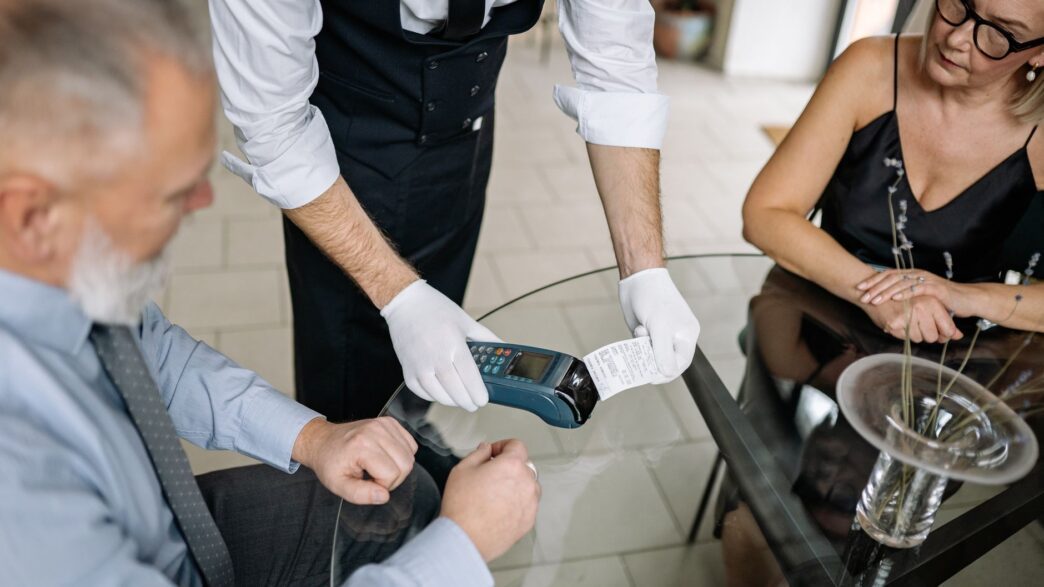
There’s a particular kind of sticker shock that hits when the check arrives and you realize two people just spent $78 on a Tuesday night dinner that neither of you will remember by Friday. It’s not that the food was bad. It’s that somewhere between the appetizer, the two drinks, the automatic 20% suggestion on the payment screen, and the “service fee” line you didn’t notice until you were signing, the math got away from you.
If that feels familiar, you’re in extremely good company. Restaurant prices have been climbing steadily for years, and while the pace has slowed from the chaos of a few years ago, it hasn’t stopped. According to the National Restaurant Association’s menu price tracking, full-service restaurant menu prices rose 3.7% year over year as of June 2026, with limited-service spots up 3.1%. That’s well below the 8.8% peak in early 2023, but it stacks. Three or four years of increases in a row mean the burger that cost $12 in 2021 is quietly a $16 burger now, and nobody sent you a memo.
Here’s the thing, though. The standard advice — “just stop eating out” — is both unhelpful and slightly insulting. Meals out are how a lot of us see friends, celebrate things, and survive weeks where cooking is genuinely not happening. The goal isn’t abstinence. It’s getting the same amount of enjoyment for meaningfully less money, and there’s a lot more room to do that than most people assume.
Know What You’re Actually Spending First
Most people underestimate their restaurant spending by a wide margin, and the reason is structural: it’s scattered across dozens of small transactions instead of one big obvious bill. A mortgage payment you notice. Forty-one separate charges between $9 and $60 you do not.
The numbers back this up. Recent household spending estimates put the average American household somewhere around $300 to $370 a month on restaurants, bars, and takeout combined — call it $3,600 to $4,400 a year. And for the first time in modern record-keeping, Americans now spend more of their food dollars away from home than at home, with the split running roughly 55/45 in favor of restaurants and takeout.
Before you change anything, pull the last two months of your checking account and debit card activity and add up every food-away-from-home charge. Not an estimate — the actual sum. Most banking apps will let you filter by merchant category, and if yours doesn’t, a spreadsheet and twenty minutes will do it. Almost everyone who does this exercise finds a number 30% to 50% higher than what they guessed, and that gap alone is usually enough motivation to change something.
The Fees Are Where the Money Quietly Goes
Menu inflation gets the headlines, but a big chunk of what’s happened to your restaurant bill over the last few years isn’t the food at all. It’s everything bolted onto the food.
Delivery apps are the worst offender. A $30 order can easily land at $48 once you count the delivery fee, the service fee that’s calculated as a percentage of your subtotal, the inflated in-app menu prices that run 15% to 25% above what the restaurant charges in person, and a tip. If you order delivery twice a week, you’re spending something like $1,800 a year purely on the convenience layer — not the food.
Then there are the surcharges. Restaurants across the country have added kitchen appreciation fees, wellness fees, credit card surcharges, and straightforward “service charges” of 3% to 5% that show up below the subtotal where you’re least likely to look. Some of these are legitimate ways for restaurants to raise prices without scaring people off the menu. All of them come out of your account. And if you’re paying with a debit card, a credit card surcharge is often avoidable — many restaurants charge less for debit or cash than for credit, since the Consumer Financial Protection Bureau has documented how those interchange costs get passed along.
The move here isn’t complicated: read the bill before you pay it, order pickup instead of delivery when you can, and default to using the restaurant’s own website or phone number rather than a third-party app. Restaurants often price their direct orders lower because they’re not paying a 25% commission.
Change the Meal, Not the Habit
The single highest-leverage change most people can make is shifting when they eat out rather than whether they do.
Lunch is dramatically cheaper than dinner at the same restaurant, frequently 30% to 40% less for a nearly identical plate. Happy hour menus at good restaurants often include the same food from the dinner menu at a discount, plus drinks. And weeknight prix fixe deals — Monday burger nights, Tuesday taco specials, Wednesday pasta deals — exist because restaurants desperately need traffic on slow days and will trade margin for a full room.
Drinks deserve their own paragraph. A $14 cocktail ordered twice per person turns a $60 dinner into a $116 dinner, and the tip and tax scale up right along with it. You don’t have to skip the drink. But ordering one instead of two, or having the first one at home, routinely knocks 25% off a bill without touching the food you actually came for.
The other quiet win is the app you already have on your phone. Most chains run loyalty programs that are genuinely worth something — free items after a threshold, birthday freebies, exclusive discounts. Layer that with card-linked offers through your bank or debit card’s rewards portal, and you can stack a chain’s own promotion on top of a 5% or 10% cash back offer. Check your bank’s offers section before you go anywhere; the deals rotate and most people never look.
Give the Money a Place to Land
Cutting spending only counts if the money goes somewhere. Otherwise it dissolves into the general fund of your checking account and you’ve accomplished nothing except eating out less.
The cleanest fix is a dedicated “dining out” allowance that lives outside your main checking account. Decide on a monthly number — say $200 — and move it into a separate account or a second debit card at the start of the month. When it’s gone, it’s gone until next month. This works far better than willpower because it converts a fuzzy judgment call (“can I afford this dinner?”) into a factual one (you have $43 left).
And whatever you’re not spending should be doing something. If you trim $150 a month off restaurants and route it automatically into a high-yield savings account, at the rates available in mid-2026 you’re looking at roughly $1,800 in contributions plus meaningful interest over a year. That’s a real emergency fund contribution built entirely out of meals you would have forgotten anyway. Bankrate’s savings rate surveys are a reasonable place to compare what’s available if your current account is paying you nothing.
The Honest Bottom Line
You don’t have to become someone who meal-preps six identical containers on Sunday. What you have to do is stop letting restaurant spending happen to you passively — unnoticed fees, default delivery, autopilot tipping on inflated subtotals.
Look at the real number. Kill the delivery fees. Move the meals to cheaper times. Set a hard monthly cap that lives in its own account. Then let the difference land somewhere it can grow. You’ll still be eating out. You’ll just be paying 2022 prices for it.