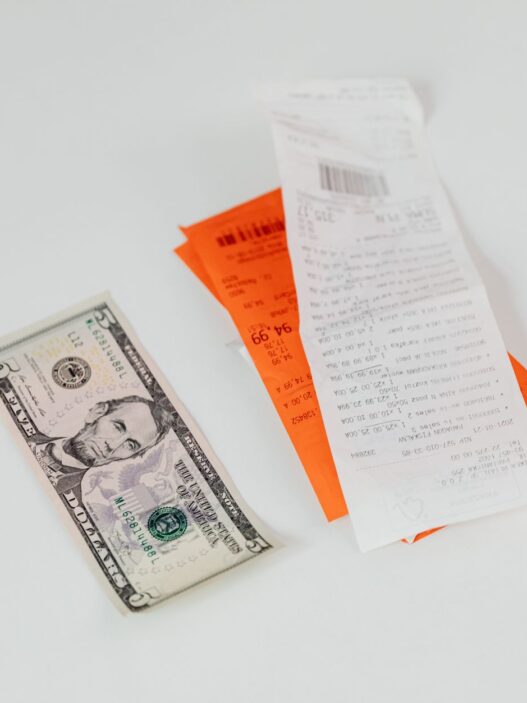










Right now, six of the country’s biggest banks are willing to hand you somewhere between $300 and $600 in cash, no strings beyond opening a checking account and routing a direct deposit through it. That is not marketing fluff. Huntington is offering up to $600 to new Platinum Perks Checking customers through June 15. BMO is paying $400 to Smart Money Checking customers who post $4,000 in qualifying direct deposits within 90 days. Wells Fargo is putting $325 on the table through July 14. Chase has a $400 offer running through July 15. Bank account bonuses come and go in a normal year, but the summer of 2026 is a notably aggressive moment for new-account incentives, and the math works out in your favor if you can spend an hour setting it up.
The reason these deals exist comes down to one stubborn statistic: Americans almost never change banks. Bankrate’s 2025 checking fees survey found that the average U.S. adult has kept the same checking account for 19 years, with baby boomers averaging 27.4 years on a single account. Drive Research reached the same conclusion from a different angle in its June 2025 banking survey of 1,000 U.S. account holders, reporting that 66% of consumers were unlikely to change their primary bank in 2025 and that 41% cited the hassle of switching as the main barrier. Acquiring a new checking customer is so hard, and so valuable over a 19-year horizon, that banks gladly pay a few hundred dollars to break the inertia.
The biggest bank promotion offers on the table this summer
Huntington’s Platinum Perks Checking promotion is the loudest right now. The bank’s own offer page lists $600 in cash for new Platinum Perks customers who open the account by June 15, 2026, and meet the qualifying direct deposit threshold; a smaller Perks Checking tier pays $400 on the same deadline. BMO Smart Money Checking offers $400 if you open between May 5 and September 8, 2026, and post a cumulative $4,000 in qualifying direct deposits within 90 days, per the bank’s digital offer page. Wells Fargo’s current consumer checking promotion pays $325 for $1,000 of electronic deposits inside 90 days; the offer runs through July 14, 2026. Chase Total Checking is paying $400 through July 15, 2026, for $1,000 in direct deposits inside 90 days. SoFi has a tiered $50 or $400 deal that scales with the size of your first direct deposit and runs through year-end.
If you can stomach the paperwork, you do not have to pick just one. Bonus hunters routinely cycle through two or three offers a year, parking a paycheck at each new bank long enough to clear the bonus, then either keeping the account open or closing it once the holding period ends. Doctor of Credit, which tracks these promotions in real time, lists dozens of active checking account sign-up bonus offers every month and notes exactly which require new customer status, which exclude certain states, and which use ironclad direct deposit definitions.
The “direct deposit” rule that voids more bonuses than anything else
Almost every bank promotion offer hinges on the same trigger: a “qualifying direct deposit” landing in your new account within 60 or 90 days. The trap is that most banks define this narrowly. Chase, for example, says the deposit must be an electronic deposit of a paycheck, pension, or government benefit such as Social Security from an employer or government agency. Person-to-person payments through Zelle do not qualify. Neither do small “micro-deposit” account verifications, transfers from your own brokerage, or one-off ACH pushes you initiate yourself.
The cleanest path is to redirect a real paycheck through your employer’s payroll system. If that is not practical for one cycle, some readers have had luck with ACH “pull” transfers initiated by an external account that the bank’s system recognizes as payroll, but this is hit or miss. The safest move is to read the fine print on the specific offer, confirm what your bank considers a qualifying deposit, and then send a small test deposit to make sure it codes correctly before relying on it.
The other quiet killer is the monthly maintenance fee. A $25 monthly fee, charged for the four to six months it can take to qualify, receive, and hold a $300 bonus, will eat $100 of your gains before you blink. Avoid this by either picking accounts with no monthly fee or by setting up the direct deposit amount that waives it. Bankrate’s roundup of best bank bonuses flags this footnote on most major-bank offers.
Yes, your bonus is taxable
Here is the part the promotional pages bury. Bank sign-up bonuses are taxable income. The IRS treats them as interest income, and your bank is required to issue a Form 1099-INT for any year in which combined interest and bonus payments reach $10 or more. Even if the bank fails to send the form, you still owe tax on the bonus at your ordinary income rate. A $400 bonus to someone in the 22% federal bracket nets out closer to $312 after federal tax, and less if your state taxes interest too. That is still real money, but plan for it. Setting aside roughly a quarter of the bonus the moment it lands keeps tax season uneventful.
The actual offer terms also matter for legal reasons that work in your favor. Regulation DD, the Truth in Savings Act rule that governs deposit account disclosures, requires banks to spell out bonus terms clearly: the qualifying conditions, the dates the offer applies, and the fees you can expect. If a social media pitch for a checking account sign-up bonus skips the fine print, the binding disclosure is on the bank’s own official page. Always read it there, not on a third-party summary.
A 90-day workflow that actually works
Pick one or two offers and treat them as a project. Open the first account on day one of a pay cycle, ideally early in the month so you have a full calendar month for direct deposit timing. Update your payroll direct deposit through your employer’s HR portal the same day; most companies process the change within one pay run. Confirm the first deposit codes as “direct deposit” inside the new bank’s app, not just “deposit.” Set a calendar reminder for the day the holding period ends, because some offers claw the bonus back if you close the account in the first six months. After the bonus posts, decide whether the new bank is genuinely better than your old one or whether it is just a parking lot for a check. There is no rule that says you have to stay.
Stacked carefully, two summer offers can put $700 to $1,000 in your account before Labor Day. For the cost of one focused afternoon and a couple of HR portal logins, that is a much better return on time than almost anything else you can do with $0 of capital at risk. While you are at it, sweep the new bonus into the right place rather than letting it idle: our guide to how much to keep in your checking account in 2026 covers where the rest should go, and a 60-minute mid-year money audit pairs naturally with a bank switch. Bank account bonuses are not life-changing money, but they are real, they are sitting on the table, and they show up at exactly the moment the rest of the country is locked into the same checking account they have had since the Obama administration.