





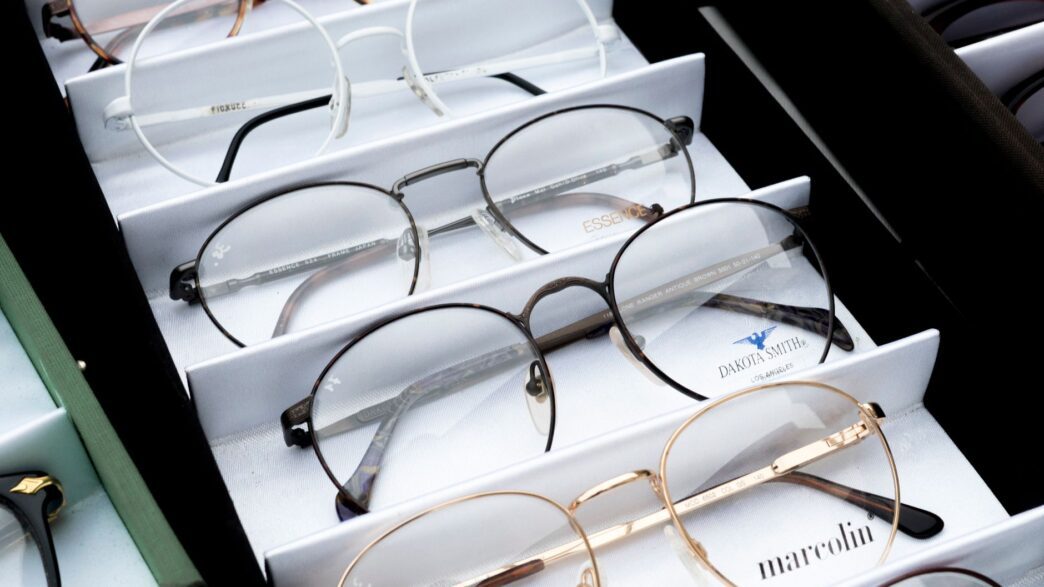
If you’ve walked out of an optical shop lately clutching a receipt that made your eyes water more than the eye exam itself, you are not imagining things. A single pair of prescription glasses now runs the average shopper around $200 with vision insurance and closer to $350 without it. Push into designer frames and progressive lenses and you can blow past $600 before you’ve even paid for the anti-glare coating. For a purchase most of us need just to function, that’s a brutal price tag — and the worst part is how much of it is avoidable once you know where the markups hide.
I’ve been down this rabbit hole personally, and the good news is that glasses and contacts are one of those rare expenses where a little homework can cut your cost by more than half. Here’s how to do it without sacrificing the quality you actually wear on your face every single day.
Why Glasses Cost So Much in the First Place
Before you can save, it helps to understand what you’re really paying for. The frame and the lens are two separate purchases bundled together, and the optical industry has spent decades convincing us that they belong only in one place: the shop attached to your eye doctor. Frames at a private practice or retail chain frequently start around $120 and climb to $400 or more for a name brand, while standard single-vision lenses add another $120 to $200. Need progressives or bifocals? Those can roughly double the lens cost on their own.
Then come the add-ons. Anti-glare, blue-light filtering, scratch resistance, and photochromic tinting each tack on anywhere from $30 to over $100. According to Warby Parker’s own cost breakdown, these enhancements are where a lot of the sticker shock lives, and many of them are optional. The lesson isn’t that quality lenses don’t matter — it’s that you’re often paying premium prices for features you may not need, sold by a system designed to make comparison shopping difficult.
Shop Online and Watch the Price Drop
The single biggest money-saver available today is buying online. When Consumer Reports surveyed glasses buyers, readers who bought from online retailers like Zenni paid a median of just $69 for a complete pair of frames and lenses — a fraction of what the same prescription would cost at a traditional optical shop. Even big-box stores beat the independents handily; Costco shoppers paid a median of around $184 for a complete pair.
The catch is that you need two pieces of information to buy online, and the optical industry doesn’t always volunteer them. The first is your prescription, which your eye doctor is legally required to give you after an exam whether you buy from them or not. The second is your pupillary distance, or PD — the measurement between the centers of your pupils. Some shops conveniently leave this off the prescription because it makes ordering elsewhere harder. Ask for it directly, or measure it at home with a ruler and a mirror in a couple of minutes.
Once you have both numbers, you can order from Zenni, EyeBuyDirect, Warby Parker, GlassesUSA, or a dozen other sites, often for less than the cost of the add-on coatings alone at a brick-and-mortar store. Buy a backup pair while you’re at it — at $69, you can afford one.
Use Your Tax-Advantaged Accounts
Here’s a strategy that quietly knocks 20 to 30 percent off the price and almost nobody uses for eyewear: pay with a Flexible Spending Account or Health Savings Account. Prescription glasses, contacts, and even prescription sunglasses are all FSA- and HSA-eligible expenses, which means you’re buying them with pre-tax dollars. If you’re in the 22 percent federal tax bracket, a $200 pair of glasses effectively costs you about $156 when you run it through an HSA.
This matters even more if you have an FSA with a “use it or lose it” deadline at year-end. If you’ve got leftover funds sitting in an FSA as December approaches, a new pair of glasses or a year’s supply of contacts is one of the smartest ways to spend that money before it evaporates. The IRS lays out exactly what qualifies in its Publication 502 on medical expenses, and vision correction is squarely on the list.
Is Vision Insurance Actually Worth It?
This is where a lot of people overpay in the opposite direction — buying coverage they don’t need. Standalone vision insurance typically costs $10 to $25 a month for an individual, or roughly $120 to $300 a year. A typical plan covers an annual exam and gives you an allowance of around $150 to $200 toward frames or contacts, often cutting costs by 50 to 75 percent on covered items.
Do the math before you sign up. If you only buy a single budget pair of glasses online every couple of years and your eyes are stable, you may spend more on premiums than you’d ever get back in benefits. As Britannica Money points out in its breakdown of vision coverage, insurance tends to pay off for people who wear contacts daily, need frequent prescription changes, or have a condition requiring regular monitoring. For everyone else, paying out of pocket from an HSA at online prices often wins. If your employer offers vision coverage as a cheap add-on or fully subsidized perk, take it — but don’t pay $250 a year to save $100.
Smart Moves on Contact Lenses
Contacts follow the same playbook with a few twists. The big retailers — 1-800 Contacts, Walmart Contacts, and Costco’s optical department — consistently undercut the price your eye doctor charges for the exact same lenses. Buying an annual supply rather than quarterly boxes almost always triggers a per-box discount, and manufacturers like Acuvue and Bausch + Lomb run mail-in rebates worth $50 to $200 on annual supplies several times a year. Stack a retailer discount, a manufacturer rebate, and your HSA, and the savings compound fast.
One word of caution under federal rules: your contact lens prescription is valid for at least one year (sometimes two, depending on your state), and sellers are required by the Federal Trade Commission’s Contact Lens Rule to verify it before shipping. That’s a consumer protection, not an obstacle — it means you’re free to buy your lenses wherever they’re cheapest, not just from the practice that wrote the script.
Don’t Forget the Free Exam Hacks
The eye exam itself is a cost worth minimizing too. Many warehouse clubs and large retailers offer exams well below independent-practice prices, and some employers and ACA marketplace plans include a vision exam benefit you may be forgetting about. Community health centers and optometry schools also offer low-cost or sliding-scale exams if you’re paying entirely out of pocket.
The Bottom Line
Clear vision shouldn’t require you to squint at your bank balance. The math is straightforward: get your full prescription including your PD, buy your frames and lenses online where a complete pair can cost under $70, pay with pre-tax HSA or FSA dollars, and only buy vision insurance if the numbers genuinely favor it. Put the difference — easily $200 or more a year for a glasses-and-contacts household — straight into a high-yield savings account, and your eyewear habit can quietly fund a chunk of your emergency fund instead of draining it.