







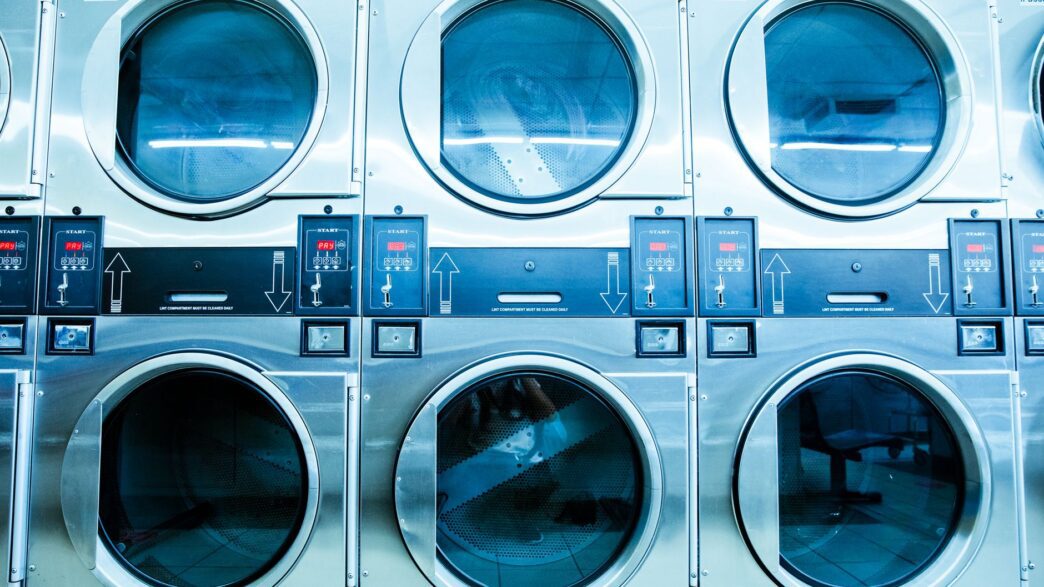
The washing machine dies on a Tuesday. You have $180 in checking, rent is due in nine days, and the store down the street has a sign in the window promising a brand-new front loader for $27.99 a week with no credit check and same-day delivery. Nobody asks for a credit score. Nobody runs a hard inquiry. You sign a page and a half, and by dinner the thing is humming away in your laundry room.
That is the pitch, and it works because it solves a real problem. When you don’t have savings and you don’t have credit, rent-to-own is often the only door that opens. The trouble is what happens on the other side of it. That $27.99 a week doesn’t stop after a couple of months. It usually runs for 78 or 104 weeks, and by the time you own the machine outright, you’ve paid somewhere between two and three times what the identical model costs at a big-box store. On a $700 washer, that gap is real money — often $900 to $1,400 more than the sticker price, paid out in increments small enough that you never quite feel it leaving.
The math nobody puts on the price tag
Here’s the part that gets lost. Rent-to-own agreements aren’t structured as loans, so they typically don’t come with an APR disclosure the way a credit card or a personal loan does. What you see instead is a weekly or biweekly payment and a term length. The store isn’t required to multiply those two numbers for you and stick the result next to the merchandise.
So do it yourself, every time. Payment times number of payments equals your total cost. A $34.99 weekly payment over 78 weeks is $2,729. If the same sofa sells for $899 elsewhere, you’re paying an extra $1,830 for the privilege of not paying up front. Expressed as an interest rate, deals like that routinely land north of 100% annualized, and sometimes well past it.
Regulators have been circling this for years. The Federal Trade Commission’s survey of rent-to-own customers recommended that the total cost of ownership be disclosed on labels shoppers can actually see while browsing, not just buried in the agreement. And in a 2024 lawsuit, the Consumer Financial Protection Bureau alleged that virtual lease-to-own company Acima had structured its agreements to obscure the true cost, locking some customers into obligations that exceeded 200% of the item’s retail price. Back in 2020, the FTC settled with Progressive Leasing for $175 million over allegedly misleading claims about pricing. When the enforcement history of an industry is this thick, the pattern isn’t a few bad stores.
The version you might not recognize as rent-to-own
The storefront model is easy to spot. The newer version isn’t.
Walk into a mattress shop, a tire center, a furniture showroom, or an electronics retailer and you’ll often see a checkout option labeled something soft — “flexible payment,” “lease approval,” “no credit needed.” That’s virtual lease-to-own, and the retailer isn’t the one financing it. A third-party company buys the item and leases it back to you, and the economics are the same as the storefront version even though it feels like you’re just picking a payment plan on a website.
This is where people get caught. Buy now, pay later has trained a lot of us to assume that a four-payment split at checkout is interest-free, because the common BNPL products genuinely are. Lease-to-own sitting next to it in the same checkout menu looks like the same species and behaves nothing like it. If the screen mentions “lease,” “rental agreement,” “ownership after final payment,” or an “early purchase option,” you’re in rent-to-own territory, not BNPL. Read that screen slowly. The FTC’s consumer guidance on rent-to-own and lease-to-own is worth five minutes before you agree to anything.
The escape hatch that actually saves you money
Almost every rent-to-own agreement, storefront or virtual, includes a same-as-cash window — usually 90 days, sometimes 100 or 101 days. Pay off the retail price plus a small processing fee inside that window and the entire lease markup evaporates. You keep the item and you’ve paid something close to what you would have paid at a regular store.
This is the single most valuable thing to know about these contracts, and it’s the reason a rent-to-own deal isn’t automatically a disaster. If you’re genuinely confident you can pull together the full amount in three months — a tax refund is landing, a seasonal job is starting, you’re getting a bonus — the early purchase option turns an expensive product into a tolerable one.
Be honest with yourself about that confidence, though. Missing the window by a week doesn’t get you a partial discount. You fall back onto the full lease term and the full markup. So if you’re going that route, set the payoff date as a calendar alarm the day you sign, then work backward: figure out what you need to set aside each week to hit it, and move that money into a separate savings account the moment it hits your checking. Don’t leave it sitting in your spending account hoping it survives. Keeping the payoff fund in a different account than your everyday money is one of those small structural choices that does more for you than willpower ever will.
What to try before you sign anything
The reason rent-to-own converts so well is urgency. A dead refrigerator is not a shopping decision, it’s an emergency. But there is almost always at least one cheaper path, and it’s worth spending an hour finding it before you spend $1,800 not finding it.
Start with the secondhand market. Facebook Marketplace, OfferUp, Craigslist, and local Buy Nothing groups move working appliances constantly, often from people who just remodeled a kitchen. A four-year-old washer for $200 cash is a wildly better financial outcome than a new one for $2,400 over two years, even accounting for the shorter remaining life. Habitat for Humanity ReStores sell donated appliances and furniture at deep discounts and exist in most metro areas.
Then check whether you can get real credit rather than lease financing. A credit union will often approve a small personal loan or a share-secured loan for members who’d get declined at a bank, and a credit union personal loan is federally capped at 18% APR — an order of magnitude better than a lease markup. Some credit unions run small-dollar loan programs specifically for exactly this situation. If you’re not a member of one, joining is usually a matter of a $5 deposit and living, working, or worshipping in a defined area. Bankrate’s overview of credit union personal loans walks through what to expect.
Retailer financing is another middle path. A store card or a manufacturer’s promotional financing offer will sometimes carry 0% for 12 months on appliances. That’s not risk-free — deferred interest deals can bite hard if you don’t clear the balance before the promo expires — but the downside is capped in a way a lease markup isn’t.
And if the item isn’t truly urgent, the cheapest option is the boring one: wait and save. A couch is not an emergency. Neither is a 75-inch TV or a gaming console, no matter how it’s marketed in the store. Setting up an automatic weekly transfer of the exact amount the lease would have cost gets you to the full purchase price in a fraction of the time, because none of it goes to markup.
If you’re already in one
Look at the agreement and find three things: the early purchase option and its deadline, the total of payments if you go the full term, and whether you can return the item to end the contract without further obligation. Most rent-to-own contracts do allow you to return the merchandise and walk away, which is the one genuinely consumer-friendly feature of the model. You lose everything you’ve paid, but you stop the bleeding.
Then run the comparison. If you’ve paid $340 on a $2,700 total contract for a $900 item, returning it and buying a used replacement for $250 leaves you better off than finishing the term by roughly $1,500. That’s a hard pill — you’re eating the $340 — but sunk costs shouldn’t decide the next two years of your budget.
The larger lesson underneath all of this is that the price of not having cash on hand is brutally high. Rent-to-own, payday loans, and overdraft fees all charge the same tax: you pay more for the same thing because you needed it before you could afford it. Building even a small buffer — $500 sitting in a separate account, untouched — is what breaks that cycle. It’s slow and it’s unglamorous, and it’s worth more than any discount you’ll ever find.