








If you just got engaged, congratulations. Now take a deep breath, because the wedding industry has a way of making “your big day” sound a lot like “your big financial reckoning.” The average wedding in the United States now runs roughly $34,000 to $36,000, according to recent reporting on 2026 wedding data, with the per-guest cost hovering near $290 to $300. In big cities like New York and San Francisco, full-blown weddings routinely cross $50,000. That number tends to send couples sprinting toward credit cards, personal loans, and 0% promo offers that never actually stay at 0%. There is a better way, and it starts with a checking account, a savings account, and a plan that takes the guesswork out of every paycheck.
Decide What the Wedding Is Actually Worth to You
Before you open a single new account, sit down with your partner and have the most boring, most important conversation of your engagement: what number can we walk away from on our wedding night without feeling sick? That number is not the average wedding cost. It is not what your cousin spent. It is what you can reasonably save, in cash, before the date you want to get married. Once you have that ceiling, you can reverse-engineer everything else. If you want a $25,000 wedding eighteen months out, you need to be putting away roughly $1,390 every month. A $15,000 wedding over the same window is closer to $834. Knowing the monthly number forces honesty into the planning before a florist ever opens a quote.
The median wedding, by the way, comes in around $18,000 — significantly below the average — because a small number of very expensive weddings pull the average up. That is a comforting statistic when the algorithm starts pushing you toward $400 invitations.
Open a Dedicated Wedding Savings Account
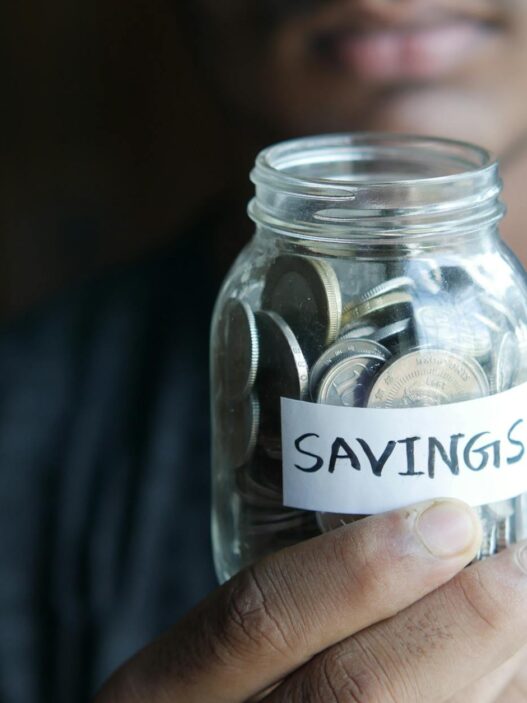
You do not want your wedding fund living next to grocery money. It is too easy to nibble. Open a separate savings account, ideally a high-yield savings account at an online bank, and name it something obvious like “Wedding Fund” so every time you log in, you see exactly what it is for. Online banks are currently paying meaningfully more interest than traditional brick-and-mortar banks. As of May 2026, the top high-yield savings accounts are advertising rates up to roughly 4.10% APY, according to Bankrate’s running list and NerdWallet’s comparison, while the FDIC’s national average for savings accounts sits at just 0.38%. On $20,000 saved over a year, that gap is the difference between earning around $800 in interest versus less than $80. It is not life-changing money, but it is most of a rehearsal dinner.
Once the account is open, set up an automatic transfer for the day after each paycheck hits. Treat the transfer like rent. If you wait until the end of the month to “see what’s left,” there will be nothing left. There never is.
Make the Guest List Do the Heavy Lifting
The single most powerful number in your wedding budget is not the venue price; it is the guest count. Every additional person costs you food, drinks, a chair, a place setting, a slice of cake, and a portion of a photographer’s hourly rate. Wedding planning data published in 2026 puts the average added cost per guest at right around $292. Cutting your list by 30 people saves you almost $9,000 with no other changes. Cutting by 50 saves close to $14,600. That is more impactful than every Pinterest hack combined.
The hard part is not the math; it is the politics. A useful filter: would you grab dinner with this person, alone, this month? If the answer is no, they probably do not need to be at a wedding where you are paying $300 a head to feed them. The B-list is your friend.
Be Strategic About the Date and the Venue
Friday weddings, Sunday weddings, and off-season weddings save real money. Many venues and vendors discount their rates by 20% to 30% for off-peak dates in January, February, and March, as well as for any non-Saturday slot. If you do not have a sentimental attachment to a specific date, treating “anything but Saturday in June” as your starting filter can be the difference between an in-budget wedding and a borrowing-money wedding.
Alternative venues stretch a dollar even further. Restaurants with private rooms, public parks with permits, museums, art galleries, and even backyards (insured for the day, please) routinely come in well below dedicated wedding venues, where the venue fee plus minimums can swallow half the budget before the food shows up. The Consumer Financial Protection Bureau’s guidance on big-purchase planning is worth a read here — most of the same logic that keeps people from regretting a car purchase keeps them from regretting a venue contract.
Stop Treating Credit Cards Like a Wedding Loan
It is tempting. You want the day to be beautiful. The credit card has a limit higher than your savings. The rewards points are real. None of that matters if you cannot pay the statement in full when it arrives. Average credit card APRs are still hovering above 20%, which means a $10,000 wedding shortfall financed at minimum payments balloons into something closer to $14,000 to $16,000 over a few years. That is a honeymoon, a down payment on a couch, or a small emergency fund — gone, before your first anniversary.
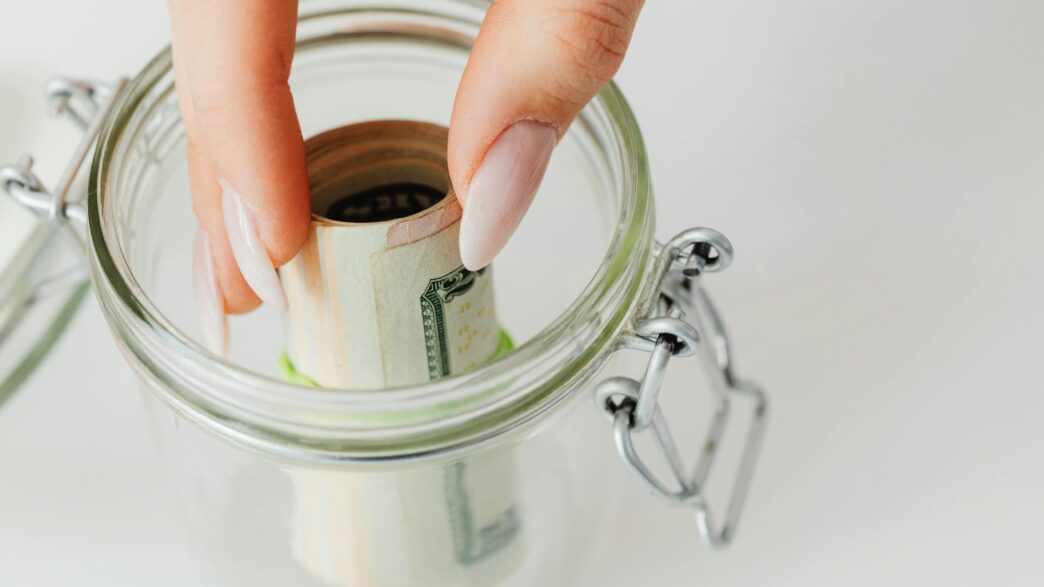
If you do want the rewards, here is the rule: only put on the card what is already sitting in your wedding savings account, and pay the statement in full the day it arrives. Anything else is just borrowing at 20% to get 2% back, which is the worst math in personal finance.
Build in a Cushion You Will Definitely Need
Plan for a hard 10% to 15% cushion above your total budget for the things you cannot predict: alterations, tips, the marriage license, postage, a forgotten suit, a last-minute hotel block, the photographer’s editing fee that is technically separate, the dance floor add-on. Couples consistently underestimate these line items, which is why so many “on-budget” weddings still end up financed in arrears. If you do not need the cushion, that money becomes your first deposit into a joint emergency fund — which is, statistically, a far more valuable thing to start a marriage with than a slightly fancier band.
What to Do With Cash Gifts
This is the quiet superpower of a well-planned wedding. If you have already paid for the wedding in cash, anything you receive as a gift the day of becomes pure surplus. That money should not go toward upgrading the honeymoon on the fly. Park it in the high-yield savings account for a few weeks while you decide. Then split it: some toward an emergency fund (the FDIC’s depositor resources are a good place to confirm coverage limits before you stack too much in one bank), some toward any small debt you carried in, and some toward whatever the next big goal is. A house, a baby, a sabbatical, a Roth IRA. The wedding is a day. The savings habit it taught you is the rest of your life.
A wedding does not have to be a financial event you spend the next four years recovering from. It can be the first big project you and your partner pull off as a team, on a number you chose, with a fund you built on purpose. That is a much better story to tell at the reception than the one about the loan.