







Summer hasn’t even officially started, and a lot of households are already bracing for that ugly first power bill of the season. If you live anywhere in the South or Southwest, you’ve probably watched your utility statement double between May and July more than once. The good news is that most of the money that disappears into your air conditioner every summer doesn’t have to. With a handful of free or nearly-free changes, the average household can knock 15 to 30 percent off their cooling costs, and that’s real money you can sweep straight into a savings account instead of handing to the power company.
Here’s a practical, no-fluff playbook for cutting your summer energy bill, plus a few thoughts on where to actually park the savings so they earn something for you.
Start With the Thermostat — The Single Biggest Lever You Have
Every degree you raise your thermostat above 75°F saves roughly 10 to 15 percent on the energy used by your cooling system, according to data cited by Northeast Energy Efficiency Partnerships. That’s not a typo. The Department of Energy recommends 78°F when you’re home and awake, and bumping it up to 85°F (or off entirely) when you’re going to be away for more than two hours.
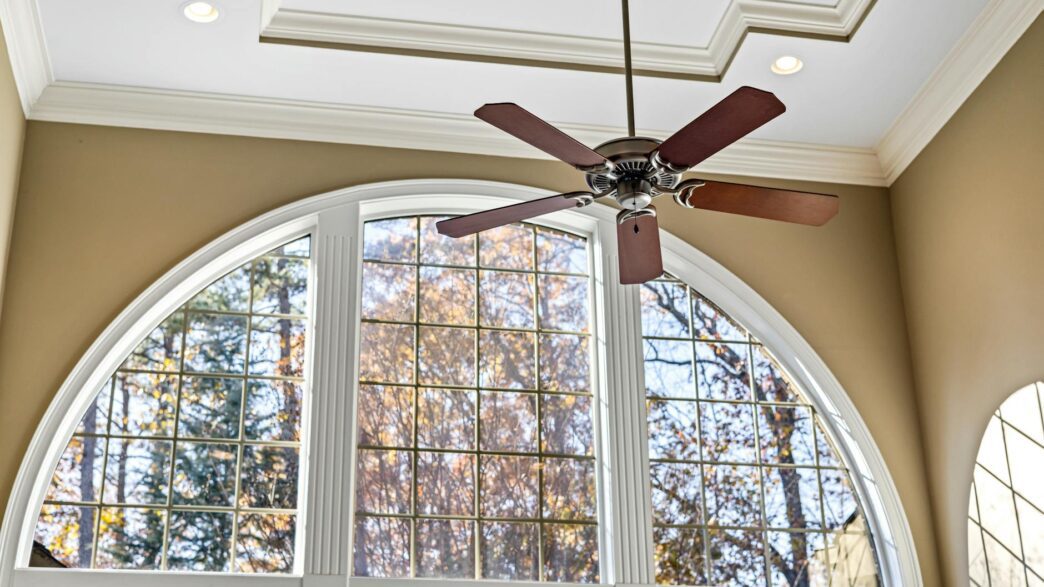
If 78°F sounds uncomfortable, that’s exactly what ceiling fans are for. Moving air feels about four degrees cooler on your skin, so a fan lets you raise the thermostat without actually feeling warmer in the room you’re in. Just remember that fans cool people, not rooms, so turn them off when you leave.
A programmable or smart thermostat does this work for you automatically. ENERGY STAR data shows that smart thermostats save an average of about 8 percent on annual heating and cooling bills — roughly $50 a year for the typical household, sometimes more in hot climates. A decent unit costs $80 to $150 and pays for itself within a year or two.
Seal the Leaks Before You Crank the AC
Running your air conditioner harder when your house is leaking cold air is the household equivalent of trying to fill a bathtub with the drain open. The Department of Energy estimates that the average home loses 10 to 20 percent of its conditioned air through gaps around doors, windows, electrical outlets, and attic hatches. Caulking and weatherstripping those leaks is a $20 to $40 weekend project that can save up to $166 a year, and according to research summarized by Kiplinger, it’s one of the highest-return home improvements you can make. The payback is often six months to two years.
While you’re at it, swap or clean your AC filter. A clogged filter forces your system to work harder and can quietly add 5 to 15 percent to your cooling costs. Filters are $5 to $20 at any hardware store, and most should be replaced every one to three months during heavy use.
Block the Sun Before It Gets In
About three-quarters of the sunlight that hits your windows turns into heat inside your home. Closing blinds, curtains, or shades during peak afternoon hours — especially on south- and west-facing windows — can dramatically cut how hard your AC has to work. Cellular or honeycomb shades are the most efficient, but even cheap blackout curtains from a discount retailer make a measurable difference on hot afternoons.
If you have shade trees, take care of them. A well-placed deciduous tree on the sunny side of a house can reduce summer cooling costs by 25 percent over time, and unlike most home upgrades, it gets better with age.
Shift Your Heavy Appliances to Cooler Hours
Your dryer, dishwasher, and oven dump a surprising amount of heat into your house, which then makes your AC work harder. Running them in the early morning or after sunset means your cooling system isn’t fighting them at peak heat. The same goes for the stove — summer is a great time to lean on the slow cooker, the microwave, the grill, or, if you’re lucky enough to have one, an air fryer.
Wash clothes in cold water when you can. The AARP notes that about 90 percent of the energy used by a washing machine goes to heating water, so switching to cold is essentially free money. Hang-drying a few loads a week — or finishing them on the line outside in the sun — saves even more.
Check Whether Your Utility Will Pay You to Use Less
A lot of homeowners don’t realize their utility company runs rebate programs for energy-efficient upgrades. Smart thermostats, attic insulation, efficient water heaters, and even LED bulbs often qualify for rebates that knock 25 to 100 percent off the upfront cost. Some utilities also offer “time-of-use” rates that pay you to shift heavy appliance use to off-peak hours, and demand-response programs that send you a small credit (often $25 to $100 a year) for letting them nudge your thermostat up a degree or two on the hottest afternoons.
Log into your utility’s website, search for “rebates” or “energy efficiency programs,” and see what’s available in your zip code. It’s usually buried, and it’s usually free money.
Where to Put the Savings (So They Actually Compound)
Here’s the part most articles skip. You’ve just freed up real dollars — let’s say $30 to $80 a month from sealing leaks, raising the thermostat, and shifting heavy appliance use. If that money sits in your checking account, you’ll spend it without noticing. If you route it somewhere with friction, it sticks.
The simplest move is to open a separate savings account — ideally a high-yield one — and set up an automatic transfer for the amount you expect to save. Right now, online high-yield savings accounts are paying around 4.10 percent APY according to Bankrate’s May 2026 rate roundup, with some offers going as high as 4.21 to 5.00 percent. Compared to the 0.40 percent national average for traditional savings accounts that the FDIC tracks, that’s roughly ten times more interest on the same dollars.
If you’re worried rates will keep drifting down (the Fed is widely expected to cut again later this year), you can also use a short-term CD or a money market account to lock in a rate on a chunk of the savings. The point isn’t to chase the absolute best rate — it’s to make sure the money you just saved on cooling doesn’t quietly leak back out through everyday spending.
A small but powerful trick: name the savings account something specific like “Summer Energy Savings” or “Fall Insulation Fund.” Behavioral research consistently shows that named, goal-tagged accounts are far less likely to get raided for impulse purchases than a generic “savings” bucket. Some banks let you create multiple subaccounts or “buckets” inside one savings account, which makes this easier without juggling logins.
A Realistic Number to Aim For
Add it all up — thermostat habits ($150 to $300 saved over the summer), sealing leaks ($75 to $150), filter changes and fan use ($50 to $100), shifting heavy appliances ($30 to $75), and utility rebates ($50 to $200 one-time) — and a typical household can realistically capture $400 to $700 over a single cooling season. Park that money in a 4 percent account and it earns about $16 to $28 in interest by year-end, which isn’t life-changing on its own but is a lot better than letting it disappear into your daily spending.
The bigger win is that you build the habit. The household that trims its summer electric bill is usually the same household that ends the year with an actual emergency fund. Cooling costs are a great place to start because the savings are measurable, the changes are mostly free, and you’ll see the difference on your very next bill.