





Most of us write a handful of paper checks a year at most. A holiday gift for a nephew, the landlord who still won’t take Zelle, a contractor, the occasional January tax payment. Then the checkbook runs out, you log into your bank’s website, click “reorder checks,” and pay whatever number shows up at checkout.
That number is usually the highest price you could have paid.
Paper checks are a dying product, but they aren’t dead. The Federal Reserve’s latest payments study, released in July 2026, found that check payments kept falling in both number and value through 2024. Falling isn’t zero, though, and since you only reorder every few years, it’s easy to miss how much the bank’s convenience is costing you.
What your bank charges for a box of checks
When Bankrate priced checks across banks and retailers, Chase came in at $60 for two boxes of 80 basic checks. That’s 160 checks, or about 38 cents apiece. Duplicate checks (the kind with a carbon copy underneath) cost $68 for the same count, around 43 cents each. Bankrate found that banks generally charge somewhere between 40 and 66 cents per check.
Your bank probably doesn’t print the checks itself. Chase’s are made by Deluxe, one of the big check printers. So when you order through the bank, you’re mostly paying for the link on your account dashboard.
What the same checks cost elsewhere
In that same comparison, Costco charged $19.52 for two boxes of 120 single checks. That’s 240 checks at roughly 8 cents each. Walmart charged $21.99 for 240 checks, about 9 cents apiece. Sam’s Club came in around $20, and Checks Unlimited, which leans toward specialty designs, charged $38.99 for 160 checks, about 24 cents each.
Put Chase’s 38 cents next to Costco’s 8 cents and the bank costs almost five times as much per check. Here’s what that looks like in dollars. If you buy 240 checks through a bank at 38 cents each, you’ll spend about $90. The Costco order is under $20. That’s roughly $70 back in your pocket for the same piece of paper with the same routing and account numbers on it.
Seventy dollars isn’t life-changing. But you’ll do this two or three more times in your life, and $70 here and $70 there covers a decent chunk of a utility bill. It also takes about the same five minutes as clicking reorder at your bank.
How ordering from a third-party printer works
The process is less nerve-racking than people expect. You need the routing number and account number, both printed along the bottom of any check you already have (or listed in your bank’s app). You type them in, pick a design, choose single or duplicate, and pick a starting check number. Most people start just after the last check in their current book so their records stay in order.
Shipping is where cheap check orders get sneaky. The base price is low, then checkout offers expedited delivery, “protected” shipping, matching address labels, a checkbook cover, and a monogrammed stamp. All of it adds up. Bankrate’s advice is to pick economy shipping, and The Penny Hoarder notes that Walmart and Bradford Exchange both offer free standard shipping, though it can take around two weeks to arrive. So order before your last few checks are gone, not after.
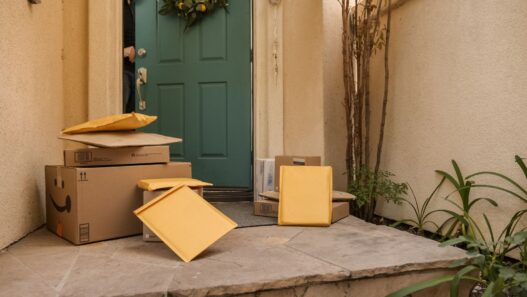
One more thing: tracked shipping is worth a small fee if your mailbox doesn’t feel secure. A box of blank checks with your account number printed on every one is not something you want sitting on a porch. Bankrate points to an FBI and U.S. Postal Inspection Service warning that reports of suspicious check-fraud activity nearly doubled from 2021 to 2023. Mail theft is a big part of that problem, so it’s fair to pay a couple of dollars for tracking or to send the order to a locker or a P.O. box if you have one.
When ordering through your bank still makes sense
There are a couple of cases where the bank wins, and they’re worth checking before you shop around.
Some banks give free checks to customers in premium account tiers. Bankrate mentions Chase Sapphire Checking and Bank of America’s Advantage Relationship Banking as examples. If you already keep enough money at the bank to qualify for one of those, free beats eight cents. Many credit unions also hand out a first box at no cost when you open an account, so ask before you buy.
The other case is when you need checks fast. If a closing or a security deposit is coming up this week, paying extra for speed through whoever can deliver quickest is reasonable. Just don’t let a once-in-a-while rush become the way you always order.
Do you need a whole box at all?
Before you buy anything, it’s worth asking how many checks you really write. If you use five a year, a 240-check order could outlast the account it’s tied to. Plenty of people switch banks, change their name, or move, and then the leftover checks are useless (and need shredding).
For a lot of us, the better answer is to buy the smallest order available and use your bank’s online bill pay for anything recurring. Many banks will mail a paper check on your behalf at no charge through bill pay, which handles the landlord or the small-town water department that only takes paper. And if you need a guaranteed payment for something like a car purchase, you’ll be getting a cashier’s check from the bank anyway, not writing one from your own book.
If you do order a box, I’d still go with single checks unless you’re the type who forgets to write things down. Duplicates cost more everywhere, and your banking app already shows every check that clears, often with an image of the front and back.
A quick checklist before you reorder
Look at your account tier first, since you might already qualify for free checks. If not, compare a warehouse club or big-box retailer against your bank’s price. Order only the quantity you’ll realistically use in the next couple of years. Skip the add-ons unless you truly want them, and pay for tracked delivery if your mail isn’t secure. Keep the checks somewhere locked, the same way you’d keep a spare debit card.
The bigger lesson is the same one that applies to most bank add-on services. The first option your bank shows you is built for convenience, and convenience usually has a markup. Five minutes of comparison shopping on something you buy once every few years is an easy $70, and that money is better off sitting in your savings account than paying for the privilege of clicking a link.