









If you’ve felt the sting at the checkout lately, you’re not imagining it. Grocery prices have climbed for years now, and the days of casually tossing items in the cart without flinching at the total are long gone. But here’s the thing most shoppers never figure out: the people getting 40% or 50% off their grocery runs aren’t doing anything magical. They’re just stacking. And in 2026, stacking has never been easier to pull off from your phone while you’re standing in the cereal aisle.
Coupon stacking is exactly what it sounds like. Instead of using one discount on an item, you layer several on top of each other so they all apply to the same purchase. A store sale, plus a digital coupon, plus a cash-back rebate from an app you scan after you leave. Each layer comes from a different source, which is why they can be combined, and when you line them up correctly, the savings compound in a way that feels almost unfair to the cashier. Let me walk you through how it actually works so you can start doing it on your next trip.
Why Three Discounts Beat One Every Time
The reason stacking works comes down to who’s footing the bill for each discount. A store sale is the grocery chain lowering its own price to move product. A manufacturer coupon, the kind you load digitally onto your store loyalty account, is the brand itself paying for the markdown, not the store. And a cash-back app rebate is a third company paying you, usually because brands want data on what people buy. Because three different parties are each covering a different slice, nothing technically conflicts. The register sees a store discount and a manufacturer coupon as separate transactions, and the app never touches the register at all.
According to coupon experts who track this stuff closely, the triple-stack strategy of combining a store sale with a digital manufacturer coupon and a cash-back app offer on the same product often takes 40% to 60% off the retail price. The shoppers who consistently use three or more discount layers regularly hit savings of 35% to 50% per transaction. Pharmacy chains and big-box stores tend to allow the most layers, sometimes three or four per item, which is why you’ll see extreme couponers gravitating toward those stores for their household staples.
The Apps Worth Putting on Your Phone
You don’t need a dozen apps cluttering your home screen. A few do the heavy lifting, and each one fills a specific role in the stack.
Ibotta is the workhorse of the cash-back world. It partners directly with thousands of brands to offer rebates on specific items, and crucially, it lets you stack. You buy something that’s already on sale at your store, use a loaded digital coupon to knock the register price down, and then claim Ibotta’s separate cash rebate on top. The cash lands in your account and you can cash it out to PayPal or your bank once you hit the minimum. NerdWallet’s roundup of the best free coupon apps is a solid place to compare the current crop if you want to see how Ibotta stacks up against the competition.
Fetch Rewards works on a refreshingly lazy model. There’s nothing to activate before you shop. You just scan your grocery receipt after the trip, and Fetch hands you points based on the brands you bought, regardless of what you paid. That makes it the easiest layer to add to any stack, because it requires zero planning. You’re going to keep the receipt anyway, so you might as well point your camera at it.
Checkout 51 rounds things out with a fresh list of cash-back offers every Thursday morning, leaning heavily into pantry staples, cleaning supplies, and the occasional produce deal. You can stack its rebates with whatever in-store promotion is already running. Between these three, you’ve got the manufacturer-rebate angle covered from multiple directions without overlapping too much.
Building Your First Stack, Step by Step
Start with the weekly ad, not the apps. Pull up your store’s circular and see what’s genuinely on sale this week, because the sale price is the foundation everything else sits on. There’s no point stacking coupons on a product that isn’t discounted to begin with when something comparable next to it is.
Once you’ve spotted a sale item, open your store’s app and load any available digital manufacturer coupons onto your loyalty account. This is the step people skip, and it’s the most valuable one because it’s the store and the brand both giving you money on the same item. Clip everything relevant even if you’re not sure you’ll buy it, since loaded coupons only apply when you actually purchase the matching product.
Then, before checkout, check Ibotta and Checkout 51 for rebates on what’s in your cart. Add anything that matches. After you pay, scan your receipt into Fetch and Ibotta to claim the cash back. The whole routine takes a few extra minutes, and the first time you watch a $30 cart shrink to $18 with another $4 coming back to you in rebates, you’ll understand why people get a little obsessed with it.
Where the Money Should Actually Go
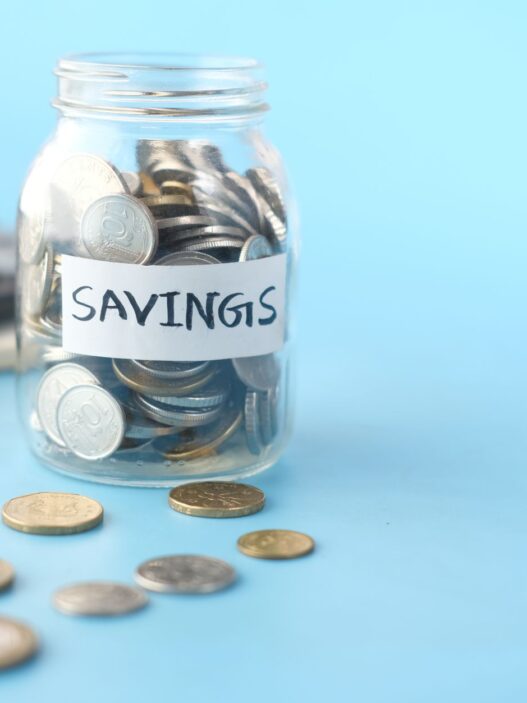
Here’s the part that separates people who save money from people who just feel busy. The savings only count if you do something with them. If stacking knocks $40 off your monthly grocery spend, that’s roughly $480 a year that didn’t exist before. Left in your checking account, it quietly evaporates into other spending. Moved into a high-yield savings account, where the best online banks are still paying well above what brick-and-mortar banks offer, it actually grows and becomes something, whether that’s a cushion against the next emergency or a head start on a goal you’ve been putting off.
A simple trick is to round your grocery budget up to what you used to spend and transfer the difference to savings the same day you shop. If your trip cost $62 but your old normal was $90, move $28. You won’t miss money you’d already mentally written off, and over a year it adds up to real money sitting somewhere productive instead of slipping through your fingers.
A Few Honest Cautions
Stacking can tip into a trap if you let it. The deals are engineered to make you buy things you wouldn’t otherwise, and a 50%-off discount on something you didn’t need is still 100% of a purchase you shouldn’t have made. The brands funding these rebates aren’t being generous out of kindness; they want your purchase data and your loyalty. Use the apps to lower the cost of what’s already on your list, not to expand the list. The Consumer Financial Protection Bureau has long warned that the most effective budgeting tool is simply spending intentionally, and no app changes that math.
Watch expiration dates and minimum cash-out thresholds too. Some apps make you accumulate $20 or more in rebates before you can withdraw, and a few offers expire faster than you’d expect. Cash out regularly so your savings don’t sit stranded in an app you forget about.
Done right, though, stacking is one of the few money moves that delivers immediate, visible results without requiring you to earn more or sacrifice anything you actually wanted. You’re paying less for the exact same groceries. In a year where every dollar is working overtime, that’s about as close to free money as your grocery cart is ever going to get.