







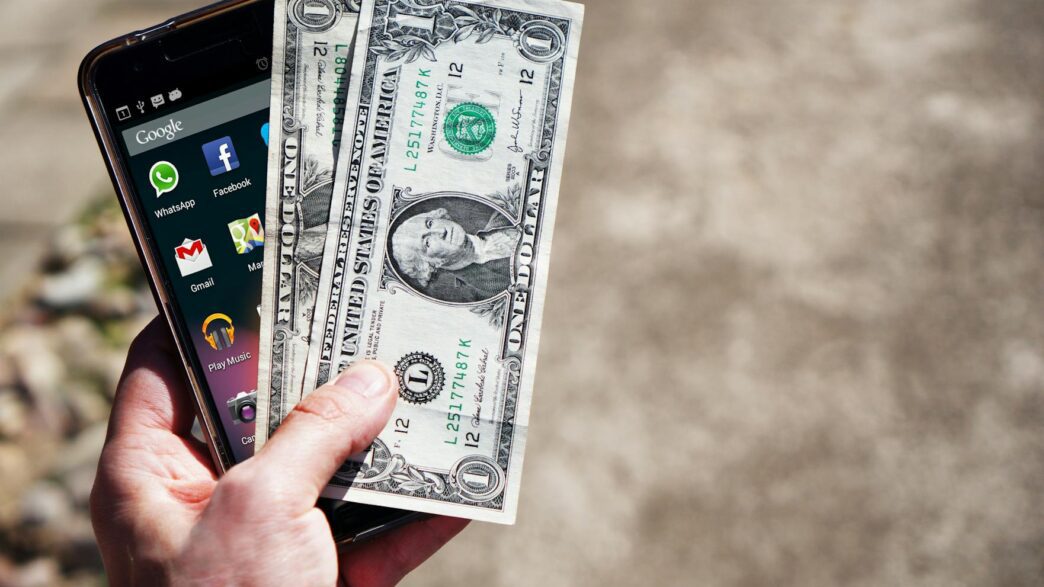
If you are still paying $70, $80, or even $100 a month for a single phone line in 2026, there is a very good chance you are quietly funding someone else’s marketing budget. The major carriers spend billions every year telling you their service is essential, that switching is risky, that their network is the only one that “just works.” Meanwhile, the same towers that carry their signal are also carrying signal for a long list of smaller carriers offering nearly identical service for a fraction of the price.
The math is not subtle. The average household pays roughly $144 a month for wireless service, according to data tracked by Consumer Reports and NerdWallet. Plenty of families pay considerably more. But plans starting at $10 to $25 a month exist on the very same networks, and the savings add up faster than almost any other budget cut you can make. A switch from a $70 plan to a $25 plan saves $540 in a single year. For a family of four moving off an unlimited plan, savings can easily push past $2,000 annually. That is real money that could be sitting in a high-yield savings account earning over 4% instead of vanishing into your carrier’s revenue line.
Why the Big Three Charge So Much More
AT&T, Verizon, and T-Mobile collectively dominate the U.S. wireless market, and their plans typically start at $65 to $75 per line for unlimited service before taxes, fees, and the inevitable “regulatory recovery” charges that mysteriously appear on your bill. A top-tier unlimited plan for four lines from any of the big three runs around $200 a month, sometimes more once you factor in financed phone payments and add-ons.
You are not paying that much because the service is dramatically better. You are paying that much because the big three operate retail stores, run national advertising campaigns, and absorb the cost of phones they offer at “free with new line” pricing. Someone has to pay for all of that, and that someone is you. The dirty secret of the wireless industry is that the carriers themselves know this, which is why each of the big three quietly owns or operates its own discount brand. T-Mobile owns Metro by T-Mobile and partially owns Mint Mobile. AT&T runs Cricket Wireless. Verizon runs Visible and Total by Verizon. Same towers, same coverage, much smaller bill.
How Smaller Carriers Pull This Off
The technical term you want to know is MVNO, short for Mobile Virtual Network Operator. MVNOs lease wholesale access to the major networks and then resell that capacity to customers at a markup smaller than the one the big three charge themselves. Carriers like Visible, Mint Mobile, US Mobile, Tello, Boost Mobile, Cricket, and many others all run on one of the three national networks. When you switch from Verizon to Visible, you are not actually changing networks. You are just buying network access from a different reseller who chose to compete on price rather than on retail-store density.
Coverage is, in nearly all cases, identical. A 5G connection in your neighborhood does not know whether you are paying Verizon directly or paying Visible to use Verizon’s airwaves. The most common downsides are softer ones: customer service typically happens through chat or email rather than in-store, deprioritization during network congestion can occasionally slow your speeds in extremely crowded areas, and international roaming or perks like streaming subscriptions are often more limited.
What You Will Actually Pay in 2026
For a single line of unlimited talk, text, and data, the most aggressive prepaid and MVNO pricing in 2026 lands roughly here. Visible offers a $25 monthly plan with taxes and fees included, no contract, no autopay requirement. Mint Mobile pricing starts around $15 per month when you prepay for a year. US Mobile’s Unlimited Starter sits around $22.50 with autopay. Tello and Total Wireless run flexible plans that let you dial back data and pay even less if you spend most of your day on Wi-Fi.
If you barely use cellular data — and a lot of people do not, since their phone connects to Wi-Fi at home and at work — you can drop into the $10 to $15 range pretty easily. NerdWallet’s roundup of cheap cell phone plans tracks plans at $10 a month or less from carriers like Tello and US Mobile that come with a few gigs of data, plenty for casual users.
The math gets even better with multiple lines. A family of four currently paying $200 to $240 a month for big-three unlimited service can land at $60 to $100 a month on the right MVNO setup. Over five years, that is a difference of around $9,000.
The Switching Process Is Not What It Used To Be
A decade ago, switching carriers meant unlocking your phone, hoping it was compatible, and praying your number ported correctly. In 2026, the process is genuinely painless. Most modern phones support eSIM, which means you can activate a new carrier in minutes by scanning a QR code or downloading the carrier’s app. There is no waiting for a SIM card in the mail, no trip to a store, no service interruption.
Your number is portable by federal law. The FCC requires carriers to release your number when you want to leave, and the receiving carrier handles the port for you. The transfer typically takes between a few minutes and a few hours. The Consumer Financial Protection Bureau and other consumer groups have steadily pushed for friction-free switching, and the result is a wireless market where the actual mechanical barrier to leaving your current carrier is almost zero.
What still trips people up is the financial side. If you financed a phone through your current carrier and still owe a balance, you typically have to pay that off before or during the switch. Some receiving carriers offer “switching bonuses” that reimburse part or all of an outstanding device balance, but those promotions vary and often require you to bring the phone with you. Always check the device balance and any unused promotional credits before pulling the trigger, since Florida Realtors recently flagged that hidden device charges and lost credits remain the most common reason a “cheaper” plan ends up costing more in the first month.
A Simple Audit You Can Run Tonight
Pull up your last full bill. Look at the line items, not just the total. Separate out what you are paying for service from what you are paying for hardware. If your phone is paid off, your entire “device installment” line goes away the moment you leave, which can quietly knock $30 or more off your monthly cost regardless of which new carrier you pick.
Next, look at how much data you actually used last month. Most carriers show this in their app or on the bill itself. If you used five gigs and you are paying for unlimited, you are paying for a buffer you do not need. A $20 plan with 10 gigs of data is probably plenty.
Finally, run your zip code through the coverage maps for the three national networks. Visible and Total run on Verizon. Cricket runs on AT&T. Mint and Metro run on T-Mobile. US Mobile lets you choose. Pick the network with the strongest coverage where you actually live and work, then choose the MVNO that resells that network for the lowest price.
Where the Saved Money Should Actually Go
The mistake people make after cutting a recurring expense is letting the savings dissolve into general spending. Cut $50 from your phone bill, then do nothing, and a year from now you will not be able to point to where any of it ended up. The fix is automation. Set up a recurring transfer from your checking account to a high-yield savings account for the exact dollar amount you stopped paying your carrier. If you went from $70 to $25, transfer $45 on the same day every month. The money never sits in checking long enough to be tempting, and a year later you have $540 plus interest sitting in a savings account doing actual work for you.
Top high-yield savings accounts in May 2026 are paying as much as 4.10% to 5.00% APY, according to recent rate trackers from Fortune and others, versus the FDIC’s national average of 0.38%. The savings from a phone-bill audit, redirected into a competitive savings account, will actually earn meaningful interest rather than slowly losing value to inflation in a checking account.
The One-Hour Project
The honest pitch for switching carriers in 2026 is this: it is a one-hour project that pays you back every single month for as long as you have a phone. Most people overestimate how painful it will be and dramatically underestimate how much money they will save. The technology has caught up. The competition has caught up. The only thing missing is the willingness to log into a new carrier’s app, scan a QR code, and let your old carrier go.
The phone bill is one of the largest recurring “set it and forget it” expenses in the average household budget, and the gap between what you are probably paying and what you could be paying is wider than almost any other line item. Run the audit. Make the switch. Send the difference to savings.