








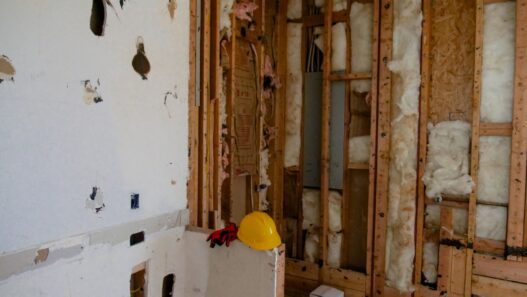
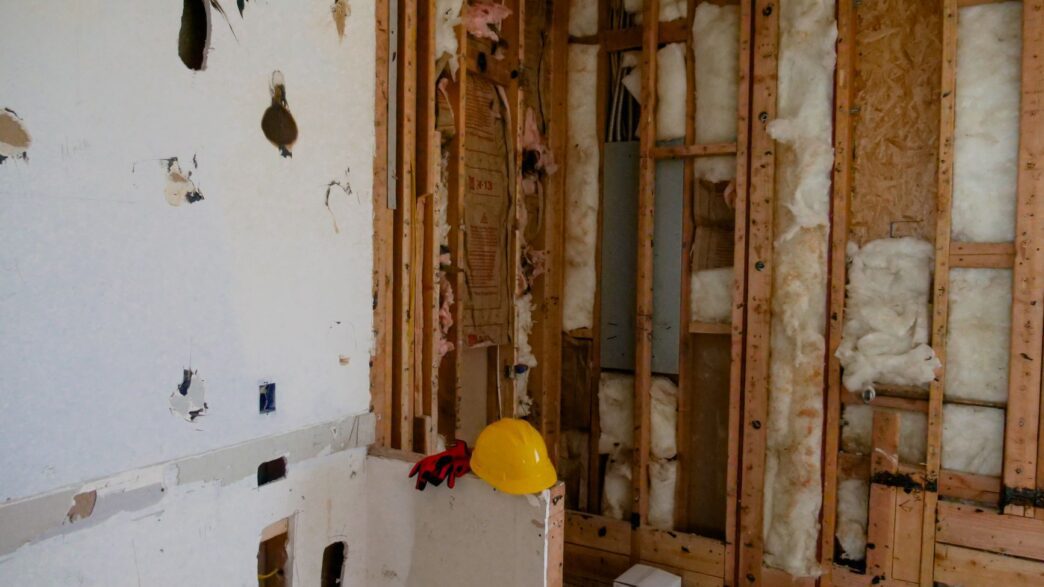
The median owner-occupied home in America was built 42 years ago, up from 31 years in 2005, and roughly 60% of them went up before 1980, according to National Association of Home Builders analysis of Census Bureau survey data published in March 2026.
That number is the whole story of ordinance or law coverage. A house built in 1983 was built to 1983 code. If a fire takes out half of it, you do not get to rebuild half a 1983 house. You rebuild to whatever the code says today, and your homeowners policy specifically excludes the extra cost of doing that.
What gets added back is a sublimit, commonly 10% of your dwelling coverage. Every article on this subject tells you that 10% is not enough. Almost none explains the part that actually makes it inadequate, which is that the same 10% has to cover three separate things.
Ordinance or law coverage is three benefits sharing one limit
It is not one benefit. It is three, and they all draw on the same sublimit.
The first pays for the lost value of the undamaged portion of your building when code requires you to tear it down anyway. Half your house burns, the inspector says the remaining half cannot stand as-is, and that surviving structure becomes a loss you need covered.
The second pays to demolish and clear that undamaged portion. Demolition and debris removal on a partially standing structure is its own line item, and it is not cheap.
The third is the one everybody thinks the coverage is for: the increased cost of construction to bring the rebuild up to current code.
So the sequence goes like this. You lose the undamaged half, you pay to knock it down and haul it away, and only then do you start spending on the code upgrades. Three demands, one sublimit, and the code upgrades are last in line.
What triggers it, and what does not
Two conditions have to be true, and people routinely misunderstand both.
A covered peril has to cause the damage. Ordinance or law coverage does not pay to fix code violations that already existed, and it does not pay because your house is simply old. If your panel is undersized today, that is a renovation you fund yourself.
And the code that matters is the code in force at the time of the loss, not the code when the house was built and not the code when you eventually finish rebuilding.
The base policy language is blunt about the exclusion. The standard ISO homeowners form excludes loss caused directly or indirectly by any ordinance or law requiring or regulating the construction, demolition, remodeling, renovation or repair of property, including removal of debris. The limited coverage is then written back in on top of that exclusion, which is why it behaves like a sublimit rather than part of your dwelling limit.
FEMA’s 50% rule is what makes this expensive
Here is the mechanism that converts a moderate loss into a full-code rebuild.
Under FEMA’s substantial damage standard, once the cost to repair a structure reaches 50% of its pre-damage market value, the local floodplain or building official classifies it as substantially damaged. At that point the repair is treated as new construction and must comply fully with current code, which in a flood zone can mean elevating the entire structure.
Fifty percent is not a total loss. It is a bad Tuesday. And the moment you cross it, you are no longer repairing a house, you are building one to 2026 standards.
This is not theoretical. After Hurricane Ian, the town of Fort Myers Beach issued substantial damage determination letters to affected homeowners under exactly this rule, and its building services FAQ walks through the process. Thousands of people discovered the 50% threshold from a letter rather than from their policy.
A related federal benefit exists and gets confused with this one. The National Flood Insurance Program’s Increased Cost of Compliance coverage pays up to $30,000 to bring a substantially damaged building into compliance. That is a flat cap on a flood policy, not a percentage of your homeowners dwelling limit, and it is a separate claim from ordinance or law coverage. Having one does not mean you have the other.
The arithmetic
Take a $300,000 dwelling limit with the standard 10% ordinance or law sublimit. That is $30,000 available.
Now run a fire that damages enough of the house to trip the substantial damage threshold. Before you touch a single code upgrade, you have the demolition and debris removal for the surviving structure plus the lost value of that structure. Call that a meaningful chunk of the $30,000, because on a partially standing house it is.
Then the upgrades start. A modern rebuild on a 1983 house typically means a larger electrical service, egress windows in any below-grade bedroom, current insulation and energy code compliance, updated plumbing, and in coastal jurisdictions roof-to-wall connectors and impact-rated openings. If the house predates 1980, asbestos and lead abatement can appear as well, and abatement is priced by the square foot of affected material rather than by the room.
I am deliberately not going to hand you precise figures for each of those, because the contractor cost guides that publish them are not authoritative research and this article is not going to pretend they are. What I can tell you is the shape: an electrical service upgrade and a couple of egress windows can each run into the thousands, abatement can run further, and structural retrofits in a wind zone are the most expensive item on the list. Stack three or four of them on a house and $30,000 is a down payment.
Some states already decided 10% is wrong
Florida is the useful counterexample. State law requires insurers to include ordinance or law coverage at 25% of the dwelling limit by default and to offer 50%.
Read that against the national convention of 10% and you have a legislature that looked at the same arithmetic and concluded the standard sublimit was inadequate by a factor of two and a half. On the same $300,000 dwelling limit, Florida’s default gives you $75,000 and its offered option gives you $150,000.
If you live somewhere without that mandate, the 25% and 50% tiers usually exist as endorsements. They are just optional, and nobody calls to suggest them.
What to do this week
Find your declarations page and look for a line reading ordinance or law, building ordinance, or code upgrade coverage, followed by a percentage. If it says 10%, multiply your Coverage A limit by 0.10 and write the number down. That is the total available for all three parts combined.
Then ask your agent two questions: what 25% and 50% cost as an annual premium, and whether your jurisdiction has adopted a building code edition more recent than the year your house was built. The second question tells you how large the gap between your house and current code actually is, and an agent who cannot answer it can usually find out from the local building department in one call.
And if you are in a flood zone, confirm separately whether you have NFIP Increased Cost of Compliance coverage, because the 50% rule is where these two benefits collide and you want both.
Ordinance or law coverage is the rare endorsement where the standard amount was set by convention rather than by arithmetic, and where at least one state has formally disagreed with the convention. Our guide to whether your roof is still insured at replacement cost covers the other endorsement that quietly shrinks a rebuild, and percentage hurricane deductibles explains what comes off the top before any of this applies.