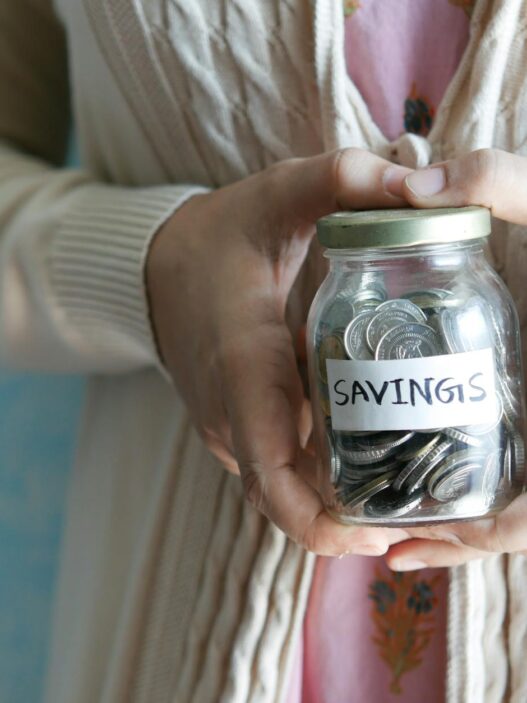









If your bank statement has been giving you the side-eye lately, you are not alone. The personal savings rate slid to just 4.5% in January 2026, less than half of what financial planners typically recommend, and Bankrate’s 2026 Emergency Savings Report found that 59% of Americans could not cover a $1,000 surprise expense without going into debt. Inflation has done a number on most household budgets, with consumer prices sitting roughly 26% higher than at the end of 2019. When the math feels that tight, a lot of people start looking for a hard reset. Enter the no-spend challenge, the simple, slightly painful, surprisingly effective way to break a spending streak and rebuild your savings habit from the ground up.
The basic idea is exactly what it sounds like. For a defined window of time, usually 30 days, you stop spending money on anything that is not a true necessity. Rent, utilities, gas, insurance, groceries, and prescription medication still get paid. Takeout, new clothes, the impulse Target run, that subscription you keep forgetting to cancel, the third coffee of the day, all of that gets shut off. Done well, a no-spend month is not really a deprivation exercise. It is a magnifying glass that shows you exactly where your money has been going and what you are willing to give up to get it back.
Why a Hard Reset Works When Soft Budgeting Does Not
Most budgets fail because they ask you to make 200 small decisions a month. Should I get the latte? Is this shirt too much? Do we really need the streaming bundle? Every one of those decisions burns a little willpower, and by the time the weekend hits, your prefrontal cortex is toast and your wallet is open. A no-spend challenge replaces all of those decisions with one rule: not this month. That is genuinely easier to follow, and it short-circuits the autopilot habits that drain your account between paydays without you noticing.
There is also a behavioral nudge at work. When you put a temporary ceiling on spending, you start to see the difference between things you actually love and things you buy out of boredom. Experian’s roundup of savings challenges for 2026 calls this the awareness benefit, and it is often the most lasting payoff. Plenty of people walk out of a no-spend month with $400 to $800 saved, but the bigger win is realizing they were spending $90 a month on apps they never opened.
Setting Up Rules That Won’t Trip You Up
The most common mistake is going too strict. People announce on day one that they will not spend a dime outside their fixed bills, then crash by day four when their kid needs a school field trip permission slip and ten bucks. A challenge that ends on day four is worse than no challenge at all because it convinces you that you cannot stick to anything. Save yourself the shame spiral by writing your rules down before you start.
The cleanest way is to split your spending into three lists. The “always allowed” list covers bills, mortgage or rent, groceries within a set weekly cap, gas, prescriptions, and anything else that genuinely cannot wait 30 days. The “absolutely not” list is where the real work happens. That is takeout, restaurants, coffee shops, clothing, beauty purchases, home decor, hobby gear, books, gadgets, and any digital impulse buy. The third list is the gray area where you preplan exceptions. A child’s birthday gift, an oil change that is overdue, a copay for a medical appointment. If you decide on those before the month starts, you are following your plan instead of bending the rules in the moment.
It also helps to set a destination for the money you would have spent. A no-spend month with no end goal feels abstract and easy to abandon. A no-spend month aimed at funding a starter emergency fund, paying down a high-interest credit card, or seeding next year’s vacation gives you something to root for. NerdWallet’s emergency fund guide is a good place to look if you are not sure how to size your savings target. Even setting up a separate high-yield savings sub-account labeled with the goal can be enough to keep you going on day 21 when the office cookie delivery is sliding past your desk.
The Boring Stuff That Quietly Saves the Most Money
Once your spending freeze starts, the real budget killers reveal themselves quickly. Subscriptions are usually the first surprise. The average household pays for between eight and twelve recurring digital services, and a no-spend audit is the perfect time to cancel anything you have not actively used in the last two weeks. Streaming, meal kits, fitness apps, and box-of-the-month clubs all fall into this trap, and most can be canceled in under a minute online.
The second surprise tends to be food spending outside the grocery store. Coffee shops, lunches out, food delivery, and convenience store snacks add up far faster than people realize. The Bureau of Labor Statistics tracks “food away from home” separately, and that line has been one of the fastest-rising categories in the consumer price index since 2021. Cooking from your pantry for a month, even imperfectly, often shaves $200 to $500 from monthly outflows by itself.
The third is the tap-to-pay creep. When your card lives in your phone, small purchases feel weightless. A no-spend month forces you to take it out of your default payment app and notice each charge. Many people leave their challenge with a permanent change to how they keep their card stored, choosing friction on purpose so they have to think before they buy.
Handling the Social Side Without Becoming a Hermit
The hardest part of any no-spend challenge is not the lattes. It is the friend who texts about brunch. People drop out of these challenges when they feel isolated or boring, so plan ahead for the social calendar. Suggest free or near-free alternatives like a hike, a potluck, a coffee at someone’s apartment, or a movie night at home. Be honest with friends and family that you are running a no-spend month. Most people respect it, and a few will probably want to join you.
If you have a partner, do not try to run a no-spend month alone if you share finances. The challenge falls apart quickly when one person is buying takeout while the other is brewing instant coffee. Aligning on the rules together, and ideally on the savings goal, turns the month into a project you tackle as a team rather than a diet only one of you is on.
What Comes After Day 30
A successful no-spend month is not the finish line. It is the test run that tells you which categories you can permanently dial back without missing them. The most useful thing you can do on day 31 is run the numbers. Pull your transactions from the previous 30 days, compare them to a typical month, and see where the savings actually came from. The categories where you barely felt the cut are the ones you can lock in for the rest of the year. The categories where the freeze was painful tell you what genuinely matters to you, and those should stay in your normal budget.
Many people use the momentum from the challenge to set up an automated transfer that mirrors what they saved. If a no-spend month freed up $600, pushing $150 a week into a high-yield savings account from there on out turns a one-time win into a year-round habit. With top online savings accounts still paying around 4% to 5% APY in mid-2026, that automation can mean a meaningful cushion by next spring without requiring another month of restriction.
A no-spend challenge will not solve every money problem, and it is not a substitute for fixing structural issues like underearning, runaway debt, or housing that eats too much of your paycheck. What it will do is give you a clean look at your habits, a quick injection of savings, and a much better sense of where your dollars want to go. In a year where over half of Americans say they are saving less than they want to, that kind of clarity is worth a lot more than a single perfect spreadsheet.