




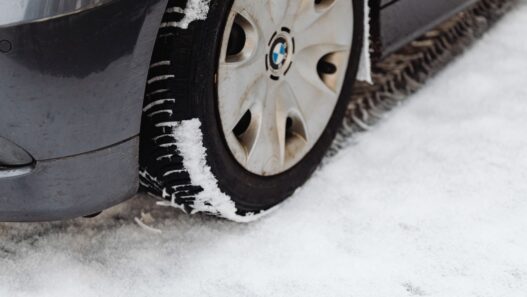



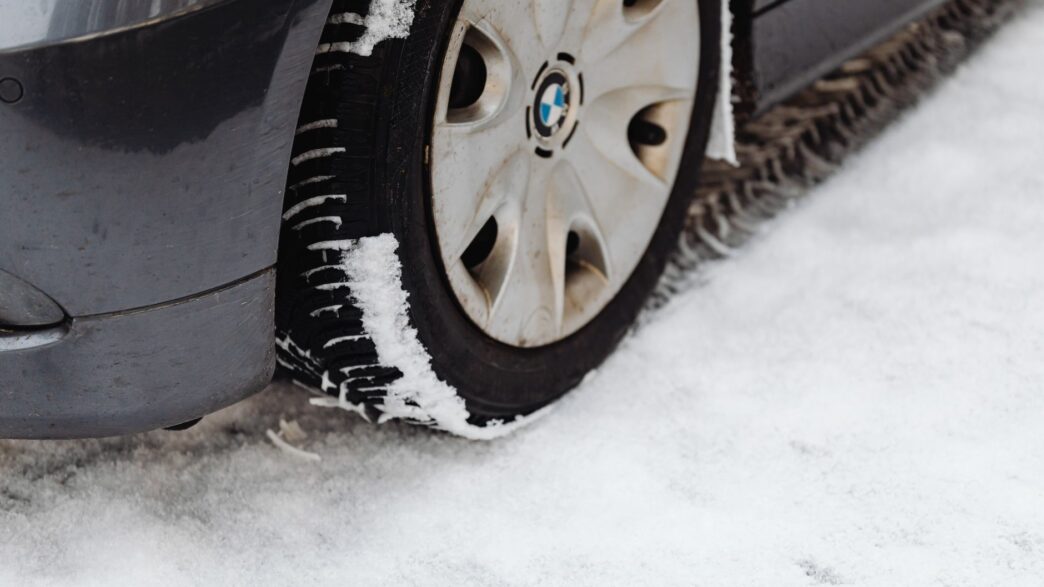
A set of four Michelin X-Ice Snow tires in 225/65R16, a common size for compact SUVs, was listing for $197.11 each at TireAgent on October 24, 2026. That’s $788.44 before you’ve bolted anything on, and it’s the number that makes most people close the browser tab. So, are winter tires worth it? My answer is yes for most drivers in snow country, because the sticker price is the wrong number. Spread over the life of the tires, a typical driver pays something closer to $49 a year extra. The people who find winter tires expensive are usually paying for storage and remounting they didn’t need to buy.
Winter tires are worth it once it drops below 45 degrees, not at the first snowfall
The safety argument is real, and you don’t need a blizzard to collect on it. Kelley Blue Book’s tire guidance says all-season and summer rubber starts to stiffen around 45°F, which is why the usual advice is to swap once temperatures stay below that, snow or no snow. In much of the northern U.S., that line gets crossed in late October or early November. This week, in other words.
The traction gap is measurable. The Tire and Rubber Association of Canada’s 2025 Winter Tire Report cites testing showing stopping distances up to 30% shorter on winter tires than on all-seasons near freezing, and better grip from winter tires on ice at minus 30°C than from all-seasons at plus 4°C. Canadians have noticed: 80% of drivers there used winter tires in 2025, per a Probe Research survey of 1,069 drivers that TRAC commissioned.
On U.S. roads the numbers are just as blunt. The Federal Highway Administration’s road weather data, which averages NHTSA crash records from 2019 to 2023, puts about 219,942 crashes a year during freezing precipitation (snow, sleet, freezing rain), with roughly 34,206 injuries and 407 deaths. You only need to avoid one fender bender to cover a set of tires. Your deductible alone is probably $500 or $1,000, and if you’ve been weighing whether to raise that deductible, better winter grip makes the higher one easier to live with.
Winter tire cost looks like double, but you aren’t buying twice the tread
Most articles on this topic, from KBB to insurers’ blogs, say a second set “extends the life” of your regular tires and then stop there. Nobody shows the arithmetic, and the arithmetic is the whole argument.
You drive the same miles whether you own one set of tires or two. A second set doesn’t double your wear; it splits it, so each set lasts longer. What you’re paying for is a bigger stack of tread bought up front.
Take a driver who puts 12,000 miles a year on a compact SUV and runs winter tires from November through March. Those five months come to roughly 5,000 miles on the winter set and 7,000 on the all-seasons. Now price both sets in the same size. A Michelin Defender2 all-season in 225/65R16 was $199.99 at Tire Rack on October 24, 2026, so $799.96 for four, with an 80,000-mile treadwear warranty. The X-Ice Snow set is $788.44 with a 40,000-mile warranty.
Run it over 10 years. With all-seasons only, you drive 120,000 miles on tires rated for 80,000, so you burn through 1.5 sets’ worth of tread: 1.5 times $799.96 is $1,199.94. With the two-set setup, the all-seasons cover 70,000 miles, which is 0.875 of a set, or $699.97 of tread. The winters cover 50,000 miles, which is 1.25 sets at $788.44, or $985.55. Add those up and you get $1,685.52.
The gap is $1,685.52 minus $1,199.94, or $485.58 over a decade. That’s $48.56 a year for tires that stop a car in noticeably shorter distances on cold pavement.
The 10-year clock breaks the math for low-mileage drivers
There’s a catch the tread math hides. Tires age out even when they still have tread left. NHTSA notes that some vehicle and tire makers recommend replacing tires that are six to 10 years old, whatever the treadwear, and Michelin’s own winter tire guidance gives a maximum service life of 10 years from the date of manufacture.
That clock matters for low-mileage drivers. If you only put 6,000 miles a year on your car, splitting those miles between two sets means neither set ever wears out. Both just get old. In that case you really are buying two sets that will both expire on the calendar, and the $49-a-year math falls apart. For someone who drives that little, a good all-weather tire with the three-peak mountain snowflake symbol may be the smarter buy than two dedicated sets.
The quick test: divide your annual miles by 10,000. If the answer is above 1, tread will probably retire your tires before age does, and winter tires come close to paying for themselves. If it’s well under 1, look hard at the calendar before you buy.
To check how old a tire already is, look for the DOT code on the sidewall. NHTSA explains that the last four digits show the week and year it was made. “2224” means the 22nd week of 2024. Check it on any set you buy, new ones included, since the 10-year clock starts at the factory and not in your driveway.
Winter tire storage and remounting are where the money leaks out
The tread math only holds if the extras don’t eat it. They easily can.
Storage is the big one. Les Schwab charges $124.95 per season to store one set of passenger tires or wheels for up to six months. That’s insured storage and a real convenience if you live in an apartment. But do the math against the $48.56 a year we just calculated: paid storage more than triples the true annual cost of the setup. Over 10 years, paying for storage every season works out to $1,249.50, more than the entire winter tire set. If you have a garage, a basement corner, or a dry spot in a storage unit you already rent, store them yourself. Michelin’s advice is simply cool, dry, and out of sunlight.
Remounting is the second leak. If your winter tires aren’t on their own wheels, every spring and fall swap means a shop has to dismount, mount, and balance tires on your one set of rims. That’s labor billed twice a year, and Kelley Blue Book points out that repeated mounting strains the tires too. Put the winter tires on a dedicated set of wheels and the swap is just a wheel change. Les Schwab says outright that seasonal changeovers are free when its tires are mounted on their own wheels. Tire Rack notes that steel wheels cost less than alloys, which makes them the usual pick for a winter set. Road salt is rough on nice alloys anyway, which is also why I’d budget for a few winter washes (we ran the math on car wash memberships separately).
Twenty minutes this week locks in the cheap version
First, check your current tires: tread depth, and the four-digit DOT date on the sidewall. If your all-seasons are close to needing replacement anyway, this is the cheapest moment to add a winter set, because you were about to spend that money regardless.
Second, price both sets in your exact size on one tire-comparison page. That gives you your own version of the 10-year math above. Expect the two prices to be close; in the 225/65R16 example they were within $12 of each other.
Third, before you click buy, call the shop you’ll use and ask two questions: do you charge for seasonal changeovers on tires mounted to their own wheels, and what does storage cost? A free-swap shop plus home storage keeps your annual cost near that $49 figure. Paid storage, paid remounting, and a 5,000-mile-a-year driving habit can push it past $300 without you noticing.
If you live where winter means ice, winter tires are worth it, as long as you pay for the rubber and skip the add-ons.