







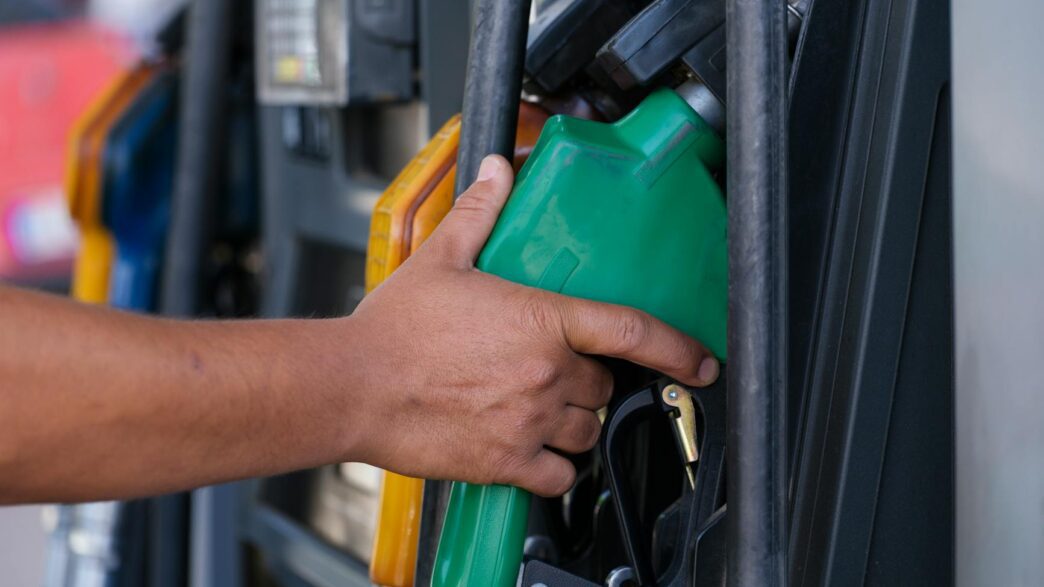
If you filled up over Memorial Day weekend and felt your stomach drop, you weren’t imagining it. AAA reported that the national average for regular hit $4.56 per gallon heading into the holiday — the highest Memorial Day pump price in four years and roughly $1.38 above where we sat at this time last year, according to AAA’s fuel price tracker. With summer demand still ramping up and refinery margins where they are, analysts aren’t betting on a quick reprieve. Fox Business reported the national average could push toward the $5.70s by mid-summer if supply pressure continues, citing forecasts from energy market analysts.
That’s the bad news. The good news is that the gap between what the cheapest station near you charges and what the average station charges is now wide enough that a few minutes of phone-tapping per fill-up actually moves the needle on your monthly budget. I’m not talking about the breathless “save $1,000 a year on gas!” headlines you see on YouTube. I’m talking about a realistic, layered approach that pulls a few cents off each gallon from multiple directions at once — what some bloggers are calling a “four-layer stack.” Done right, the typical commuter can save somewhere between $250 and $600 a year. That’s a real number. That’s your car insurance deductible.
Here’s how the stack works, what each layer actually delivers, and which combinations are worth your time.
Layer One: Find the Cheapest Station Before You Drive to It
The single biggest source of gas savings isn’t an app or a card. It’s not driving past a $4.39 station to fill up at a $4.69 station because that’s the one you always use. The price spread between nearby stations in most metro areas runs 20 to 50 cents per gallon. On a 12-gallon fill-up, that’s $2.40 to $6.00 in your pocket for the price of looking at your phone for ten seconds.
GasBuddy remains the easiest way to do this. It crowdsources real-time prices from millions of users and shows the cheapest stations within a radius you set. The app itself is free and the price-finder feature alone is the whole reason most people install it. You don’t need to enroll in anything, link a card, or watch ads. Open the app, sort by price, drive to the winner. NerdWallet’s roundup of gas apps notes that the crowdsourcing model means prices are usually accurate within a few cents and updated multiple times per day in populated areas.
There’s a subtle version of this trick most people miss: check prices along your commute, not just near home. If you drive past three gas stations every morning, one of them is almost certainly cheaper than the one on your block. Filling up on the way to work, not on the detour home, is free money.
Layer Two: Add a Cashback App on Top
This is where Upside enters the picture, and it’s the layer most drivers haven’t activated yet. Unlike GasBuddy, Upside doesn’t show you the cheapest pump price — it shows you participating stations near you and tags each one with a per-gallon cashback offer, usually somewhere between five and 25 cents. You claim the offer in the app before you pump, upload your receipt (or link a card so it happens automatically), and the cashback hits your in-app balance within a few hours. You can cash out to PayPal, Venmo, your bank, or a gift card.
The trick is that Upside’s offers aren’t tied to the cheapest stations. A station can have a high posted price and a fat cashback offer, or a low posted price and almost no offer. So the play is to use GasBuddy to surface the lowest pump price in your area, then check Upside to see if that station — or a station within a few cents of it — is running a cashback promo. Stack the discount with the price advantage and you keep more cash.
NerdWallet’s analysis and reviews on Rideshare Guy both peg Upside’s average annual savings for active users at roughly $250. That number squares with my own experience: in a typical month of suburban driving, I see between $15 and $25 in Upside cashback land in my account. It’s not life-changing, but it’s also not nothing — especially since the marginal effort is about ten seconds per visit.
Layer Three: Pay With the Right Card
The third layer is the payment method itself. Gas is one of the few spending categories where credit cards still pay genuinely strong rewards. Several no-annual-fee cards offer 3% or higher cashback on fuel, and a handful of rotating-category cards (Chase Freedom Flex, Discover It) put gas in their 5% bonus quarter at least once a year. Bankrate’s guide to gas rewards cards is a useful starting point if you want to see the current crop.
For drivers who don’t want a new credit card, the Pay with GasBuddy debit card is worth a look. The free tier shaves three cents off every gallon at virtually any U.S. station, automatically debiting your checking account. There’s a paid tier at $9.99 per month that bumps the discount to 20 cents off the first 50 gallons each month, but unless you’re driving a thirsty vehicle a lot of miles, the math on the paid tier rarely beats the free tier plus an Upside offer.
The Consumer Financial Protection Bureau has a primer on prepaid and debit cards worth skimming before you link any payment method, just so you know what protections do and don’t travel with the card.
Layer Four: Stack a Grocery Loyalty Program
The final layer is the one people forget entirely. If you grocery shop at Kroger, Safeway, Albertsons, Stop & Shop, or any of the dozens of regional chains that run a fuel rewards program, you’re probably already earning points toward gas discounts at affiliated stations — you just have to actually use them before they expire. Kroger Fuel Points and Safeway’s program (operated through Shell stations in much of the country) typically let you knock 10 cents off per gallon for every $100 you spend on groceries, with monthly stacking caps that can push the discount well above a dollar a gallon if you bought a lot of gift cards during a 4x promotion.
Costco and Sam’s Club operate a different model: members-only gas pumps with prices typically 10 to 30 cents below the local average. The catch is membership fees ($65 to $130 a year depending on tier) and notorious lines during peak hours. If you fill up two to three times a month and Costco gas is genuinely cheaper than your area average — check on GasBuddy first — the membership pays for itself on fuel alone before you’ve bought a single rotisserie chicken.
What This Looks Like in Practice
A driver who fills up 12 gallons twice a week — pretty average for a U.S. commuter — pumps about 1,250 gallons a year. If the four-layer stack pulls 20 cents per gallon out of that (3 cents from a price-finder, 10 cents average from an Upside offer, 3 cents from a cashback card, 4 cents from a grocery rewards program), that’s $250 a year. If you live in a market with bigger price spreads, run a Costco card, and hit a few high-offer Upside stations, $500 a year is realistic. Roll those savings into a high-yield savings account and you’ve got a small slug of money working for you at the same time gas prices are working against you.
Two final caveats. First, don’t drive out of your way for a deal — the moment you add five extra miles round-trip to chase cheap gas, you’re burning the savings in fuel and time. The best stations are ones you pass anyway. Second, be honest about how much you actually drive. If you’re putting 4,000 miles a year on a hybrid, the absolute dollars saved by the full stack are smaller, and the marginal effort might not be worth it. The bigger your fuel bill, the bigger the payoff for layering the apps.
The unsexy truth about saving money on gas in 2026 is that no single tool wins it for you. The wins come from stacking small percentages — a few cents from the app, a few cents from the card, a few cents from the loyalty program — into one fill-up at a time. Set it up once and the system runs itself.