







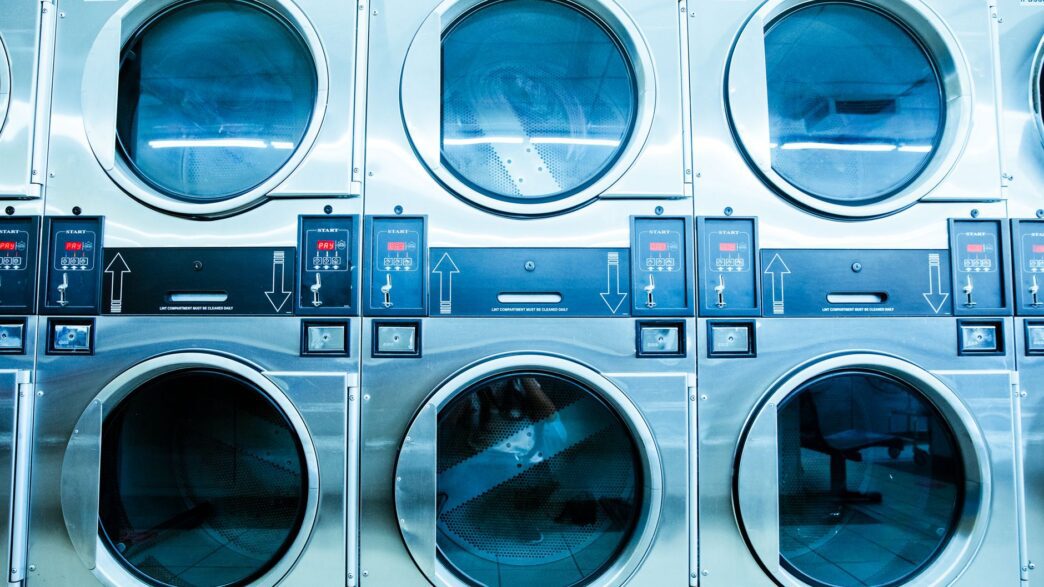
Major appliance prices fell 4.1% in the twelve months through July 2026, according to the Bureau of Labor Statistics. Hold that number in your head while you read the Labor Day sales 2026 circulars, because every one of them is going to tell you appliances are the category to buy. They are not wrong, exactly. They are just measuring the discount against a number that was already sliding on its own.
Labor Day lands on September 7 this year, but the sale window opened in early August, which is the first clue that the countdown clock on the banner ad is decorative. Retailers gave up on the one-weekend model years ago. The price data did not get the memo, though, and it disagrees with the standard Labor Day advice in a couple of places that are worth actual money.
The categories everyone tells you to buy are already getting cheaper
Pull up any Labor Day roundup and you will find the same three recommendations: appliances, mattresses, patio furniture. Skip electronics, they all say, because Black Friday is better.
Now check the federal numbers. In the July 2026 CPI release, major appliances were down 4.1% year over year. Televisions were down 0.8%. Information technology commodities, which covers computers and related hardware, were down 4.8%. Furniture and bedding, the category housing every mattress ad you will see this month, was up 0.5%. Living room, kitchen, and dining room furniture was up 1.1%.
So the two categories with genuine deflation are one you are told to buy and one you are told to skip. The mattress and furniture category, where the percentage-off claims run highest, is the one where prices actually crept up. That inversion is the thing none of the big roundups mention, and it changes what a 40% sign is worth. When the underlying price is falling, a discount is a bonus on top of a trend already working for you. When the underlying price is rising, the discount is doing all the work by itself, and the only question that matters is whether the starting number was honest.
Labor Day sales 2026 reward you for knowing what the price was in June
Here is the arithmetic that made me stop trusting the percentage sign.
Say you are looking at a washer and dryer pair listed at $1,899, marked 35% off for the weekend. That works out to $1,234, a cut of $665, which is a genuinely good outcome. But major appliance prices fell 4.1% over the twelve months through July, so the same pair carried a list price of roughly $1,980 last August. Waiting a full year cost you about $81. The sale is where the $665 lives, and the sale will come around again.
Flip to apparel and the picture reverses. Apparel prices rose 3.9% over that same twelve months. A $600 wardrobe refresh from last August costs about $623 today. A 20% clearance markdown brings that to $498, which finally beats last year’s price by $102. In a category with rising prices, the markdown is the only thing pulling you backward in time. In a category with falling prices, the market is already doing part of the job.
The practical version: for appliances and electronics, you can afford to be patient and picky. For clothing, sporting goods (up 4.3% year over year), and anything else drifting upward, the end-of-season markdown is the whole opportunity.
The “was” price is supposed to be real, and retailers have paid to settle claims it wasn’t
This is the part I wish someone had told me a decade ago. Federal guidance on advertising, the Guides Against Deceptive Pricing at 16 CFR Part 233, says a former price used in a comparison has to be an actual price the item was offered at, openly and in good faith, for a reasonably substantial period. An inflated number invented so a big reduction can be advertised off it is, in the government’s own language, a false bargain.
That is not a theoretical concern. JCPenney, Kohl’s, Macy’s, and Sears have all faced class actions over what plaintiffs called false reference pricing, and the settlements were not small. JCPenney settled for $50 million. Kohl’s settled for roughly $6.15 million. In one complaint, a customer bought gold earrings tagged with a $524.98 original price and found a pricing insert inside the packaging listing the original as $225.
You do not need a lawyer to protect yourself from this. You need a price history. Camelcamelcamel covers Amazon listings for free and shows you what a product actually sold for over the past year. For everything else, search the exact model number rather than the product name, because model numbers are how you find the same unit at three retailers instead of three lookalike units at one. If the “was” price only exists at the store running the sale, it is a reset tag, not a discount.
Clearance is the only part of the weekend that actually expires
Checking the “was” price tells you whether a discount is honest. Floor space tells you whether it is urgent.
Every retailer runs an appliance sale in September, and another in November, and another in January. Those promotions rotate. Floor space does not. Grills, patio sets, above-ground pools, window air conditioners, and summer apparel all have to leave the building before the holiday inventory arrives, and there is no second chance in December.
That is the one genuine deadline in the Labor Day sales 2026 calendar. If you want a grill, this is the month, and the markdowns will get deeper through late September as the racks thin out. If you want a refrigerator, there is no deadline at all, and the price data says the list price will probably be lower in six months than it is today.
The same logic applies to anything you buy a year ahead. Buying next summer’s patio cushions in September at 60% off is not impulse spending if you were going to need them anyway. It is the same move as our holiday sinking fund, just running in reverse: you are paying now for a cost you already know is coming.
The routine that turns a sale into a decision
Give yourself ten minutes per item, which is less than you were going to spend scrolling the sale page anyway.
Look up what the product sold for in June, using a price tracker or a cached listing. Search the model number across at least two other retailers to see whether the “original” price exists anywhere else. Then ask whether the category is one where prices are falling, in which case waiting costs you almost nothing, or one where prices are rising, in which case the clearance rack is the whole game.
That is the difference between a sale and a decision. Most of what runs in the Labor Day sales 2026 window will still be available in October at a similar price, so the appliance can wait and the grill cannot. If you are stocking up on fall basics at the same time, our guide to back-to-school shopping covers the categories where September timing genuinely pays.