






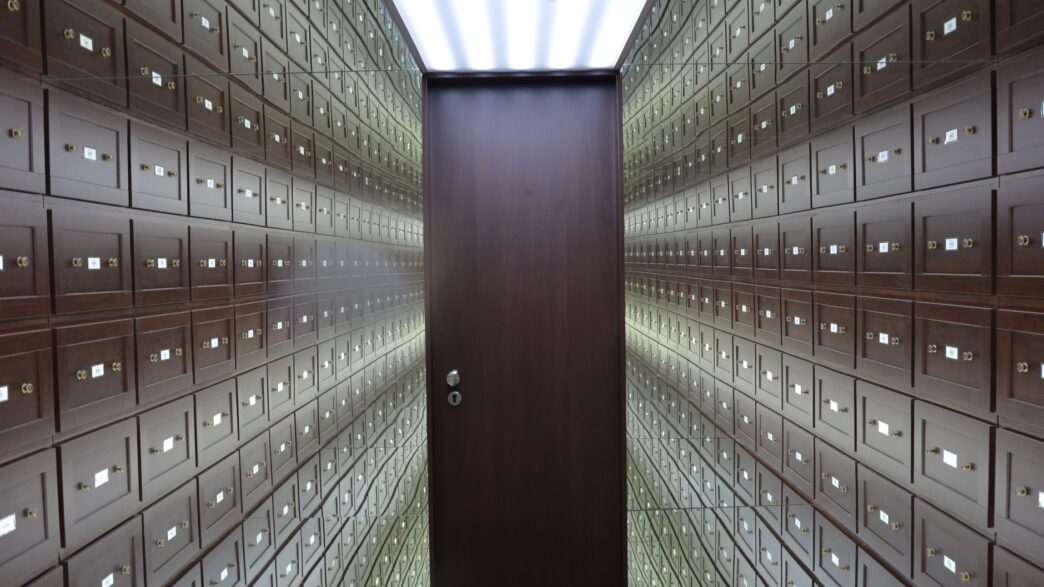
Most people who rent a safe deposit box couldn’t tell you what’s in it without going to look. That’s a little funny, because they can usually tell you what it costs. The bill shows up once a year, it gets paid, and the box keeps sitting in a vault somewhere downtown holding a birth certificate, an old savings bond, and maybe a ring nobody wears.
If that sounds like your box, this is a good year to open it up and run the numbers. Banks are getting out of the safe deposit business, fees vary a lot depending on where you rent, and a good chunk of what people keep in those boxes doesn’t need to be there.
Banks are quietly closing the vault door
JPMorgan Chase stopped renting safe deposit boxes to new customers back in 2021. Then in August 2025, the bank said it would phase out all of its remaining boxes nationwide, with existing renters getting advance notice before they had to clear them out. Chase isn’t alone. The Philadelphia Inquirer reported that Citizens Bank stopped offering new boxes in 2020, Santander stopped selling them around 2023, and PNC won’t put boxes in any of its 100 planned new branches. Capital One, HSBC, and Barclays have reportedly been pulling back too.
The reason is mostly real estate. A safe deposit specialist quoted by the Inquirer described the vault as “the most expensive square footage you can put into a new branch.” Boxes were never a big moneymaker for banks, and fewer people walk into branches than they used to.
So if you got a letter telling you to empty your box, you have company. There are still more than 20 million safe deposit boxes in the U.S., according to an industry estimate cited by AARP. Plenty of people are about to make the same decision you are.
What a safe deposit box actually costs
Prices are all over the place. When the AP reported on Chase’s original pullback, it put typical rent at $45 to $150 a year depending on box size. The Inquirer found a wider spread, from about $25 to a couple hundred dollars a year, including a midsize box at one TD Bank branch for about $200.
Credit unions tend to sit at the cheap end. Summit Credit Union in Wisconsin, for example, lists annual rent of $25 for a 3×5 box, $40 for a 3×10, $50 for a 5×10, and $80 for a 10×10. That’s a fraction of what some big-bank customers pay for the same drawer.
Then there are the fees nobody thinks about until they happen. North Carolina’s State Employees’ Credit Union charges $18 for a lost key, $145 to drill the box open if you lose both keys, and $12 if your rent is more than 60 days late. Other institutions just bill you “our cost” for drilling, which means whatever the locksmith charges. And if you stop paying entirely, the bank can eventually drill the box and turn the contents over to your state’s unclaimed property office, with the unpaid rent and drilling charges still on your tab.
Add it up over a decade and a $139 box (the price one couple told AARP they pay, even with a loyalty discount) costs you $1,390. For a lot of people, that’s more than the stuff inside is worth to anyone but them.
The insurance gap most renters miss
This is the part that surprises people. The FDIC does not insure the contents of a safe deposit box. Your checking and savings balances are covered up to the usual limits. The jewelry, cash, and coins sitting in the vault one floor down are not, and the bank generally isn’t on the hook either unless you can prove it was negligent.
If you want real protection for valuables, it usually comes from your homeowners or renters policy, often through a rider or a scheduled personal property add-on priced on the appraised value of each item. AARP notes some insurers will knock a little off the premium because the items are stored in a vault. Call your agent before you assume you’re covered either way. It’s a five-minute conversation and it tells you what you’re really paying for.
What belongs in a box, and what doesn’t
Some things are a pain to replace and you rarely need on short notice. Original birth certificates, a car title for a vehicle you’ve paid off, property deeds, paper savings bonds, and a few sentimental heirlooms fit that description. Those are reasonable box items.
Other things are a bad fit. The FDIC has long warned against storing anything you might need when the bank is closed, like your passport. Think twice about the original of your will too, since your family may have a hard time getting into the box quickly after you die. Your power of attorney and medical directives should be somewhere your family can reach on a Sunday night. Banks also ban a list of items outright. Bank of America’s rules exclude firearms, liquids, perishables, and cremated remains, among other things.
A lot of what people stash in boxes is paperwork they could scan in an afternoon. Old tax returns, insurance policies, and account statements can live as encrypted files backed up in two places. You still keep the originals somewhere safe, but “somewhere safe” doesn’t have to cost $150 a year.
Cheaper places to keep the important stuff
If your bank is closing its vault or you’re just tired of the bill, you have a few options.
The easiest move is to shop around locally. The Inquirer found credit unions and community banks still renting boxes, and some are adding them while the big banks leave. If you only need a small box for a handful of documents, a credit union’s $25 to $50 tier is hard to beat.
A good home safe is the other common answer. Prices run from a couple hundred dollars to a couple thousand, so a decent fire and water resistant model can pay for itself in two or three years compared with a midsize bank box. Bolt it down, and ask your insurer how valuables kept in a home safe are covered under your policy.
For people with a real collection of jewelry, gold, or coins, private vault companies have opened in some cities to pick up the customers banks are dropping. Compare their prices against a bank box before you sign up. They make the most sense when the value inside justifies the cost.
And for paper, the cheapest storage is a scanner and a cloud backup. You’ll still want originals of a few documents, but the pile that has to sit behind steel gets a lot smaller.
A 20-minute checkup worth doing this month
Pull your last box rental statement and find the annual fee. Then go open the box and write down what’s in it. Sort everything into three piles in your head: things you need to keep as originals, things you could keep at home, and things you could scan and shred.
If the first pile fits in an envelope, you probably don’t need a $150 box. A $25 credit union box or a home safe will do the same job. If the box holds expensive jewelry or coins, call your insurance agent and ask what it would cost to schedule those items. That number matters more than the box rent, because right now those items may not be insured at all.
Whatever you decide, put the money you stop paying in rent to work. Moving $100 or $150 a year into a high-yield savings account isn’t going to change your life, but it beats paying a bank to babysit a folder of papers you haven’t looked at since 2019.