





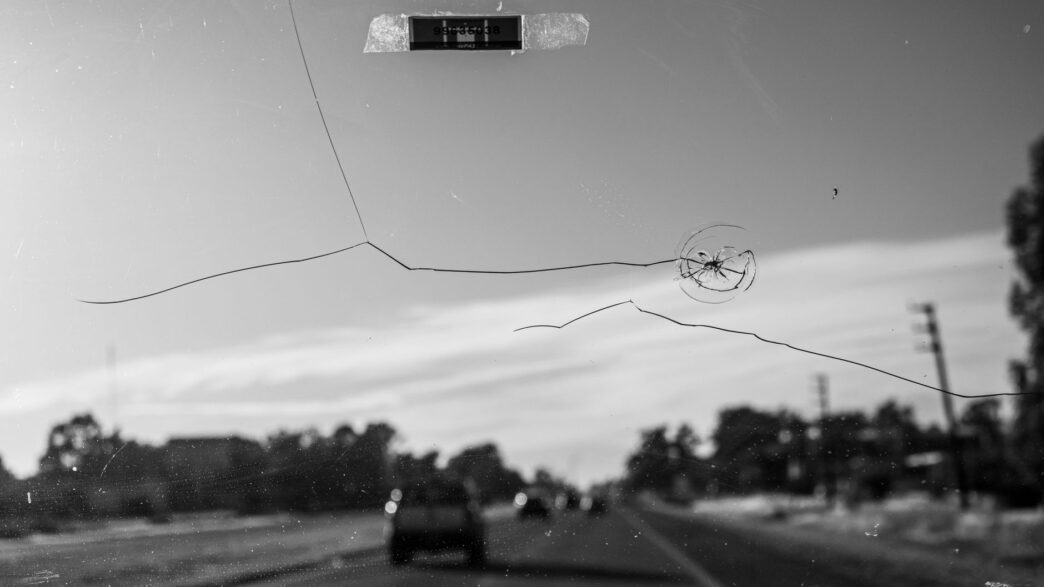
AAA tested windshield replacement on three ordinary vehicles, a Ford F-150, a Nissan Rogue and a Toyota Camry, and itemized the bill. The total came to $1,439.78, and $360 of that, 25.4%, was the advanced driver assistance system components and recalibration.
Standalone front camera calibration alone ran $600 to $800.
That changes the arithmetic on a windshield insurance claim in a way the ranking articles have not caught up with. Safelite, GEICO and Progressive all explain correctly that comprehensive coverage handles glass, that many insurers waive the deductible for a chip repair, and that a single glass claim usually does not move your premium. None of them tells you that the camera behind the glass now accounts for a quarter of the cost, or which states forbid your insurer from charging a deductible at all.
Three states bar a deductible on a windshield insurance claim
This is the part worth knowing before you call, and the statutory basis is checkable.
Florida has barred any deductible on windshield damage under comprehensive coverage since 1979, under state statute 627.7288. If you carry comprehensive in Florida, your windshield is covered from the first dollar.
South Carolina goes broader. Its code section 38-77-280(B) provides that no deductible applies to automobile safety glass under any physical damage policy, which covers door and window glass rather than the windshield alone.
Kentucky is the interesting one, because it updated for the technology. KRS 304.20-060 requires zero deductible for safety equipment including the windshield, door and window glass, and required lights. Effective April 2, 2024, it was amended to extend that zero-deductible mandate explicitly to ADAS calibration services performed as part of a covered glass replacement. A state legislature looked at a $360 calibration line item and decided it belonged inside the mandate.
You will read lists claiming Arizona, Massachusetts and New York also mandate full glass coverage. I could not verify those against statutory text, so treat that wider list as unconfirmed and check your own state’s insurance department rather than an article.
Everywhere else, your ordinary comprehensive deductible applies to glass like any other comprehensive loss, unless you have bought a separate full glass or glass deductible endorsement, which waives the deductible for glass specifically while leaving your comprehensive deductible intact for theft, hail and animal strikes.
Why calibration is a separate line item
Your windshield is no longer just glass. On most vehicles built in the last several years it is the mounting surface for a forward-facing camera that runs lane departure warning, automatic emergency braking, adaptive cruise control and traffic sign recognition. Move the glass and you move the camera, and a camera aimed a fraction of a degree off does not fail obviously, it fails on the highway.
Recalibration comes in two forms and the distinction shows up on your invoice.
Static calibration is done stationary in a shop bay, using manufacturer-specified targets placed at precise measured distances so the camera can re-establish its reference points. It needs dedicated floor space, a level surface, controlled lighting and a target kit specific to the vehicle.
Dynamic calibration is a road test at a specified speed for a specified duration, letting the camera recalibrate against real lane markings.
Some vehicles need both. Subaru’s EyeSight system and several BMW and Mercedes models require dual calibration.
It is billed separately because it is a different job requiring different equipment and manufacturer service information, and many independent glass shops subcontract it to a dealer or a calibration specialist. Which is also why the calibration can be scheduled days after the glass, and why you should confirm it happened.
There is a related reason to care about glass quality. Aftermarket glass can differ enough in optical properties or camera bracket geometry to cause calibration failures, and some manufacturers will not warranty ADAS performance on non-original glass. If your vehicle has these systems, ask what glass the shop is installing before you agree.
The arithmetic on whether to file
Take a realistic modern replacement with calibration at $1,200, using AAA’s real-world case as the anchor rather than a cost-guide estimate.
If you are in Florida, South Carolina or Kentucky with comprehensive coverage, file it. Your deductible is zero by statute and there is nothing to weigh.
If you carry a $500 comprehensive deductible elsewhere, the insurer pays $700 and you pay $500. Worth filing, but not obviously so, because you are trading $700 against whatever a comprehensive claim does to your renewal.
If you carry a $1,000 deductible, the insurer pays $200 and you have filed a claim for almost nothing. That is the case where you pay cash and never mention it.
And if the damage is a chip rather than a crack, ask about repair rather than replacement first. Most insurers waive the deductible entirely for a resin repair because a $100 repair prevents a $1,200 replacement, and a repaired chip does not disturb the camera at all.
On whether a glass claim raises your rates, I want to be straight: the claim that two or more glass claims in three years triggers a 15% premium increase circulates widely and I traced it to a glass shop’s blog rather than to any research body. Do not plan around it. Ask your own insurer whether it treats a comprehensive glass claim as chargeable, because carriers genuinely differ and the honest answer is that it depends on yours.
What to do this week
Look up two numbers before you have a cracked windshield rather than after. Your comprehensive deductible, on your declarations page. And whether your state mandates zero-deductible glass, which your state insurance department website will tell you.
If your deductible is $500 or higher and your state has no mandate, ask what a full glass endorsement costs. On a vehicle with a camera behind the windshield, the endorsement is protecting a four-figure part rather than a piece of glass, which is a different proposition than it was ten years ago.
And when you do get the work done, ask the shop three questions: whether your vehicle requires static, dynamic or dual calibration, whether they perform it in house or subcontract it, and whether they are installing original or aftermarket glass. A windshield insurance claim is now a claim on a sensor housing, and the calibration is the part that determines whether the car drives the way it did before. If you are reviewing the rest of the policy, the deductible math applies to comprehensive as well as collision, and what a total loss settlement should include is worth knowing if the damage goes beyond the glass.