

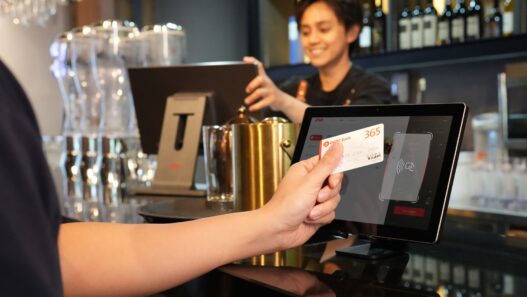




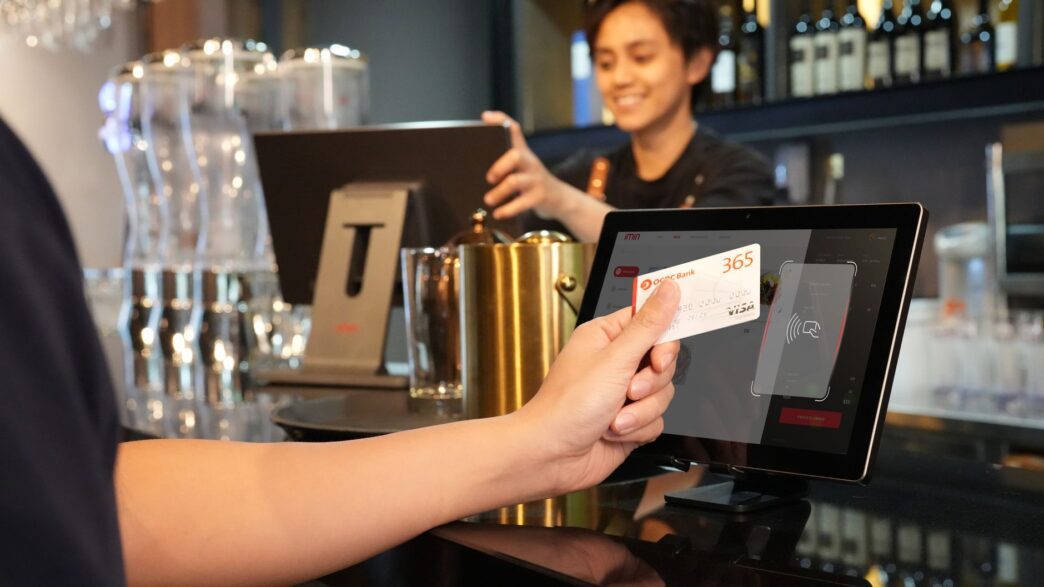
The counter person hands you a muffin. Then the iPad swivels around, and there it is: 20%, 25%, 30%, with the middle option glowing a little brighter than the others. Nobody has served you anything. There is a line behind you. You tap something and walk out mildly annoyed at yourself.
That moment happens to most of us several times a week now, and it adds up in a way that never shows up on a budget worksheet. The average American household spent roughly $3,945 on food away from home in 2024, according to the Bureau of Labor Statistics Consumer Expenditure Survey. If even two thirds of that runs through a machine that asks for a gratuity, the difference between a 25% default and an 18% custom entry is well over $150 a year. That is a decent pair of shoes, or two months of a streaming bundle, decided entirely by which button you tap under mild social pressure.
The Screens Got Greedier and People Noticed
Tip prompts used to start at 15%. Now the low option is frequently 18% or 20%, and the high option can reach 30%. Customers have caught on. A 2026 study from the restaurant platform Popmenu found 78% of consumers think tipping practices have become ridiculous, and 35% say they scaled back their tipping this year. The share of people who feel compelled to leave something when a screen asks fell to 59%, down from 66% in September 2025.
Bankrate has tracked the same souring mood in its annual tipping culture survey, where a large majority of Americans now say tipping has gotten out of hand and a meaningful chunk admit they tip out of social pressure rather than service. Square’s payment data tells the story from the merchant side: average tip percentages across restaurants, cafes, and bars slipped below 15% of the bill.
So the defaults went up and actual tipping went down. What is left is a gap that most of us fill by guessing, and guessing under pressure tends to be expensive.
Percentages Quietly Got Bigger Even If You Never Changed Yours
Here is the part that gets missed. You can tip the exact same percentage you tipped five years ago and still be handing over noticeably more money, because the bill itself grew. Restaurant menu prices have climbed steadily since 2021. A 20% tip on a $45 dinner is $9. A 20% tip on the same dinner priced at $62 today is $12.40. Nothing about your behavior changed. Your spending did.
Then there is the question of what you calculate the percentage on. Most point of sale systems compute the suggested tip on the post tax total, not the pre tax subtotal. On a $60 check in a city with 8.25% sales tax, a 20% tip on the after tax number costs about a dollar more than the same tip on the subtotal. One dollar sounds trivial. Twice a week for a year is around $100, and you are tipping on money the restaurant never received.
I do not think anyone should agonize over a dollar in front of a server. But knowing the machine is quietly padding the base is worth something, and entering a custom amount takes about four seconds.
The Categories Where a Tip Was Never Standard
Counter service is where the biggest gap sits between what the screen asks and what etiquette ever actually required. Picking up a to go order, buying a bag of beans, grabbing a bottled drink from a cooler: none of these historically carried a tip, and plenty of people have quietly gone back to not tipping on them. In the Popmenu data, only 22% of consumers now tip at fast food restaurants, down from 27% in September 2025.
The same skepticism applies to self checkout kiosks that ask for a gratuity, to automated retail machines, and to services where a mandatory fee already appears on the bill. A tip is supposed to be voluntary. When a device presents it as a required step, treating it as optional is not rudeness, it is just accuracy.
Where I would not cut is anywhere a person is doing sustained work directly for you. Sit down restaurant service, bartending, hair and nail appointments, movers, delivery drivers on bad weather days, hotel housekeeping. Roughly 70% of Americans say they always tip sit down restaurant servers, and that norm exists because tipped wages in most states are genuinely low. Trimming a 25% default to 18% at a coffee counter is reasonable. Stiffing a server who took care of you for ninety minutes is a different thing entirely.
Read the Bill Before You Add Anything
Service charges have spread fast, and they are the single most common way people accidentally double pay. Restaurants add “kitchen appreciation” fees, health surcharges, large party auto gratuities, and generic “service fees” of 3% to 20%. Some of that money reaches staff, some of it does not, and the receipt rarely explains which.
The habit worth building takes ten seconds: scan the line items between the subtotal and the total before you tip. If there is already a 20% auto gratuity on a party of six, the additional tip line is asking you to go to 40%. If there is an ambiguous 5% service fee, it is fair to ask what it covers, and it is fair to size your tip accordingly.
Hotels do a version of this too, with resort fees that cover almost nothing you use. Those are not tips, and they should not change what you leave for housekeeping.
Delivery Apps Deserve Their Own Look
Food delivery is the place where tip creep compounds with everything else. The menu prices inside the app are often marked up above what the restaurant charges in person. Then come service fees, small order fees, delivery fees, and a suggested tip calculated on the inflated subtotal. You can easily pay 60% more than the restaurant’s own price for the same meal.
Drivers do depend on tips, so cutting the tip is the wrong lever. Cutting the frequency is the right one. Ordering pickup instead, or ordering directly from the restaurant’s own site when it offers delivery, removes the markup and the fees while keeping the driver whole.
One Thing Worth Knowing About the People Receiving Your Tips
Since the 2025 tax law, tipped workers get a federal deduction of up to $25,000 in qualified tips for tax years 2025 through 2028. The IRS published final regulations in April 2026 confirming a list of more than seventy qualifying occupations, and the deduction phases out above $150,000 of modified adjusted gross income, or $300,000 for joint filers. The IRS explainer on the deduction lays out the details.
That does not mean tips are free money for the worker, and payroll taxes still apply. But it does mean the tip you leave at a sit down restaurant now goes further for the person receiving it than it did two years ago, which is a decent argument for keeping your restaurant tipping steady while trimming the reflexive counter service ones.
Actually Capture the Difference
Cutting back on tips only shows up as savings if the money goes somewhere. Otherwise it dissolves into the same account it would have left anyway, and in six months you have nothing to show for the mild awkwardness of pressing “custom.”
Pick a number you believe. If you tap the custom button twice a week and save four dollars each time, that is about $416 a year. Set a recurring transfer of $35 a month into a separate savings account, ideally one paying a competitive yield rather than the national average, which the FDIC has pegged near 0.38% APY while the better online accounts have been paying above 4% this summer. The transfer is what turns a behavioral change into an actual balance.
The goal here is not to become the person who tips nothing. It is to stop letting a piece of software pick the number for you.