








Here’s a number that says a lot about how Americans handle money: we spent roughly $104.7 billion on lottery tickets in 2024, which works out to about $321 per person in states that sell them, according to lottery revenue data compiled by The Motley Fool. Meanwhile, the personal saving rate sat at just 4.5% in early 2026 — about half the long-run historical average — and Bankrate’s 2026 Emergency Savings Report found that 27% of U.S. adults have no emergency savings at all.
Read those two facts back to back and the obvious question is: what if the money going toward scratch-offs went somewhere it could actually stay? That’s not a rhetorical guilt trip. It’s the exact idea behind a product that most people have never heard of, even though hundreds of credit unions have quietly offered it for over a decade. It’s called a prize-linked savings account, and in 2026 it’s worth a serious look.
What a Prize-Linked Savings Account Actually Is
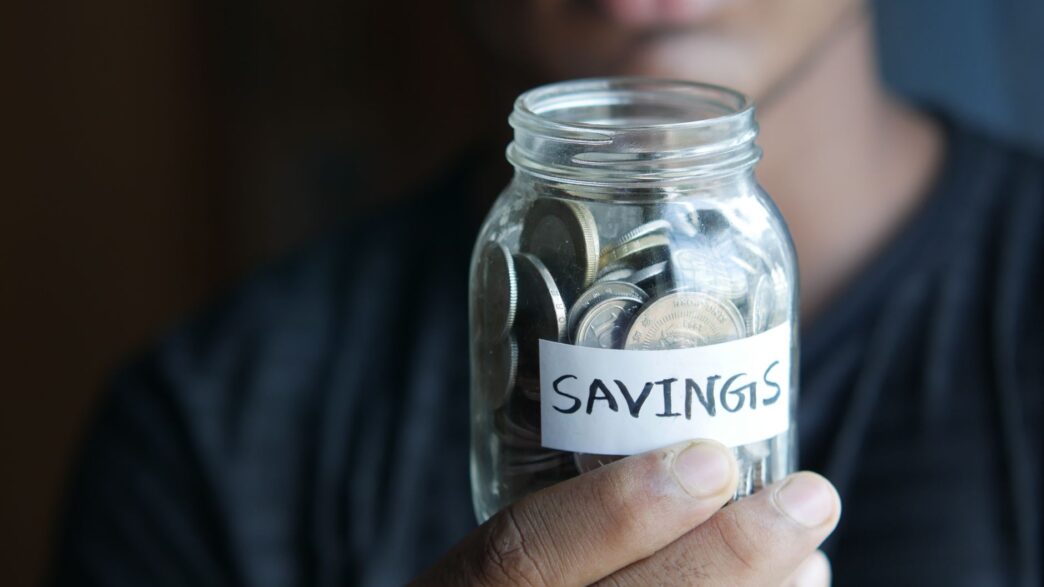
The concept is simple enough to explain in one sentence: instead of earning most of your return as interest, you earn entries into cash prize drawings based on how much you save.
The biggest version of this in the United States is a program called Save to Win, offered through credit unions across more than a dozen states. The mechanics are consistent wherever you find it. You open a special savings account — usually structured as a 12-month share certificate — and every $25 you deposit in a given month earns you one entry into monthly, quarterly, and annual drawings. Most programs cap entries at somewhere between 10 and 30 per month, so a wealthy member can’t simply buy their way to a hundred entries. There’s typically a low minimum to open, often $25.
Then the drawings happen, and some members win. Wright-Patt Credit Union in Ohio, one of the larger participants, advertised a member-only prize pool of $118,500 for 2026, with a top prize of $15,000. People Driven Credit Union in Michigan published a 2026 multi-state national drawing schedule with 2,084 annual winners sharing $149,200. Neighborhood Credit Union in Texas awards a $49,999.99 grand prize every February 1.
And here is the part that makes this fundamentally different from a lottery ticket: you never lose your deposit. Whatever you put in stays yours, plus whatever dividends the account earns over the term. If you never win a single drawing, you still walk away with every dollar you saved. A scratch-off ticket is a transaction where the money leaves your hands permanently. This is a savings account that happens to come with a raffle attached.
The credit unions running these programs are also careful to point out that legally this isn’t gambling and isn’t a sweepstakes — it’s a savings incentive, structured under state laws that were specifically amended to allow it. Deposits are federally insured by the National Credit Union Administration, which protects credit union accounts up to $250,000 per depositor, the same coverage level the FDIC provides at banks.
Why This Works When Willpower Doesn’t
Behavioral economists have studied prize-linked savings for years, and the finding that keeps showing up is that the people it helps most are the people who weren’t saving anything before. Not the household already maxing out a Roth IRA. The household that has tried the “just save $50 a month” advice four times and quit by March.
The reason has to do with how our brains price small rewards. Earning 3.8% APY on $500 gets you about $19 over a year. That is real money and you should absolutely take it, but nobody’s heart rate goes up over nineteen dollars accruing in monthly slivers. A shot at $15,000, on the other hand, is emotionally vivid in a way that compound interest simply isn’t. Prize-linked savings borrows the same psychological hook that makes lottery tickets sell, and points it at an account you can’t lose money in.
There’s a practical design element too. Because most Save to Win accounts are structured as 12-month certificates, withdrawing early usually costs you a penalty fee — often around $25 per withdrawal, with programs commonly limiting you to one or two before the account is closed. That friction is doing quiet work. It’s the same reason people keep savings at a different institution than checking: money that’s mildly annoying to reach is money that survives until the next paycheck.
The Honest Tradeoff You Need to Understand
Now the part that a lot of enthusiastic coverage skips. The dividend rate on prize-linked accounts is usually mediocre, and sometimes close to zero. That’s the whole trade — the credit union takes some of what it would have paid you in interest and pools it into prizes.
So run the math on your own situation. If you’re parking $5,000, the difference between a high-yield savings account paying around 4% and a prize-linked account paying 0.25% is roughly $190 a year in interest you’re giving up in exchange for lottery entries. For most people with that kind of balance, that’s a bad trade. You should go check current rates on Bankrate’s savings account comparison and put the bulk of your cash where it earns real yield.
But flip it. If you’re saving $50 a month and your alternative isn’t a high-yield account — it’s spending the money — then the forgone interest is a rounding error and the psychological pull of the drawings is the entire point. Someone who saves $600 over a year in a prize-linked account is $600 ahead of someone who saved nothing in an account paying 4.3%.
The most sensible approach for a lot of households is a split. Keep your real emergency fund in a proper high-yield savings account where it compounds. Then run a smaller prize-linked account alongside it, funded with whatever you were previously spending on scratch-offs or Powerball tickets. You get the entertainment value, you keep the principal, and you may accidentally build a second cushion.
How to Find One and What to Check Before You Open
Prize-linked savings is a credit union product almost everywhere in the U.S., which means step one is finding a credit union you’re eligible to join. Membership requirements have loosened dramatically over the past decade — many now accept anyone who lives, works, or worships in a defined region, or who joins an affiliated nonprofit for a few dollars. The NCUA’s credit union locator will show you what’s near you, and searching “Save to Win” plus your state name will usually surface which local institutions participate.
Once you find one, read the account disclosure with three specific questions in mind. First, what’s the dividend rate, and how does it compare to what you’d earn elsewhere on the same balance? Second, what are the early withdrawal rules and penalty fees, since you’ll likely be locking money up for twelve months? Third, how are prize entries actually calculated — some programs count net deposit increases rather than gross deposits, meaning you can’t game it by cycling the same $500 in and out each month.
Also worth confirming: whether the program has both a local and a national prize pool. Smaller credit unions sometimes participate only in the multi-state drawing, which spreads your odds across a much larger member base. That’s not necessarily worse — bigger pools often mean bigger top prizes — but it’s useful to know what you’re entering.
If your credit union doesn’t offer one, several fintech apps have tried variations on the same idea over the years, with genuinely mixed results — a few have collapsed or been shut down by regulators. Stick with an NCUA-insured credit union program where your deposits are federally protected and the rules are disclosed in writing.
Saving money is mostly a boring habit, and boring habits are hard to start. If a shot at $15,000 is what gets you to move $25 a month somewhere it can’t be spent, that’s not a gimmick. That’s just knowing how your own brain works and using it.