







Grocery prices are still creeping up. According to the Bureau of Labor Statistics, food-at-home prices rose another 2.7% over the twelve months ending May 2026, and categories like poultry, pork, and seafood all jumped a full percentage point or more in a single month this spring. If your grocery receipt has been giving you sticker shock, you’re not imagining it.
Here’s the good news: it’s mid-July, which means we’re smack in the middle of peak harvest season across most of the country. And that makes right now the single best window of the year to shift some of your produce spending from the supermarket to your local farmers market — if you know how to shop it. Done wrong, a farmers market trip can actually cost you more than the grocery store. Done right, it can quietly shave real money off your summer food budget while upgrading what’s on your plate.
The Honest Truth About Farmers Market Prices
Let’s get one thing out of the way, because plenty of budget sites gloss over it: farmers markets are not automatically cheaper. Price comparison studies have found that farmers market produce can run 10% to 40% higher than comparable conventional items at a chain grocery store, and roughly on par with grocery store organic prices. If you stroll in and buy a single heirloom tomato and a jar of artisanal honey, you will absolutely spend more than you would at the supermarket.
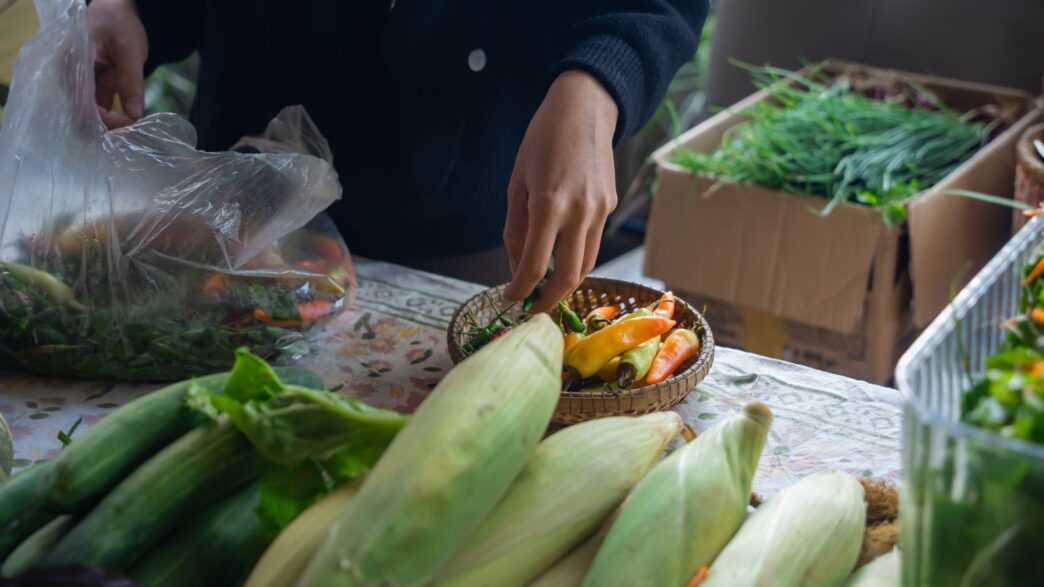
But those averages hide where the real savings live. When a crop hits peak harvest in your region, local growers end up with far more of it than they can sell at premium prices, and the price at the market stall drops fast — often below what the grocery store charges. Shoppers comparing prices this summer have found summer squash and zucchini selling for roughly half the grocery store price at peak season, and sweet corn is a perennial example of local produce beating the chains. Bulk deals get even more dramatic: a 25-pound box of Roma tomatoes at a farm stand can work out to well under a dollar a pound, when loose grocery store tomatoes typically run $2 to $4 per pound, according to price comparisons at The Locavore.
The rule of thumb is simple: buy what’s in glut, skip what’s scarce. In July and August, that means tomatoes, squash, zucchini, cucumbers, corn, peppers, melons, peaches, and berries in most regions. A quick look at a seasonal produce price guide for your state will tell you what’s flooding local fields right now.
Timing Is a Savings Strategy
When you show up matters almost as much as what you buy. Arrive in the last 30 to 60 minutes before closing and you’ll find vendors who would rather sell at a discount than haul crates back to the farm. It’s completely normal to ask, politely, whether there’s a deal on whatever’s left — many vendors will knock 20% to 50% off near closing time, especially on delicate items like berries and stone fruit that won’t survive until the next market day.
The other timing play is the opposite: arrive early on a peak-harvest weekend and ask about “seconds.” These are cosmetically imperfect fruits and vegetables — a bruised peach, a curvy cucumber, a tomato with a scar — that taste identical to the pretty ones. Vendors often sell seconds by the box at steep discounts because restaurants and canners buy them up. For anything you’re going to chop, sauce, freeze, or bake anyway, seconds are the smartest money at the entire market.
Buy the Glut, Then Bank It
The biggest farmers market savings don’t happen at the market at all. They happen in your freezer. When a crop is at rock-bottom peak-season pricing, buying in bulk and preserving it lets you lock in July prices and eat them in January, when that same produce costs two or three times as much at the store and tastes like disappointment.
You don’t need to become a homesteader. Berries freeze beautifully on a sheet pan in about two hours. Peppers and corn can be chopped or cut off the cob and frozen raw. Tomatoes by the box become sauce or salsa in one Sunday afternoon and then sit in the freezer for months. Even fresh herbs — often a dollar or two for a huge bunch at the market versus four dollars for a plastic clamshell at the store — can be chopped and frozen in olive oil in an ice cube tray. Every bag you put away is a small deposit toward winter grocery bills, and it pairs nicely with the money you’re not spending: consider sweeping the difference into a high-yield savings account so the savings actually stick instead of evaporating into the rest of your budget.
Stack the Programs Most Shoppers Ignore
If you receive SNAP benefits, farmers markets can be dramatically cheaper than the grocery store, full stop. Thousands of markets nationwide participate in nutrition incentive programs — commonly known as Double Up Food Bucks or similar names — that match every SNAP dollar you spend on produce, effectively cutting prices in half. The USDA has tracked steady growth in these programs, but participation among eligible shoppers remains surprisingly low, mostly because people don’t know they exist. Ask at your market’s information booth; many markets also offer matching programs for seniors through the Senior Farmers Market Nutrition Program.
Even if you don’t qualify for any assistance program, ask vendors about bulk pricing, end-of-season CSA deals, and loyalty punch cards. Small growers price flexibly in ways a supermarket never will. Cash still talks, too — some vendors will round down or throw in extras for customers paying cash, since card processing eats into their thin margins.
The Waste Math Nobody Runs
There’s one more piece of the comparison that rarely makes it onto the price tag. Farmers market produce is typically picked 24 to 48 hours before you buy it, versus produce that spent a week or more in trucks and distribution centers before reaching a supermarket shelf. That freshness gap shows up in your trash can: produce that lasts four or five extra days at home is produce you actually eat instead of throw away. The average American family tosses a painful share of the groceries they buy, so cutting produce waste even modestly can outweigh a slightly higher sticker price. As a local food comparison from CollectiveCrop put it, the total cost story often looks very different once quality, shelf life, and waste enter the math.
Make It a Habit, Not an Outing
The shoppers who actually save money at farmers markets treat them like a grocery run, not a Saturday event. Go with a list built around what’s in season, set a cash budget before you walk in, shop the whole market once before buying anything (prices for the same item can vary noticeably between stalls), and save the pastry stand and lavender lemonade for special occasions. Do that from now through the end of harvest season, and you’ll come out of summer 2026 with a freezer full of cheap, peak-season food — and a grocery budget that finally caught a break.