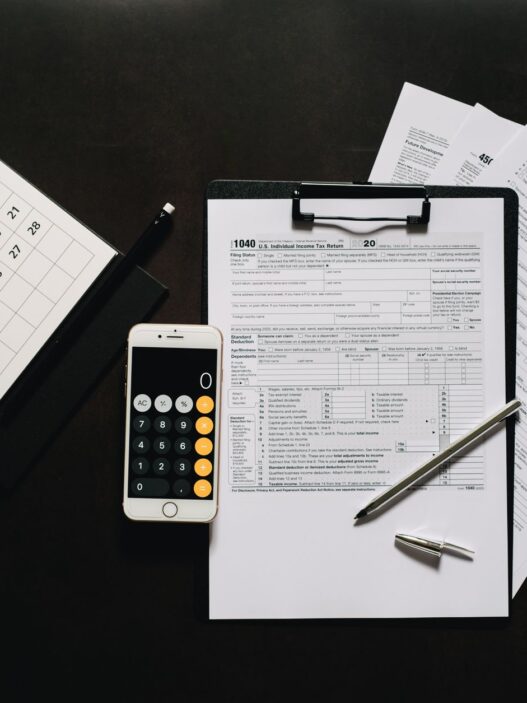










Summer is barely underway, but if you have kids heading back to a classroom this fall, the smartest thing you can do for your wallet right now is mark a single weekend on the calendar. More than a dozen states host a sales tax holiday between late July and mid-August where clothing, shoes, school supplies, and sometimes laptops are exempt from state sales tax. Used right, a tax-free weekend can shave $50 to $200 off a family back-to-school haul, and on a big-ticket day like a laptop replacement, it can save you a lot more than that.
That matters more than usual in 2026. The National Retail Federation’s most recent survey found families with children in elementary through high school are budgeting an average of $858 on clothing, shoes, supplies, and electronics this season, and college families plan to spend $1,325. Total back-to-school spending is on track to hit $39.4 billion this year, which is the second-highest figure on record per NRF. When the average household is putting that much on the table, a 6 to 9 percent sales tax break is real money. Here is the smart way to use it.
What a Sales Tax Holiday Actually Is
A state sales tax holiday is exactly what it sounds like: a window, usually a Friday-through-Sunday weekend, when your state suspends sales tax on certain categories of goods. The categories almost always include clothing and school supplies, sometimes computers, and in a few states even items like bed linens and energy-efficient appliances. Local taxes may or may not be waived depending on the state, but in most participating states the full sales tax disappears at the register on qualifying items.
The savings are not enormous on any one purchase. On a $40 pair of sneakers in a state with 7 percent combined sales tax, the holiday saves you $2.80. But back-to-school shopping is not one purchase, it is dozens, and the math compounds quickly. If your family spends the NRF average of $858, a 7 percent tax break is right around $60 saved without changing what you buy or where you shop. Stack the holiday with a retailer sale or a stored credit card reward and the discount snowballs.
The Big 2026 Dates to Know
Texas runs its holiday August 7-9, 2026, and exempts clothing, footwear, school supplies, and backpacks priced under $100 per item. South Carolina, one of the most generous programs in the country, runs the same weekend with no price cap on most categories, meaning even computers and bed linens qualify. Florida is unusual in that the back-to-school holiday runs through most of August, giving Florida families weeks rather than days to shop. Mississippi goes earlier than most, July 25-26, with a $100 clothing cap. Connecticut runs late and long, August 16-22, with a generous $300 price cap on clothing and footwear.
Other states with confirmed 2026 holidays include Virginia, West Virginia, Kentucky, Tennessee, Alabama, Arkansas, Iowa, Missouri, New Mexico, Ohio, and Oklahoma, most of them clustered around the first weekend of August. Because exact dates, eligible items, and price caps shift year to year, the safest play is to look up your specific state on a roundup like the one Sales Tax Institute maintains, or check your state department of revenue’s site directly. Showing up with the wrong assumption about what qualifies is the easiest way to lose the savings.
Plan Before You Shop, Not At the Register
The mistake families make on tax-free weekend is treating it like a green light to buy whatever catches the eye. Stores know the holiday is coming. They run aggressive promotions, they put end caps in the front of the store, and they count on shoppers feeling like every purchase is a win because of the tax break. It is not a win if you bought something you did not need.
Two weeks before your state’s holiday, sit down and inventory what each kid actually needs. Take stock of what survived from last year. Walk the closet, count the working pencils, test the calculator. Then build a list with sizes, quantities, and ballpark prices. Set a hard total budget that is no higher than what you would have spent anyway, because tax savings only matter if your underlying spending stays disciplined. Bankrate and NerdWallet both have free printable back-to-school checklists you can adapt.
A useful trick is to split the list into “must buy now” and “can wait.” Notebooks, pencils, basic clothing, and shoes go in the must-buy column and get bought tax-free. Items you might not need until November, like a winter coat or a second pair of sneakers, can wait. You want the holiday to fund the inevitable purchases, not pull future purchases into the present.
Where the Holiday Saves You the Most
The biggest single-purchase wins on tax-free weekend are big-ticket items where the state allows them. Five states (most prominently Missouri, South Carolina, Tennessee, and Arkansas) include computers in the holiday, and a few exempt laptops up to certain price caps. On a $1,000 laptop in a 9 percent combined tax state, that is roughly $90 back in your pocket on a single transaction. If a kid in your house genuinely needs a new laptop for the school year, plan the purchase for the holiday weekend.
After that, footwear delivers strong per-item savings because the price points are higher than supplies. Backpacks too, especially the higher-end ones designed to last several school years. School supplies in bulk (a year’s worth of notebooks, pens, and folders) also add up nicely because volume amplifies a small percentage discount.
What Most Families Miss
Online purchases usually count. If your state participates, qualifying items bought online and shipped to a tax-free state generally get the exemption, as long as the order is placed during the holiday window. That means you do not have to fight the crowds at the mall. You can sit on your couch on Saturday morning, place your orders, and pocket the tax break. Confirm the retailer’s policy in advance, because not every retailer handles this cleanly.
Layering matters a lot. Stack the tax holiday with a cash-back credit card, a store loyalty program, and a browser extension like Rakuten or Honey and the effective discount can climb into double digits. Many big-box retailers also price-match during the weekend, so if you find a lower price at a competitor, ask.
Skip the impulse stuff. Pencil cases shaped like sushi rolls and themed lunch boxes with licensed characters are where margins are highest and durability is lowest. They are also rarely the reason you came in. Stick to the list, hit the categories that actually qualify in your state, and treat the holiday as what it is: a chance to subtract a small percentage from spending you were going to do anyway.
One Last Move: Save the Difference
Here is a habit that turns a tax holiday into a real personal-finance moment. Add up what you would have paid in sales tax, then immediately transfer that amount from your checking account into your savings account. If you saved $60 on a $858 shop, that $60 goes straight into a high-yield savings account where it can earn around 4 percent in 2026 rather than sitting in checking and quietly getting absorbed into next week’s groceries. It is a one-minute transfer that converts a fleeting discount into actual savings, which is the only kind of savings that ever compounds.