







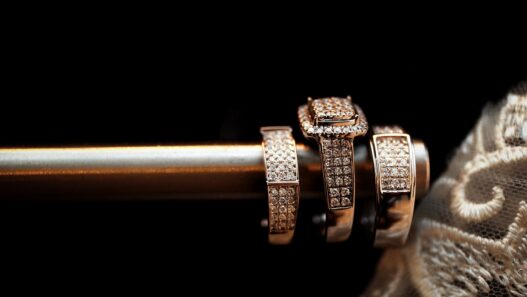
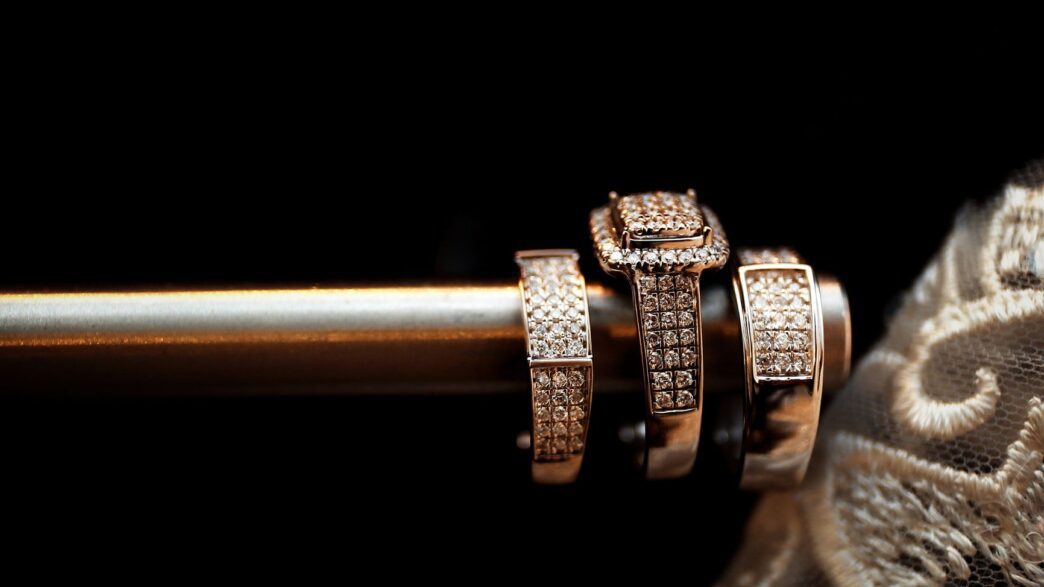
Your homeowners policy probably covers $250,000 of personal property and $1,500 of stolen jewelry. That second number is not a typo and it is not per item. It is a category cap covering jewelry, watches, furs and precious stones together, and it applies to theft specifically.
So a $6,000 engagement ring taken in a burglary produces a $1,500 check and a $4,500 hole. Every article on this subject tells you that much, and every one tells you to buy a jewelry insurance rider. What none of them tells you is that two different riders exist, and one of them does not promise to pay the amount you scheduled.
The clause that decides what you actually get
Scheduling an item means listing it on the policy with a stated value, usually backed by an appraisal. Most people assume that stated value is what the insurer pays.
Under the standard ISO scheduling endorsement, HO 04 61, it is not. The loss settlement clause for most categories reads that the value of the property is not agreed upon and will be ascertained at the time of loss, and that the insurer will not pay more than the least of four amounts: the actual cash value, the amount for which the property could reasonably be expected to be repaired, the amount for which it could reasonably be expected to be replaced with one substantially identical, or the amount of insurance.
The least of four. Your scheduled amount is the ceiling, not the promise.
A separate form, HO 04 60, is the agreed value version, and it pays the scheduled dollar amount outright. That is the one people think they are buying.
This is the question to ask by name, because it is the difference between a $6,000 ring producing a $6,000 payment and producing whatever an adjuster concludes a substantially identical ring can be replaced for this month. On a mass-produced setting with a common stone, those may be close. On anything unusual, vintage, or custom, they are not.
What a jewelry insurance rider changes, and what it costs
Assuming you get a reasonable form, scheduling buys you four things the base policy does not.
Open perils instead of named perils, so the item is covered for causes the base policy never listed.
Mysterious disappearance, which in plain terms means simply losing it. The base policy covers theft. It does not cover the ring going down a drain or off a dock, and that is how a great deal of jewelry actually disappears.
Typically no deductible on the scheduled item.
And worldwide coverage, which matters because jewelry travels. Progressive markets its jewelry product on exactly that basis.
The price is the reason this is one of the better trades in personal insurance. Jewelers Mutual, a specialty insurer in this category, publishes a typical cost of 1% to 2% of the insured value annually. On a $6,000 ring that is $60 to $120 a year to close a $4,500 gap and add loss coverage the base policy never had.
Run the comparison honestly. Without the rider, a stolen ring pays $1,500 and a lost ring pays nothing. With it, at $60 a year, both pay. Even at the high end of the rate range, a decade of premiums costs $1,200 against a $6,000 exposure, and the decade only matters if nothing happens.
Appraisals go stale, and that is your problem
The scheduled amount is only as good as the appraisal behind it, and appraisals decay because metal and stone prices move.
Jewelers Mutual recommends refreshing an appraisal every two years for that reason, and applies an automatic insurance value adjustment when one lapses. That adjustment is the insurer trying to keep you roughly current, not a guarantee that the scheduled figure tracks what a replacement costs.
The failure mode is quiet. You schedule a ring at $6,000 in 2020, gold and the setting appreciate, and in 2026 the same piece costs $8,000 to replace. You are insured for $6,000 and you have been paying premiums the whole time, so it feels like you did the right thing. Two years is the interval to put in your calendar.
The crime data, with a caveat
I want to be careful with statistics here, because the numbers that circulate about jewelry theft are mostly unsourced.
The Jewelers’ Security Alliance publishes an annual crime report, and its 2024 edition recorded $142.5 million in total crime losses across 1,420 incidents, with grab-and-run thefts making up 65.1% of theft events at an average loss of $9,713 each.
The important caveat is that those figures measure crime against the jewelry industry, meaning retailers and wholesalers, not losses from private homes. They tell you the category is attractive to thieves. They do not tell you your odds.
You will also see a figure asserting roughly $1.2 billion in annual jewelry theft losses attributed to the FBI. I could not locate any FBI table behind that number, so do not repeat it, and be suspicious of any article that does.
What to do this week
Pull your declarations page and find the special limits of liability section. Look for the jewelry, watches and furs line and read the number. If it says $1,500, that is your total theft coverage for everything in that category combined. Some carriers raise it to $2,500 or $5,000 in their own endorsements, which is better and still nowhere near a ring.
Then add up what you own at replacement cost, not what you paid. Engagement and wedding rings, an inherited piece, a watch, anything you would actually replace.
Then call and ask three specific questions. What it costs to schedule those items. Whether the endorsement is an agreed value form or the least-of-amounts form. And whether the carrier requires an appraisal or will accept a recent receipt.
That middle question is the one that separates a jewelry insurance rider that does what you think from one that does not, and it is not going to come up unless you raise it. While you are reviewing the homeowners policy, what one small claim does to your CLUE report is worth reading before you file anything, and the water backup endorsement is the other cheap add-on most policies leave out.