

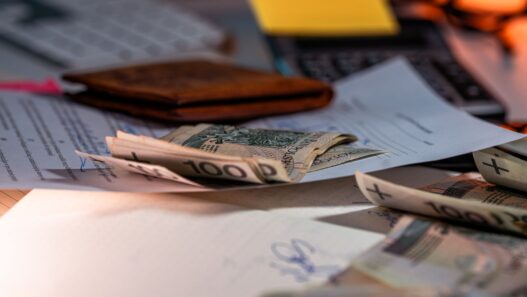




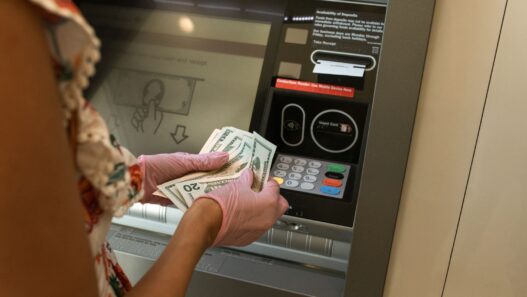
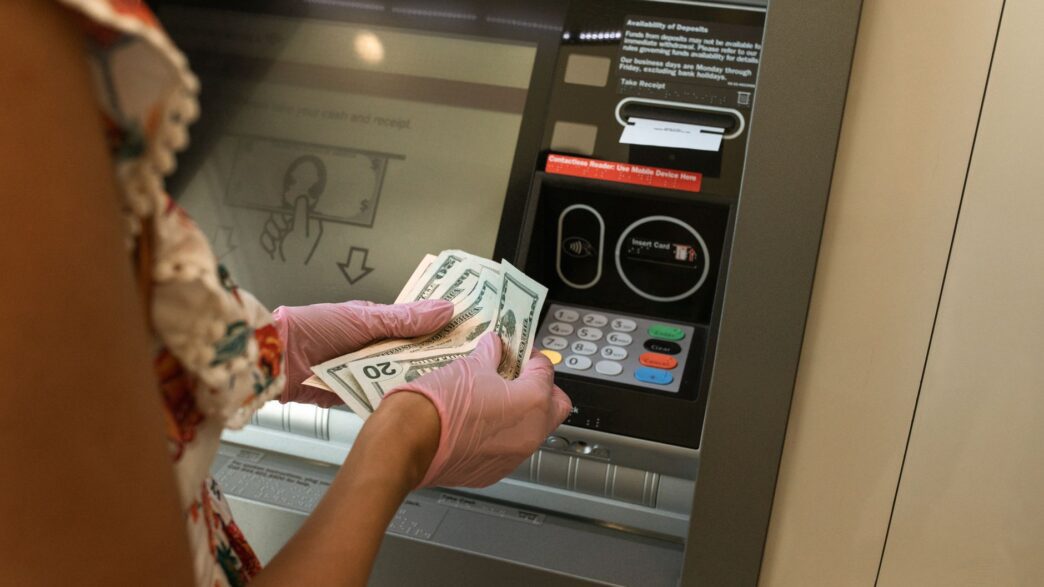
Cash is still money. It has just become the most expensive kind of money to hand to a bank.
If you get tipped, pick up side work, sell things at a weekend market, or simply end up with a stack of twenties because your brother-in-law paid you back the way he always does, you already know the problem. Your bank has no branch within twenty minutes. The ATM you can reach takes checks but not currency. And the pharmacy that will accept the deposit wants close to five dollars for the privilege of moving your own money into your own account.
Five dollars sounds trivial. Twice a month it turns into roughly $120 a year. For comparison, the national average savings account paid 0.63 percent APY in early September 2026, according to Bankrate’s rate survey, and the FDIC’s average for a traditional savings account was closer to 0.38 percent. On a $2,000 balance that is about $8 to $13 in interest for the year. You can end up paying more to deposit your money than the bank pays you to keep it there.
Here is what depositing cash actually costs in 2026, and how to get that number down to zero.
Why cash got expensive to bank
Two things happened at once. Banks closed branches and leaned harder on digital accounts, and a wave of online banks with genuinely good rates showed up without any physical footprint at all. Great for people whose paycheck arrives by direct deposit. Less great if part of your income shows up as paper.
The scale of that gap is bigger than most people assume. The FDIC’s most recent National Survey of Unbanked and Underbanked Households found 4.2 percent of U.S. households had no bank account, and about 66 percent of those households ran entirely on cash. Another 14.2 percent were underbanked, meaning they had an account but still used check cashers, money orders, or payday products to fill in the gaps. That is tens of millions of people paying a small tax every time money changes hands.
The fee itself rarely comes from your bank. It comes from the retailer or the network sitting in the middle. Which is good news, because middlemen can be avoided.
Start with your own bank’s ATM map
Most people never check this, and it is the fastest fix available.
Plenty of banks and credit unions accept cash at their own machines with no fee, and some accept it at partner machines too. Capital One takes cash deposits at its branches, its Cafés, any Capital One ATM, and select Allpoint locations, though not at MoneyPass machines. Alliant Credit Union gives members access to more than 80,000 surcharge free ATMs and has a locator that filters specifically for the ones that accept deposits. Chase, like most large branch banks, accepts cash at its own machines.
The trap is assuming that “in network” means “accepts cash.” It often does not. A machine can waive the surcharge on a withdrawal and still refuse a deposit, because deposit-taking machines cost more and need servicing. Spend ten minutes on your bank’s ATM locator, filter for deposit capability, and save the two or three closest ones in your phone. That single step solves the problem for a lot of people.
The credit union workaround most members never use
If your money is at a credit union, you may have access to something like 5,600 branches without knowing it.
Shared branching, run through the CO-OP network, lets members of participating credit unions walk into another participating credit union and transact on their own account. Deposit cash, withdraw it, transfer between accounts, make a loan payment. The teller pulls up your account at your institution and handles it as if you were home. The network also covers around 33,000 ATMs.
There is no fee for the deposit. You need your account number and a photo ID, and it helps to call ahead, because a few credit unions limit shared branching services or route them through a specific window. But if you have been paying a retailer to accept your cash while a participating credit union sits four blocks away, this is found money.
Not every credit union participates, so check the locator on your credit union’s site before you drive anywhere. If yours is not in the network, that is worth knowing when you compare it against others. Branch access is a real feature, and it is one of the quieter arguments for keeping at least one account at an institution with local offices even if your high-yield savings lives somewhere online.
Retail deposits are convenient, and usually not free
The Green Dot Network powers most of the “deposit cash at a store” options attached to online accounts, including partners like Axos. You hand cash to a cashier at Walmart, CVS, Walgreens, Dollar General, Kroger, 7-Eleven, and similar chains, and it lands in your account, often within about fifteen minutes.
The bank frequently charges nothing. The store does. Green Dot lists retail service fees of up to $4.95 per transaction, with Walmart on the low end at around $3.74. Deposit limits usually run from $20 to $500 per transaction at most retailers, and up to $1,000 at participating Walmart locations, which matters if you are trying to move a week of tips at once.
None of that makes retail deposits a bad deal in an emergency. It makes them a bad default. If you use one twice a month at $3.74, you are spending about $90 a year. If you use one twice a year because a snowstorm closed the credit union, you are spending eight dollars and should not think about it again.
One quiet advantage worth knowing: Capital One 360 Checking customers can add cash at CVS and Walgreens locations, which is a useful backup for an account that otherwise leans on a thin branch network.
Cashing the check instead is almost always worse
Some people skip the deposit question entirely and just cash their paycheck. That is where the real money goes.
Walmart charges a flat $4 to cash a check up to $1,000 and $8 for checks up to $5,000, with a $5,000 limit that rises to $7,500 for tax refund checks between January and April. Flat fees like that are the friendliest version of this transaction. A storefront check casher charging 3 percent takes about $60 out of a $2,000 check. Do that every two weeks and you have handed over more than $1,500 in a year to access wages you already earned.
If you are cashing checks because you cannot open an account, that is a different problem with a different fix, and second chance checking accounts exist for exactly that situation. If you are doing it out of habit, the math is worth staring at once.
Building a setup that costs nothing
The version that works for most people who handle cash regularly is boring and takes an afternoon to set up.
Keep a local account at a credit union or a bank with a nearby deposit-taking ATM, and treat it as your cash intake point. Keep your savings wherever the rate is best, then link the two and push money over by ACH transfer, which is free and takes a day or two. Cash goes in locally, savings earn online, and the retailer in the middle never gets a cut.
While you are in there, check what the local account costs you. Bankrate’s survey work put the average monthly service fee at $15.65 for interest checking and $5.47 for noninterest checking, and found that roughly 47 percent of noninterest accounts charge no monthly fee at all. Free is common enough that paying for a basic checking account in 2026 is a choice, not a requirement. If yours charges you, ask what waives it, and if the answer is a balance you cannot hold, move.
The Consumer Financial Protection Bureau keeps a plain-language guide to account fees and disclosures if you want to compare what a bank is allowed to charge before you sign up. Read the fee schedule, not the landing page. That is where the deposit rules hide.