






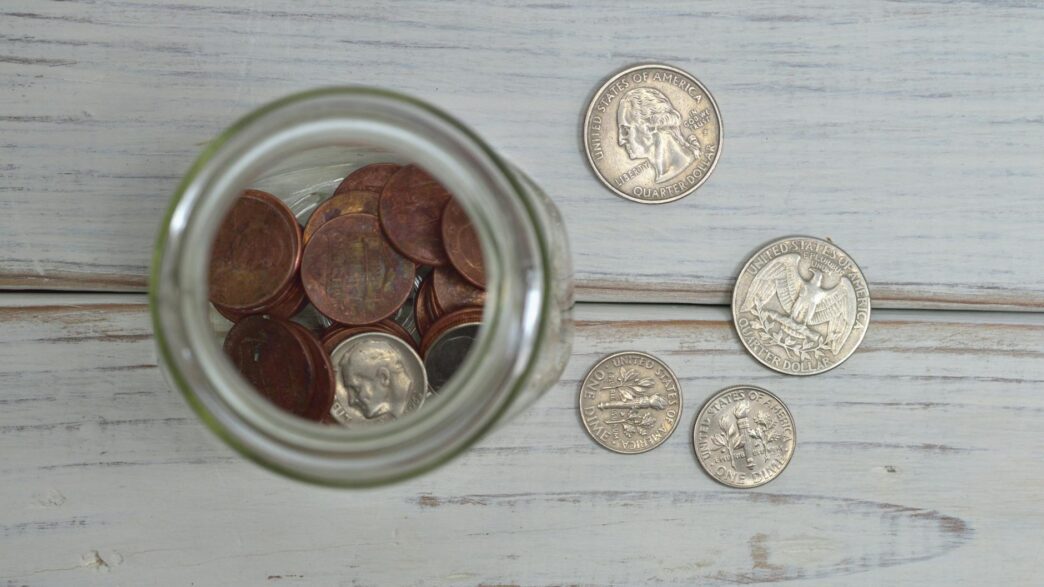
Here’s a sobering statistic: 47% of Americans can’t cover a $1,000 emergency expense from their savings right now. Not 10%. Not 30%. Nearly half. That means if your car needs a repair, your kid needs a dentist, or your furnace breaks down, you’re looking at credit card debt or borrowing money at exactly the moment you can least afford it.
An emergency fund is the foundation of financial security. It’s not exciting. It won’t make you rich. But it will prevent emergencies from becoming catastrophes. And the best part? You can start building one right now, even if you have very limited money. It doesn’t require a six-month emergency fund fully funded by tomorrow. It requires consistency and a plan.
Why 47% of People Don’t Have an Emergency Fund
Before we talk about how to build one, let’s acknowledge why so many people don’t have this financial cushion. Money is tight. Rent is high. Childcare costs are brutal. Healthcare is expensive. When you’re living paycheck to paycheck, the idea of saving three to six months of expenses seems delusional. How can you save when you’re barely covering your basic needs right now?
This is real, and it’s legitimate. But here’s the insight that changes things: you don’t need three to six months saved today. You need to start with $500. Then $1,000. Then progress from there. The goal is to break the paycheck-to-paycheck cycle by creating a small buffer that prevents one small emergency from derailing everything.
Once you have $1,000 saved, your life fundamentally changes. That car repair becomes fixable. That dental emergency becomes manageable. That unexpected medical bill becomes a problem you can actually solve without going into debt. A thousand dollars isn’t much money in the grand scheme of things, but it’s the difference between financial chaos and financial stability.
The Milestone Approach to Emergency Funds
Rather than focusing on the big number—three to six months of expenses—break it down into concrete milestones. This psychological trick makes the goal feel achievable instead of impossible.
Milestone One is $500. This is enough to cover most minor emergencies. Your car breaks down. Your fridge stops working. Your phone gets damaged. These things happen. $500 gives you options beyond “put it on a credit card.”
Milestone Two is $1,000. At this point, you’ve got breathing room for small to medium emergencies. A bigger car repair, medical bills, dental work. You can handle it.
Milestone Three is one month of expenses. This is when your emergency fund starts covering more than just specific emergencies. If you lose your job, you’ve got a month to find new work without going into debt.
Milestone Four is three months of expenses. This is where traditional financial advisors say your emergency fund should be. You’ve got real stability. Most job transitions can be managed without panic.
Milestone Five is six months of expenses. This is the gold standard. You could handle job loss, serious medical issues, major home repairs—everything—without going backward financially.
But here’s the key insight: you don’t need to hit milestone five to benefit. Milestone one makes an enormous difference in your financial stress. Build toward each milestone progressively, and celebrate each one when you hit it.
The Math of Getting Started
Let’s assume you’re tight on money but you can find $50 per paycheck to set aside for emergencies. If you get paid every two weeks, that’s $100 per month. In five months, you’ve hit the $500 milestone. In ten months, you’re at $1,000. That’s one year. By this time next year, you could have a genuine emergency fund that eliminates a massive source of stress.
If $50 per paycheck feels impossible, what about $25? That’s $50 per month, and it hits $1,000 in twenty months—less than two years. Is two years a long time to build financial stability? Sure. But you’re going to live for two more years anyway. Would you rather spend those two years worrying about every possible emergency, or would you rather spend them knowing you’re building a safety net?
The amount doesn’t matter as much as the consistency. The person who saves $25 per paycheck for two years ends up in a better financial position than the person who saves nothing because they’re waiting until they can save $100 per paycheck. Consistency beats perfection.
Where to Actually Keep Your Emergency Fund
This is crucial. Your emergency fund should not be in your checking account. If it’s sitting next to your regular spending money, you will spend it on non-emergencies. I know this sounds cynical, but human psychology is real. That “emergency fund” becomes “money available if I want something.”
Put your emergency fund in a separate account, preferably at a different bank than your checking account. The friction of having to transfer money between banks makes you think before you touch it. More importantly, put it in a high-yield savings account.
A high-yield savings account is perfect for emergency funds because the money stays safe, you earn interest on it, and you can access it quickly if you actually need it. You’re not tying the money up in long-term investments. You’re earning real returns—currently 4% to 5% APY depending on which account—while maintaining complete liquidity.
This means your emergency fund is actually working for you. A $1,000 emergency fund in a regular savings account earning 0.01% makes about $0.10 per year. The same $1,000 in a high-yield savings account earning 4.50% makes roughly $45 per year. That’s free money. It’s not life-changing, but it’s real. Over time, that interest accelerates. A $5,000 emergency fund earning 4.50% makes roughly $225 per year. A $10,000 fund makes roughly $450 per year.
Automate Your Way to an Emergency Fund
The absolute best way to build an emergency fund is to make the process automatic. Set up an automatic transfer from your checking account to your high-yield savings account on the same day you get paid. Don’t even look at the money. Don’t make a conscious decision each paycheck. Just let it move automatically.
This works because you’re using the friction of setup to overcome the temptation to spend the money. After the first month or two, you’ll forget the money is even being transferred. It becomes invisible, which is exactly what you want.
If your employer offers direct deposit—and most do—you can often split your paycheck directly. Tell your employer to deposit part of your check to your checking account and part to your savings account. This prevents the money from ever hitting your checking account in the first place, making the temptation to spend it nonexistent.
When You Actually Need to Use It
Here’s the rule about emergency funds: they exist to be used when genuine emergencies happen. You’re not supposed to ignore this money and let it sit forever. When your car breaks down, when you have medical bills, when your job situation changes—that’s what the fund is for.
The key is distinguishing between genuine emergencies and wants. Your car breaking down is an emergency. A vacation you’d like to take is not. Medical bills are emergencies. New clothes because you want them are not. An unexpected home repair is an emergency. Upgrading to a nicer kitchen is not.
When you do use emergency fund money, rebuild it as soon as possible. If you take out $500 for car repairs, your next step is getting that $500 back into the account. This might take a few months, but it’s important. You’ve just used your financial safety net, and you need to rebuild it.
The Psychological Shift
Building an emergency fund is more about psychology than it is about math. The moment you have $500 saved, you stop feeling like every small expense is catastrophic. That mental shift is worth more than the actual money in many ways. You sleep better. You make better decisions. You’re less likely to take on predatory debt because you know you have options.
The 47% of Americans who can’t cover a $1,000 emergency aren’t uniquely terrible with money. They’re people who haven’t built the habit of saving, haven’t automated the process, or haven’t been shown a plan that feels achievable. You’re about to be different. You’re going to start with $500, then $1,000, then more. Each milestone is a win.
Your Action Items Right Now
Step one: open a high-yield savings account at Varo, Axos, Newtek, or Wealthfront if you don’t already have one. Yes, do this today. It takes fifteen minutes.
Step two: figure out where you can find $25, $50, or $100 per paycheck for your emergency fund. Look at your spending. Can you skip coffee a few times per week? Can you reduce a subscription? Can you negotiate a better rate on something? Find the money.
Step three: set up an automatic transfer on the same day you get paid. If you get paid on the 15th, set the transfer for the 16th. Make it automatic and forget about it.
Step four: celebrate when you hit $500. Then celebrate when you hit $1,000. Then keep going.
This is how normal, financially secure people build their emergency funds. Not all at once. Not through inheritance or bonuses. Through consistent, automatic saving over time. You can do this. It just takes a starting point, which you’re about to have.
Sources
- Bankrate. “Emergency Fund Statistics 2026: 47% Can’t Cover $1,000.” https://www.bankrate.com/
- Federal Deposit Insurance Corporation (FDIC). “Savings Account Protection and FDIC Insurance.” https://www.fdic.gov/
- Consumer Financial Protection Bureau (CFPB). “Building an Emergency Fund: A Consumer Guide.” https://www.consumerfinance.gov/
- Federal Reserve. “Household Finances and Emergency Savings Data.” https://www.federalreserve.gov/
- Varo. “High-Yield Savings Account Rates and Benefits.” https://www.varo.com/
- Axos Bank. “Emergency Fund Solutions and Rates.” https://www.axosbank.com/
- Newtek Bank. “Savings Products for Emergency Planning.” https://www.newtekbank.com/
- Wealthfront. “Cash Account for Emergency Savings.” https://www.wealthfront.com/