





Remember when free checking was just… free? No strings attached, no minimum balances, no monthly fees? Those days are quietly slipping away. Major banks are systematically eliminating free checking accounts and hiking fees on the ones that remain, leaving millions of Americans scrambling to figure out where to safely keep their money without getting nickel-and-dimed every month.
This isn’t accidental. It’s a calculated shift by the biggest financial institutions in the country, and if you’re not paying attention, you could be losing hundreds of dollars a year without even realizing it. The good news? There are still ways to get truly free checking—you just have to know where to look.
What’s Happening With Bank Fees Right Now
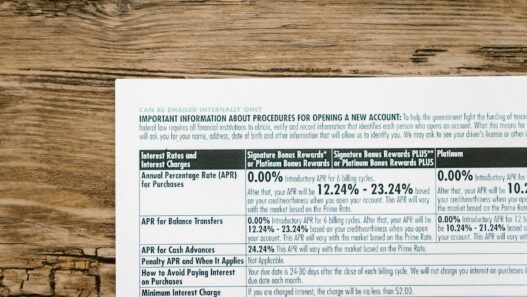
The recent changes at two of America’s largest banks tell the whole story. Wells Fargo, which has been rebuilding its reputation for years, just raised the monthly fee on its Everyday Checking account from $10 to $15. But that’s not even the worst part. They also bumped up the minimum balance requirement from $500 to $1,500. Miss that target, and you’re paying the higher fee.
Chase followed suit, raising the monthly fee on its Performance Business Checking account from $30 to $40 per month. These aren’t small, isolated moves—they’re part of a broader trend. The average monthly checking fee at large banks now sits between $13 and $16, which means the typical American household is paying $156 to $192 per year just to have a basic checking account.
Think about what you could do with an extra $200 a year. That’s real money that could go toward building your emergency fund, paying down debt, or just breathing easier at the end of the month.
Why Banks Are Killing Free Checking
Here’s the frustrating reality: free checking was never actually free for banks. They made money on the float—the time between when you deposited money and when checks cleared. They also profited from overdraft fees and other services. As digital banking changed the landscape, that old model collapsed. So instead of adapting their business model, many big banks decided to just charge everyone a flat monthly fee.
The problem is that banks know most people won’t leave. They have automatic deposits set up, their paycheck goes there, and switching seems like a hassle. So they raise fees bit by bit, expecting that customer inertia will keep money flowing in. In some ways, it’s a tax on not paying attention.
Where You Can Still Get Free Checking
The silver lining is that truly free checking still exists—it’s just not at Wells Fargo or Chase. Several online banks and financial technology companies have built their entire business model around offering customers what banks used to provide for free. Here’s what’s actually available:
Online Banks and Digital-First Banks: Companies like Chime, Capital One 360, SoFi, Ally, and NBKC offer checking accounts with zero monthly fees, no minimum balance requirements, and no catch. They make money through different channels—lending, investment products, or premium service tiers—so they’re not dependent on bleeding their basic account holders with monthly charges. These institutions are FDIC insured just like traditional banks, meaning your money is protected up to $250,000 per account.
Credit Unions: Local credit unions often offer free checking accounts as a benefit to members, particularly if you also maintain a savings account or set up direct deposit. Credit unions are non-profit, member-owned institutions, so their incentive structure is fundamentally different from big banks.
Online-Only Divisions: Even some traditional banks have online-only divisions that offer free checking. The key is that they’re competing for your attention in a crowded digital marketplace, so they use free checking as a hook to get you in the door.
The catch? Most of these options require that you be comfortable banking online and through mobile apps. You won’t be walking into a physical branch to deposit checks. But here’s the thing: most people don’t need a physical branch anymore. Mobile check deposit, digital transfers, and online bill pay handle 95% of what people actually do with their checking accounts.
How to Evaluate a New Bank
If you’re thinking about leaving your big bank for free checking, you should evaluate based on a few key factors. First, does the bank offer FDIC insurance? This is non-negotiable. Your deposits should be protected. Second, what’s their user interface like? Can you navigate their mobile app and website easily? Set up bill pay? Check balances? Third, is their customer service accessible? Do they offer 24/7 support if something goes wrong?
Also consider whether you’ll still need access to physical ATMs. Many online banks partner with ATM networks to give you access to thousands of machines without paying out-of-network fees. If you travel frequently or are in areas with spotty digital coverage, this matters.
Finally, ask yourself: what’s really keeping you at your current bank? If it’s just inertia, that’s actually the easiest thing to overcome. Switching is easier than it’s ever been. Most banks will help you move direct deposits and automatic payments during the transfer process.
The Math on Monthly Fees
Let’s do some simple math. If you switch from Wells Fargo’s $15/month checking account to free checking at an online bank, you’re saving $180 per year. Over a decade, that’s $1,800. If you could invest that money instead of handing it over to the bank, and it grows at an average annual return of 4% to 5%—which is what high-yield savings accounts are paying right now—you’d have roughly $2,200 after ten years.
That’s not revolutionary, but it’s also not nothing. That’s a plane ticket, a home repair, or a meaningful boost to your emergency fund. And all of it comes from simply declining to pay a monthly fee for something you can get for free.
Making the Switch
The practical process of switching banks is straightforward. Set up your new account at an online bank first. Give yourself a couple of weeks to make sure you like the interface and that all your direct deposits are working. Then start shifting your other accounts. Automated bill pay transfers to your new account, subscription services get updated, and you’re done.
You don’t need to close your old account immediately. Some people keep their old big bank account open for a month or two, just to make sure they haven’t missed anything. After that transition period, you can close it. The only time you might want to keep both accounts is if you have a very large amount of money there and want to ensure you stay under the $250,000 FDIC insurance limit across multiple account types.
The Bigger Picture
What’s really happening with checking fees is a quiet wealth transfer from ordinary people to big financial institutions. It’s not dramatic, and it’s not illegal, but it’s also not inevitable. You have options, and every time someone takes their business to a bank that offers free checking, it sends a message to the big guys that customers care about this.
The goal isn’t to punish Wells Fargo or Chase. It’s to keep more of what you earn. And in 2026, that means actively choosing banks that respect your money and don’t treat basic financial services as an opportunity to extract extra fees.
Your checking account should be a tool for managing your money, not a drain on it. Free checking is still out there. You just have to know where to find it.
Sources
- Federal Deposit Insurance Corporation (FDIC). “Deposit Insurance Coverage.” https://www.fdic.gov/deposit/deposits/
- Federal Reserve. “Paying Too Much? How Banking Fees Have Changed.” 2026 Banking Trends Report.
- Wells Fargo. Official account fee structure and policy updates, 2026.
- JPMorgan Chase & Co. Official business checking account fee disclosures, 2026.
- Consumer Financial Protection Bureau (CFPB). “Fee Transparency and Banking Practices.” https://www.consumerfinance.gov/
- Bankrate. “Average Bank Fees Across Major Institutions,” 2026.