





You swipe your debit card at a gas pump. Feels normal. Seems secure. But somewhere out there, someone might be stealing your account information before you even drive away. Debit card skimming has become a genuinely sophisticated operation, and it’s getting worse. The U.S. Secret Service launched major outreach initiatives in 2026 specifically targeting EBT fraud and ATM skimming, which tells you how serious this problem has become.
The good news? Understanding how skimming works and knowing what to look for can protect you. Let’s talk about what’s actually happening and what you can do about it.
The Evolution of Skimming: From Tape Readers to Bluetooth
If you think skimming is just about a card reader taped to a gas pump, you’re way behind the curve. The technology has evolved dramatically.
Traditional skimmers were physical devices—hollow overlays that fit over legitimate card readers and captured magnetic stripe data. They worked, but they required someone to physically install and retrieve them, which created vulnerability windows.
Modern skimmers are something else entirely. Sophisticated devices now use Bluetooth technology to communicate with the criminal operating them. This means someone could harvest card data from half a block away. Some high-tech skimmers are nearly invisible, carefully designed to match legitimate card reader hardware so perfectly that even trained eyes miss them.
The shift to contactless payments has created new targets too. While tap-to-pay technology is actually more secure in many ways, criminals are adapting their techniques faster than most people update their security practices.
How Skimmers Actually Steal Your Money
Here’s what happens in a real skimming scenario: A criminal installs a skimmer device over an ATM’s card slot or gas pump’s card reader. When you insert your card, the skimmer captures your card number, expiration date, and PIN as the magnetic stripe is read. Some devices also include a hidden camera filming the keypad to capture your PIN.
The criminal either retrieves the device later to download the data, or—with newer Bluetooth-equipped skimmers—they don’t have to. They can sit in their car nearby and wirelessly collect information from multiple victims. Your card details then get sold on the dark web or used to create counterfeit cards.
With your complete card information including PIN, criminals can drain your checking account through ATM withdrawals or point-of-sale purchases. Because it’s a debit card, they’re pulling directly from your bank account. This is fundamentally different from credit card fraud, where the credit card company typically absorbs the loss and you’re protected.
Protection Strategy #1: Know What to Look for
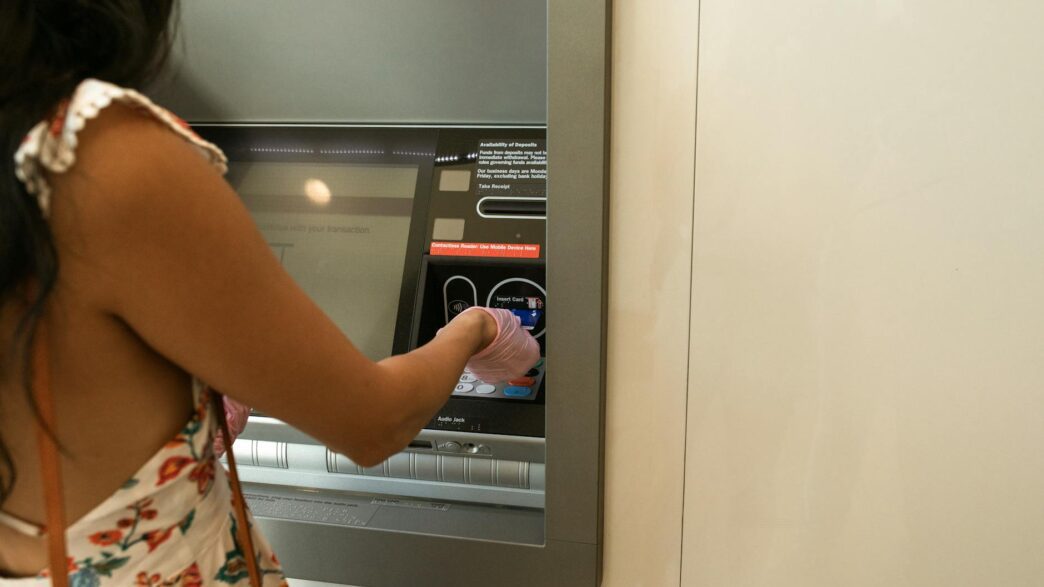
Before you use any card reader—especially at ATMs and gas pumps—take ten seconds to inspect it carefully. Legitimate card readers should feel secure and flush with the surrounding panel. If a card reader looks loose, damaged, or like it’s been added on top of the original hardware, don’t use it.
Run your fingers around the edges. A properly installed reader should have no gaps or raised edges. Look for any signs of tampering or materials that don’t match the rest of the machine. If something feels off, trust your gut. Walk away and find another ATM or pump.
Gas pumps in particular are frequent targets. Some criminals specifically target pumps at smaller stations with less sophisticated security. Major chains tend to have better monitoring and faster response times to breaches.
Protection Strategy #2: Cover the Keypad When Entering Your PIN
This is simple but genuinely effective. When you’re about to type your PIN, use your other hand or body to block any potential hidden cameras. Criminals might have your card number, but without your PIN, they can’t make ATM withdrawals or complete certain types of fraud.
This is especially important at gas pumps and ATMs where you’re entering your PIN in public. The few seconds it takes to shield the keypad is time well spent.
Protection Strategy #3: Use Tap-to-Pay and Contactless Payments
Here’s the thing about contactless payments and tap-to-pay technology: they don’t expose your card information the same way magnetic stripe cards do. When you tap a phone or compatible card, the payment is tokenized, meaning the merchant doesn’t even see your full card number. This also means skimmers designed to capture traditional magnetic stripe data can’t touch your information.
If your bank card supports contactless payment, use it. If your bank doesn’t offer it yet—and some banks are unfortunately slow to adopt this—ask about it. Increasingly, credit unions and online banks are making contactless payments standard. You can also pay with your phone using Apple Pay, Google Pay, or similar services, which offers the same security benefits.
The advantage is elegant: you get fraud protection without needing to provide your full card details to the merchant or the payment terminal.
Protection Strategy #4: Monitor Your Accounts Actively
Skimming is only effective if criminals actually use the card information they steal. This creates a window of opportunity for you to catch fraud early. Check your bank account regularly—ideally weekly, but minimum every few days if you’re someone who uses debit cards frequently.
Modern banking apps make this easier than it’s ever been. You can set up notifications for any transaction over a certain amount. When you see something unfamiliar, report it immediately to your bank.
This is another reason to keep a dedicated emergency fund in a separate account. If someone skims your debit card and drains your checking account, your emergency savings are protected. It’s a good operational security practice.
Protection Strategy #5: Know What to Do If You’re a Victim
If you notice fraudulent transactions on your debit card, here’s what to do:
Contact your bank immediately. Call the number on the back of your card. Because debit card fraud is pulling directly from your account, speed matters. Your bank can freeze your account and begin the fraud investigation faster if you report it promptly.
Federal law limits your liability for debit card fraud, but the key word is “promptly.” If you report it within two business days, your liability is limited to $50. After two business days but before 60 days, it can jump to $500. Beyond 60 days, you might be liable for the full amount.
Ask your bank to issue you a new card immediately. Don’t wait for them to mail it—ask them to expedite it or pick it up in person at a branch.
File a report with the FTC at IdentityTheft.gov. This creates an official record that helps with disputes and recovery.
The Bigger Picture
The rise in sophisticated skimming is a genuine security concern, which is why federal agencies like the Secret Service are actively running outreach campaigns about it. But it’s not an unsolvable problem. You have real power to protect yourself through awareness and smart habits.
The most important single thing you can do? Shift to contactless payments whenever possible. Tap-to-pay technology eliminates the entire category of skimming attacks that target magnetic stripe readers. It’s more convenient, faster at checkout, and genuinely more secure.
For situations where you need to use a PIN or insert your card, stay vigilant. A few seconds of inspection before using an ATM or gas pump isn’t paranoia—it’s baseline financial hygiene in 2026.
Sources
- U.S. Secret Service. “ATM and Debit Card Skimming Prevention.” 2026.
- Federal Trade Commission. “Debit Card Fraud.” https://www.identitytheft.gov
- Consumer Financial Protection Bureau. “Unauthorized Transactions on Debit Cards.” https://www.consumerfinance.gov
- Federal Reserve. “Electronic Funds Transfer Act Regulations.” https://www.federalreserve.gov
- National Association of Convenience Stores. “Payment Security Trends.” 2026.