

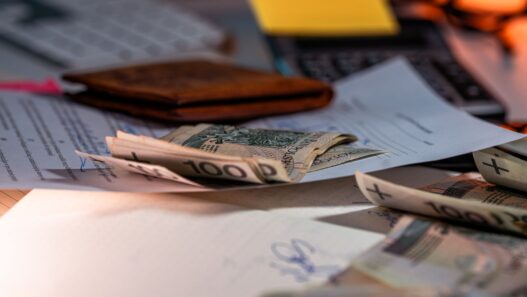





Audible Premium Plus is $14.95 a month. Netflix raised its ad-free standard plan to $19.99 in March. Spotify Premium went to $12.99 in January. That is $47.93 a month leaving your checking account, or $575.16 a year, and a free card from your local branch can wipe out most of it. September is Library Card Sign-Up Month, which makes this a good week to work out how much money a library card saves at your specific branch. Do it now. The answer is getting smaller every year, and I will explain why below.
The subscription math is the entire argument
Start with the number, because the number is what makes this worth twenty minutes of your Saturday.
Say you pay for all three services above. Audible costs you $179.40 a year. Netflix standard runs $239.88. Spotify is $155.88. Cancel Audible and Netflix, keep the music because Spotify has no real library equivalent, and you have freed up $419.28 a year without watching or listening to less. Libby, the app almost every U.S. public library uses, handles the audiobooks and e-books. Kanopy and hoopla, where your library still carries them, handle the movies and documentaries. Both are checkouts against your card, not a subscription with your card number attached.
Two cancellations and a fifteen-minute signup, and the money stops leaving on the next billing date. I have never clipped $400 worth of grocery coupons in a year, and I would bet you haven’t either.
The catch is that $419 is my stack. Yours depends on what your branch can still afford to license, which is where this gets complicated.
How much money a library card saves depends on what your branch still pays for
Library digital collections are expensive in a way print never was, and the economics are moving against you right now.
When a library buys a print copy of a novel, it owns the book until the spine gives out. When it licenses the e-book, it is renting. The common models are one copy for one user at $30 to $85 per title, or metered access where the license simply dies after 26 checkouts or 24 months, whichever comes first, and the library has to buy the same title again. hoopla works differently and charges the library per checkout, which is wonderful for patrons and brutal for a fixed annual budget, since every person who borrows a movie hands the library another bill.
So systems are cutting. Prairie Lakes ended hoopla service on December 30, 2025. Nashua Public Library in New Hampshire moved to discontinue it. Others have quietly capped monthly borrows at four or five titles. Meanwhile demand keeps climbing: the Institute of Museum and Library Services reported in May 2026 that median electronic circulation per person rose 84 percent between fiscal 2018 and fiscal 2023, from 0.49 items to 0.90. City systems hit 1.31 items per person. Rural systems managed 0.74, which tells you something about where the budgets are.
Rising demand against per-checkout pricing is not a stable arrangement. Check what your library offers this month rather than assuming it will look the same next spring.
The hold queue decides whether you can really cancel
Nobody cancels Audible over a service that takes eleven weeks to deliver. So before you cancel anything, run a test.
Open Libby, connect your card, and search for four or five titles you actually want, including something new. Look at the wait times. Under three weeks on most of them and you can drop the paid subscription today. Two months and up, and you have a browsing tool rather than a replacement.
Two things shorten those queues. First, most library systems let you place holds on several titles at once and freeze them, so you are moving up multiple lines while only receiving one book at a time. Second, hoopla and Kanopy have no waiting at all, since the library pays per use. If your branch carries either one, that is where you go when you want something tonight. Search Libby for what you are willing to wait for, and check hoopla or Kanopy for what you are not.
A $50 nonresident card is a purchase, not a hack
If your local system has thin digital shelves, you can buy into a bigger one. Some libraries sell cards to people who live nowhere near them, and the fee is treated as regular revenue, not a loophole.
Queens Public Library in New York sells a nonresident account for $50 a year to anyone outside New York State, including international users. You apply on the site, answer no to the question about living or working in New York, pay by card, and get an account number and PIN by email. That $50 buys access to their digital media and research databases, which is a much deeper catalog than most small-town systems can afford.
Weigh it against the thing you are replacing. Fifty dollars a year against $179.40 for Audible leaves you $129.40 ahead, and if you drop Netflix too, you are up $369.28 instead of $419.28. Worth it if your local Libby queues are hopeless.
Do this soon. Several systems that used to sell nonresident cards have stopped offering digital access on them, for the same licensing reasons above, and the ones still selling are the exception rather than the rule. Confirm the specific digital services included before you pay, because some nonresident cards cover Libby and not hoopla, and a few cover neither.
The passes are where families come out furthest ahead
Digital media gets the attention, but the physical perks are where the numbers get silly, especially with kids.
California runs a state library parks pass that gets you vehicle day-use entry to more than 200 state park units, and you check it out from your public library the same way you would borrow a book. A single day-use fee in California often runs $10 or more per vehicle, so six weekend outings covers a year of what you would otherwise pay. Similar programs run in dozens of states, covering more than a thousand museums, zoos, science centers, and botanical gardens. Sacramento Public Library and King County Library System in Washington both publish their pass lists online, and your system probably has one buried under “museum passes” or “discovery passes.”
Then there is the borrowing that has nothing to do with media. Plenty of branches now lend telescopes, musical instruments, sewing machines, pressure washers, cake pans, and hotspots. IMLS counted a median of 202 programs per library system in fiscal 2023, more than double the 76 reported in 2021, and a lot of those are free classes you would otherwise pay for.
None of it registers on your statement as savings. It registers as admission fees you never paid. If you are hunting for charges that never should have happened in the first place, our subscription audit and streaming bill walkthroughs pair well with this one.
Do this before October
Sign up online at your local system this week, which most libraries now allow without a branch visit. Connect the card to Libby. Search five titles you want and write down the wait times. If the waits are bad, price a nonresident card and check what digital services it actually includes. Then cancel one paid subscription, not all of them, and see whether you miss it after a month.
How much money a library card saves comes down to arithmetic you can finish in an afternoon: the annual cost of whatever you cancel, minus any nonresident fee. For most households it lands somewhere between $180 and $575. The reason to run it in September rather than next year is that library digital budgets are getting squeezed, and what your branch offers you today is probably better than what it will offer next fall.